Every August, gyms are filled with hopeful athletes. New shoes. Fresh knee pads. Tryout sheets taped to the wall. Parents sit in the bleachers, imagining senior night photos four years down the line. Statistically, most of those athletes will not play varsity. Achieving greatness in sports requires intentionality and the proper application of the scientific principles of training and sports performance.
That is not a criticism of effort. It is not an indictment of coaching. It is a function of development. A high school varsity roster typically carries 12 to 15 players. In many communities, dozens more enter the system in middle school and freshman year. The funnel narrows each season. By junior year, the physical, technical, and psychological gaps are visible.
The uncomfortable truth is that participation is common. Structured development is rare. If varsity is the goal, the pathway must be engineered.

The Participation Trap
One of the biggest misconceptions in youth volleyball is the belief that playing equals improving. Athletes practice, compete on weekends, travel for tournaments, and accumulate hours in the gym. On the surface, it looks like growth. However, does deliberate play lead to real talent development? Is participation enough? Most parents think this.
Every August, gyms are filled with hopeful athletes. New shoes. Fresh knee pads. Tryout sheets taped to the wall. Parents sit in the bleachers, imagining senior night photos four years down the line. Statistically, most of those athletes will not play varsity. Achieving greatness in sports requires intentionality and the proper application of the scientific principles of training and sports performance.
That is not a criticism of effort. It is not an indictment of coaching. It is a function of development. A high school varsity roster typically carries 12 to 15 players. In many communities, dozens more enter the system in middle school and freshman year. The funnel narrows each season. By junior year, the physical, technical, and psychological gaps are visible.
The uncomfortable truth is that participation is common. Structured development is rare. If varsity is the goal, the pathway must be engineered.
The Participation Trap
One of the biggest misconceptions in youth volleyball is the belief that playing equals improving. Athletes practice, compete on weekends, travel for tournaments, and accumulate hours in the gym. On the surface, it looks like growth. However, does deliberate play lead to real talent development? Is participation enough? Most parents think this.
But improvement in sport is not simply exposure, nor is it a result of mere participation. It is an adaptation to deliberate practice.
Motor learning research shows that repetition without correction reinforces whatever pattern already exists. If a passer consistently angles her platform slightly off target and no one corrects it, that deviation becomes embedded. When the game speeds up at the high school level, small inefficiencies become costly. Practice must be systematically designed, and continuity is a must.
Many athletes plateau not because they stop working, but because they stop refining.
Varsity players are not defined by how much they played at 13. They are defined by how much they improved at 14, 15, and 16. They are also defined by the amount of positive coaching available to inspire athletes to reach greatness.
Athleticism Eventually Separates the Field
In early adolescence, volleyball rewards coordination and enthusiasm. By sophomore year, it rewards height, maturation and force production.
The game at the varsity level is faster and more explosive. Serves are faster. Blocks close quicker. Attacks are heavier. Defensive range must expand, and players must play in multiple positions. Physical expertise and growth truly matter. An athlete who is not in great shape and cannot produce sufficient vertical force or decelerate efficiently will struggle to keep pace, regardless of how polished her technique once looked.
This is where structured strength training changes trajectories.
Properly supervised resistance training in youth athletes has been shown to improve neuromuscular efficiency, power output, and injury resilience. It does not stunt growth. It does not create bulk that slows athletes down. It builds the physical foundation that allows skill to express itself under pressure.
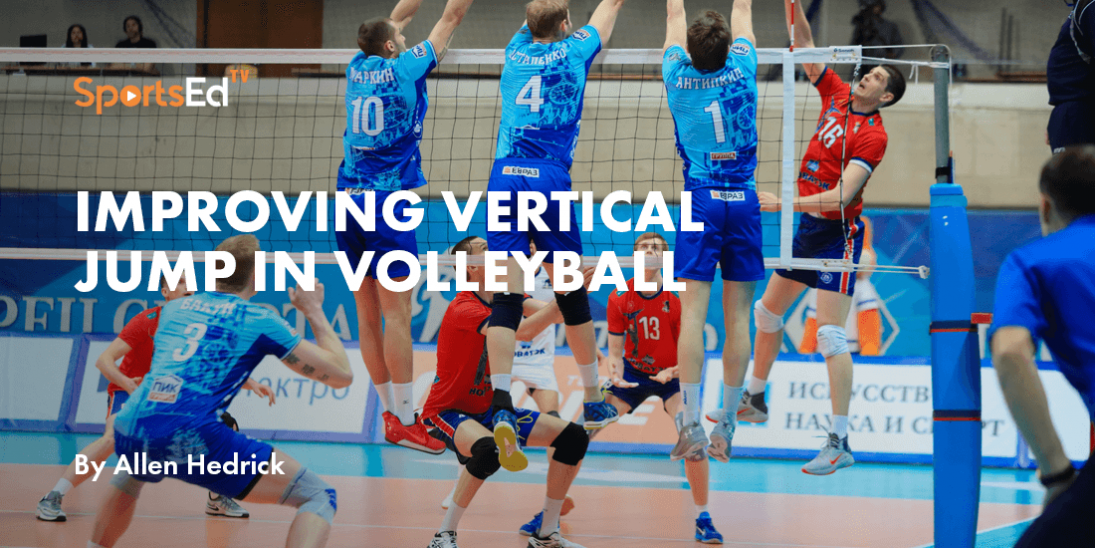
A three-inch improvement in vertical jump can transform an undersized hitter into a viable offensive option. Stronger hips and better landing mechanics reduce knee stress and extend availability across seasons. Durability is a competitive advantage.
The athletes who make varsity are often not the earliest bloomers. They are the ones who built athletic capacity before it became urgent.
Growth Spurts Change Everything
Between ages 12 and 16, bodies change rapidly. Limbs lengthen. Center of mass shifts. Coordination temporarily declines. Many families interpret this phase as regression. An athlete who once dominated suddenly mistimes jumps and struggles with balance.
This is not failure. It is neuromuscular recalibration.
The athletes who adapt best during growth spurts receive guidance. They rebuild movement patterns. They emphasize landing control and single-leg stability. They stay patient while their nervous system catches up to their skeleton.
The athletes who ignore this window often develop compensations that linger for years. By the time varsity tryouts arrive, those compensations limit efficiency and increase injury risk.
Development is rarely linear. It requires strategic patience.
The Club Volume Illusion
A modern volleyball club can create the impression that more exposure guarantees advancement. Weekend after weekend of tournaments feels productive. Travel creates a sense of elite status, but what really matters is that the athlete has an excellent coach who understands expertise development in volleyball.
Competition is valuable, but it is not a substitute for deliberate practice.
When athletes compete constantly without rebuilding mechanics, they reinforce habits under fatigue. Recovery windows shrink. Strength adaptation stalls. Tendon irritation and shoulder fatigue accumulate quietly.
Progress follows a cycle of stress and adaptation. If stress never yields to structured rebuilding, the system stagnates.
The players who reach varsity are often those who trained intelligently in the off-season, refined mechanics in controlled environments, and entered competition prepared rather than exhausted.
First Contact Is Currency
Coaches at the varsity level prioritize reliability. An athlete who can consistently control serve receive stabilizes the entire offensive system. Even a physically gifted hitter becomes limited if his/her team cannot pass accurately.
Mastery of first contact is rarely glamorous. It requires repetition, anticipation, feedback, and attention to the critical elements of the service. Ball path recognition, platform angle, foot positioning, and communication habits must be sharpened deliberately. The volleyball player must be equipped with skills and performance strategies to address high ball speed.
The athletes who treat passing as foundational rather than secondary build a reputation for dependability. Coaches notice dependability long before highlight swings.

Intelligence Under Speed
Volleyball is a cognitive sport disguised as a physical one.
Varsity athletes read setter shoulders, anticipate defensive seams, and adjust serve targets based on rotation. These decisions occur in fractions of a second. They are not instinctual in the mystical sense; they are learned through exposure and reflection.
Film review accelerates pattern recognition. Guided questioning from coaches sharpens anticipation. Athletes who study the game off the court often process it faster on the court.
Raw athleticism without tactical awareness eventually hits a ceiling.
Recovery Is Performance
Adolescents are often chronically underslept. Academic pressure, social media, and travel schedules erode sleep duration. Yet sleep is when hormonal regulation, tissue repair, and motor learning consolidation occur. Sleeping well enhances performance and prevents injuries. A good night of sleep provides a strong immune system and the balance of the whole neuro-muscular system.
An athlete training intensely while sleeping six hours per night limits his/her adaptation potential. Nutrition follows a similar pattern. Inadequate protein intake reduces recovery efficiency. Hydration deficits impair reaction time.
The athletes who appear resilient are often simply consistent in their recovery habits.
Performance capacity is not only built in the gym. It is protected at home.

Psychological Endurance and Mental Training
The journey to varsity includes setbacks. Growth spurts disrupt timing. Coaches favor older athletes. Injuries interrupt momentum. Social comparison intensifies.
Athletes who rely solely on external validation struggle during these phases. Those who value mastery and incremental improvement endure.
Sport psychology research consistently links intrinsic motivation to long-term persistence. The athlete who trains because she loves the process will remain when peers drift away.
By junior year, attrition reshapes the roster landscape. Commitment compounds.
The Parent’s Influence
Parents cannot control roster decisions, but they shape the social and psychological environment of their children. Science is key. A household that values sleep, balanced nutrition, and disciplined training builds invisible advantages. A parent who encourages strength work rather than endless tournaments alters long-term outcomes. A parent who normalizes growth plateaus reduces anxiety during recalibration phases.
Over-scheduling, sideline coaching, and constant comparison undermine confidence. The objective is not to engineer perfection. It is to cultivate sustainable development.
Youth sport should build capacity, not anxiety.

The Long Arc
The athlete who dominates at 12 is not guaranteed varsity at 17. Physical maturation shifts competitive balance. Technical gaps widen. Psychological resilience becomes decisive. The early-mature champion is completely forgotten by the age of 16.
The common thread among varsity players is not early stardom. It is a consistent annual improvement. Early initiation and late specialization is a principle found in all expertise development research. The constant assessment and coaches’ development plan provides new learning opportunities through the variability of practice, which also assures new learning curves and new motivations for all athletes.
They refined mechanics when others coasted. They built strength before it was mandatory. They studied the game when others relied on instinct. They slept when peers scrolled. They accepted correction rather than defending their ego.
Incremental gains compound over five years. That compounding effect is what most families underestimate.
A Final Perspective from the science of expertise in volleyball
The statistic that most youth volleyball players will not reach varsity is not meant to discourage participation. Sport offers value beyond roster status. Discipline, teamwork, time management, and resilience matter regardless of level. However, if varsity is the explicit goal, it requires planning and specificity in training.
It requires understanding that development is deliberate. That athleticism matters. That recovery is non-negotiable. That intelligence under speed differentiates. Those growth phases demand patience. Coaching expertise and the social support system are determinants of technical outcomes. The path is not mysterious. Best practices, extra practices and smart practices make a huge difference. Another key factor is a certain level of international experience; therefore, participation is common and much needed. Access to great coaches and structured development is rare.
The families who recognize that distinction early shift the odds dramatically.