When most athletes think about improving performance, they focus on strength, speed, agility, endurance, or technique. Very few think about their vision, even though vision drives nearly every movement we make in sport.
Research shows that up to 80 to 90 percent of athletic performance depends on how the brain receives, processes, and responds to visual information (Abernethy, 1996; Appelbaum and Erickson, 2018). Vision is not just about seeing the game. It is what helps you play the game. Every motion an athlete makes begins with what the eyes perceive and how the brain interprets it. Your muscles only carry out what your visual system commands.
That is why vision training is a critical yet often overlooked part of performance development. It strengthens the connection between the eyes, the brain, and the body, creating faster reactions, more accurate decisions, and smoother movements.

Vision Training Is Not About Better Eyesight
One of the biggest misunderstandings in sports is the belief that good eyesight automatically means good vision. It does not.
Eyesight is the ability to see clearly, as measured on an eye chart. Vision is the brain’s ability to process, understand, and respond to what the eyes see.
Vision training focuses on brain-driven skills that allow athletes to perform at their highest level. These include tracking a moving object, reacting quickly, judging distance and speed, maintaining peripheral awareness, making rapid decisions under pressure, and moving with confidence and timing.
In simple terms, vision training upgrades the software that controls your body’s hardware.
Studies have shown that targeted visual exercises can significantly improve performance-related abilities such as anticipation, visual reaction time, and coordination (Quevedo et al., 2015). When athletes train, the way their eyes and brain communicate, the benefits transfer directly into their sport. They see plays develop earlier, respond faster, and make fewer errors under pressure.
Why Vision Training Matters in Every Sport
Every sport has its own set of visual demands, but all depend heavily on how efficiently an athlete processes visual information. When your visual system is untrained or slow, your physical reaction will always lag.
Racket and Paddle Sports
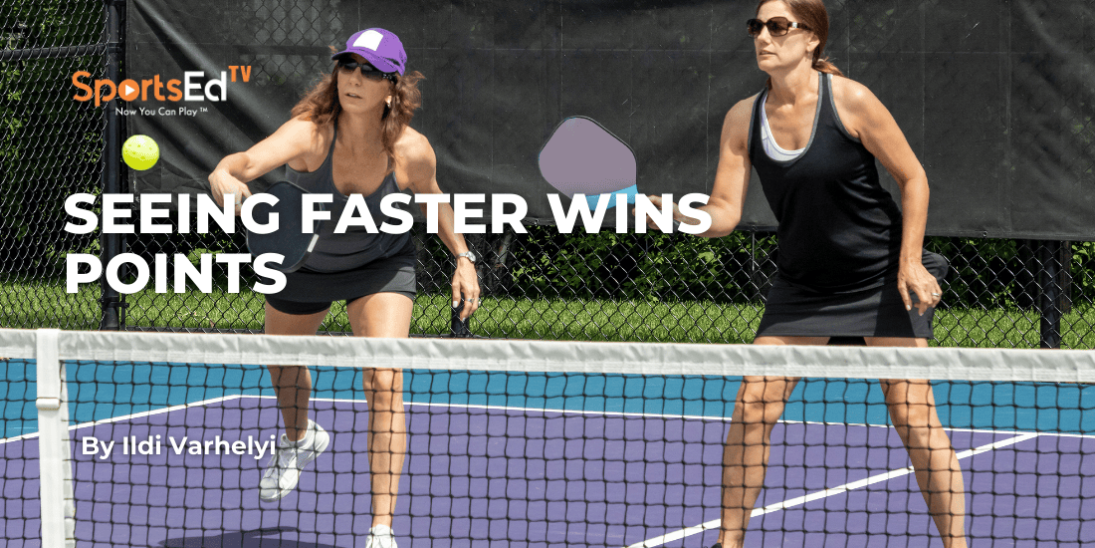
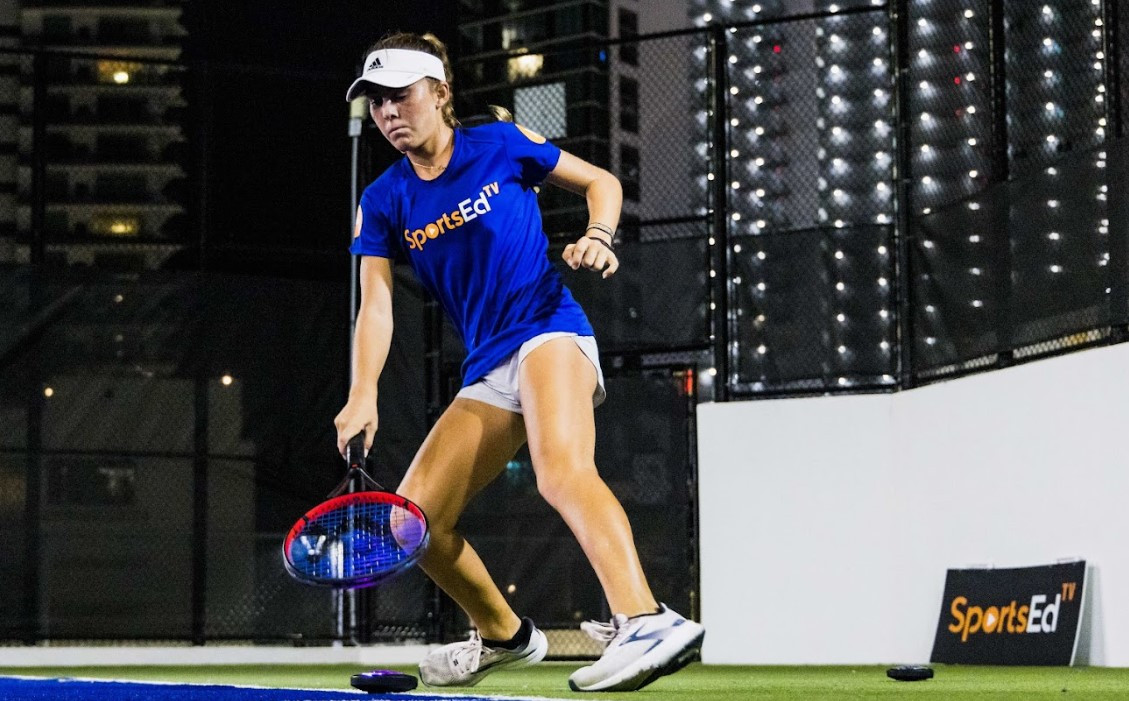
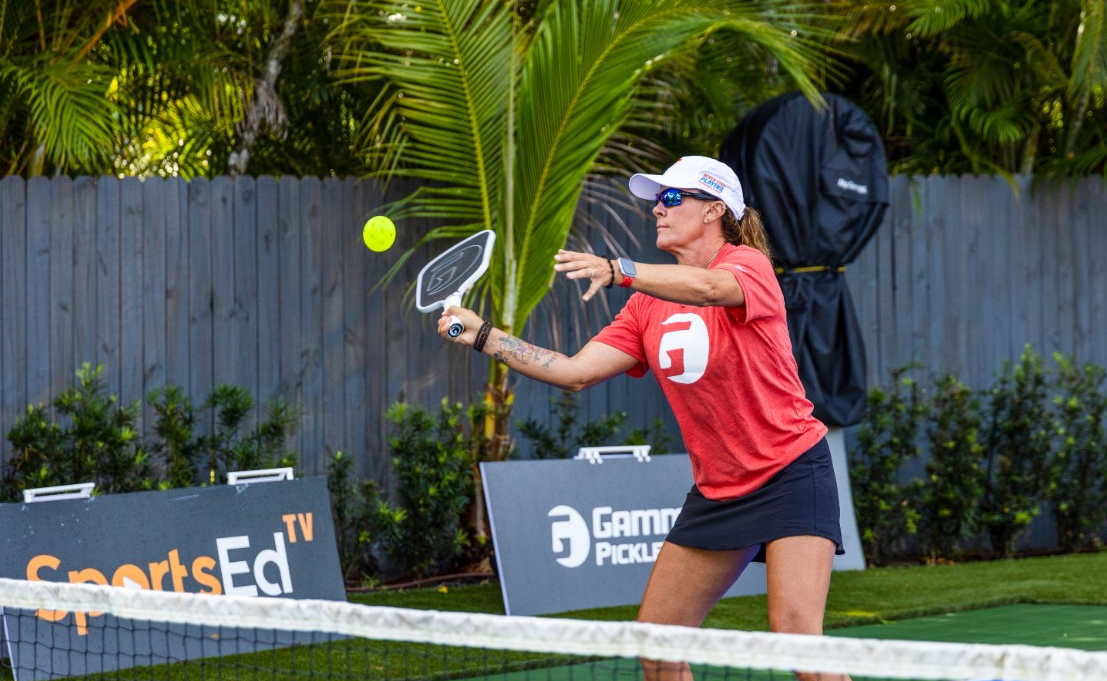
In sports like tennis, pickleball, badminton, or table tennis, vision is everything. Players must track a ball traveling at high speed, judge its spin, adjust their body position, and time their swing to the nearest fraction of a second. Even a slight delay in visual reaction can mean a late contact point or a missed opportunity.
Elite tennis and baseball players have been shown to possess superior visual tracking skills compared to amateur athletes, highlighting how vision separates high performers from the rest.
Ball Sports
In games like soccer, basketball, baseball, and football, athletes constantly shift focus between multiple moving targets. They must read the ball’s trajectory, anticipate passes, scan the field, and react to teammates and opponents simultaneously.
Vision training enhances depth perception, focus flexibility, and spatial awareness. These skills allow players to make quicker decisions and execute movements with greater precision. A soccer player with trained visual awareness will not only see the ball but also the defender approaching from the side. A quarterback will detect open receivers earlier, and a point guard will read passing lanes more effectively.
Endurance and Outdoor Sports
Cyclists, runners, and skiers rely on visual flow, balance, and spatial awareness to move efficiently through their environment. Minor improvements in visual processing can enhance rhythm, reduce wasted movement, and improve overall body control.
For example, studies on endurance athletes have shown that better visual–vestibular integration reduces motion sickness, fatigue, and coordination errors (Swan et al., 2020). The eyes guide the body’s sense of orientation, and when this system is trained, athletes can maintain smoother movement and better posture even under fatigue.
Combat and Reactive Sports
Sports like boxing, martial arts, or ice hockey require lightning-fast reactions. Opponents move unpredictably, and success depends on reading micro-movements before they happen. Visual anticipation allows athletes to predict rather than react.
When fighters train their ability to pick up subtle cues through peripheral vision, their defense becomes instinctive rather than reactive. The faster the eyes process information, the quicker the body can respond.
Different Sports Require Different Vision Skills
Just as athletes train specific muscle groups for their sport, they also need to train the visual skills most relevant to their discipline.
A baseball player must pick up the ball early from the pitcher’s hand to adjust the swing in milliseconds. A basketball player must expand peripheral awareness to monitor both defenders and teammates. A pickleball player must track a small ball at high speed from short distances. A goalkeeper must process multiple moving targets at once while maintaining focus on the ball.
Vision training is, therefore, highly individualized. A one-size-fits-all program does not work because each sport demands a different visual emphasis. Effective programs evaluate an athlete’s baseline visual abilities, identify weaknesses, and build drills that simulate real game situations.
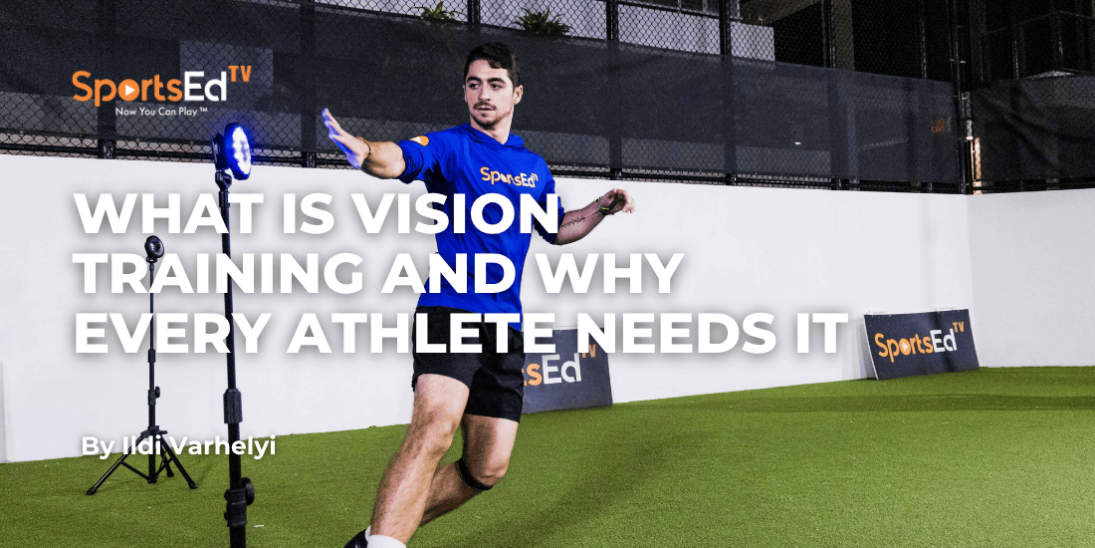
For example, a tennis player might train dynamic focus using a metronome or light board to improve anticipation timing. A football player might work on peripheral awareness drills that require tracking multiple moving lights simultaneously. The key is to train the brain to process visual information under the same time pressure experienced during real play.
The Connection Between Vision and Injury
Vision training not only enhances performance but can also play an essential role in preventing injuries.
Movement, balance, and coordination depend heavily on visual input. When visual information is inaccurate or delayed, the body compensates by moving incorrectly. Over time, this can lead to poor biomechanics, slower reaction times, and higher injury risk.
For example, an athlete who misjudges distance or spatial position may land awkwardly from a jump, overreach when sprinting, or turn too late during a defensive move. These errors are not always due to strength or conditioning issues but can stem from visual misperception.
Recent studies have found that athletes with better visual awareness and reaction times experience fewer non-contact injuries and recover faster from concussions and balance-related setbacks (Swan et al., 2020). By improving how the brain processes motion and orientation, vision training helps stabilize the body, enhances timing, and supports rehabilitation after injury.
Physical therapists and performance specialists increasingly use vision training during post-injury recovery to retrain brain–body synchronization. This not only restores function but also builds resilience against future setbacks.

What Vision Training Actually Looks Like
Vision training combines targeted drills that challenge the eyes, brain, and body to work together more efficiently. Common exercises include:
• Focus control, also known as accommodation, which trains the eyes to adjust quickly between near and far objects.
• Convergence and divergence exercises, which strengthen the ability to align both eyes on the same target.
• Eye tracking, which improves the smooth pursuit of moving objects.
• Eye–hand and eye–foot coordination drills, which build timing and precision.
• Peripheral awareness training, which expands visual field processing.
• Reaction time drills, which teach the brain to process visual information faster under pressure.
Modern vision training programs may also use digital tools such as stroboscopic eyewear, light boards, and motion tracking systems. These technologies measure progress and create high-intensity visual environments that mimic real sports conditions.
By training the brain to interpret information faster and more accurately, athletes move with greater confidence and make better decisions in the moment.

Why Most Athletes Are Missing This Piece
Most athletes have never been taught how vision works. Most coaches have never been trained to teach it. And most traditional strength and conditioning programs focus almost entirely on the body, not the brain.
The result is a performance training gap. Athletes spend countless hours building physical strength, speed, and endurance, yet neglect the visual system that directs those movements.
Once athletes experience vision training, they often notice immediate improvements in reaction time, focus, and consistency. The difference can be dramatic. In many cases, visual performance improvements occur faster than changes in physical conditioning.
Vision is not just about what you see. It is about how your brain guides your body. Training it can unlock an entirely new level of performance and confidence in sport.
References
Abernethy, B. (1996). Training the visual–perceptual skills of athletes: Insights from the study of motor expertise. American Journal of Sports Medicine, 24(6 Suppl), S89–S92.
Appelbaum, L. G., and Erickson, G. (2018). Sports vision training: A review of the state-of-the-art in digital training techniques. International Review of Sport and Exercise Psychology, 11(1), 160–189.
Quevedo, L., Solé, J., and Palmi, J. (2015). Efficacy of visual training in improving sports performance. Journal of Optometry, 8(3), 149–160.
Swan, L., Otzel, D., and DiCesare, C. (2020). The relationship between visual skills and athletic injury risk. Sports Health, 12(6), 552–559.