If you asked an Olympic or Paralympic athlete what the number one reason for their success is, you might expect answers like genetics, personality, coaching, family support, or luck. All of these matter, but there is one ingredient every top athlete must fully embrace to reach the highest level of their sport: repetition.

More Than the Ten-Thousand-Hour Rule
Most people know the idea that mastery takes 10,000 hours. In reality, there is no set number and no promise of success. What remains true is that the more time, effort, and focused attention you invest, the greater your chances of reaching excellence. It is not simply about logging hours. It is about how those hours are used. Mastery requires repetition, and it needs it with purpose.
Why Repetition Changes Throughout an Athlete’s Journey
Depending on training cycles and competitive demands, repetition takes different forms and intensities. Sometimes the focus is on large volumes of work at lower intensity. Other times it shifts to fewer movements delivered with absolute precision and explosive quality. There is no debate about its presence. Repetition is always at the core.
My Extreme Relationship With Repetition
As an Olympic javelin thrower, I took repetition to an extreme level. At my peak, I performed 10,000 medicine ball throws in a single session, and repeated it three times a week. The volume challenged my body, yet the monotony became a mental sanctuary. In those long sessions, I visualized what it would feel like to throw far when the pressure was highest. The grind strengthened my body, sharpened my mind, and locked my focus on my goals for hours at a time.
When the season shifted, and I reduced the volume, replacing it with fewer but far more intense sessions, everything clicked. That is when I started making international teams, competing at major events, and breaking record after record.
Repetition Builds Every Essential Attribute
Strength develops through repeated movements.
Flexibility is earned through repeated stretching.
Skill is built through repeated practice.
If you asked an Olympic or Paralympic athlete what the number one reason for their success is, you might expect answers like genetics, personality, coaching, family support, or luck. All of these matter, but there is one ingredient every top athlete must fully embrace to reach the highest level of their sport: repetition.
More Than the Ten-Thousand-Hour Rule
Most people know the idea that mastery takes 10,000 hours. In reality, there is no set number and no promise of success. What remains true is that the more time, effort, and focused attention you invest, the greater your chances of reaching excellence. It is not simply about logging hours. It is about how those hours are used. Mastery requires repetition, and it needs it with purpose.
Why Repetition Changes Throughout an Athlete’s Journey
Depending on training cycles and competitive demands, repetition takes different forms and intensities. Sometimes the focus is on large volumes of work at lower intensity. Other times it shifts to fewer movements delivered with absolute precision and explosive quality. There is no debate about its presence. Repetition is always at the core.
My Extreme Relationship With Repetition
As an Olympic javelin thrower, I took repetition to an extreme level. At my peak, I performed 10,000 medicine ball throws in a single session, and repeated it three times a week. The volume challenged my body, yet the monotony became a mental sanctuary. In those long sessions, I visualized what it would feel like to throw far when the pressure was highest. The grind strengthened my body, sharpened my mind, and locked my focus on my goals for hours at a time.
When the season shifted, and I reduced the volume, replacing it with fewer but far more intense sessions, everything clicked. That is when I started making international teams, competing at major events, and breaking record after record.
Repetition Builds Every Essential Attribute
Strength develops through repeated movements.
Flexibility is earned through repeated stretching.
Skill is built through repeated practice.
Whether the emphasis is on volume or on precision, repetition is always the engine of improvement.
The Long View of a Fifty-Year Throwing Career
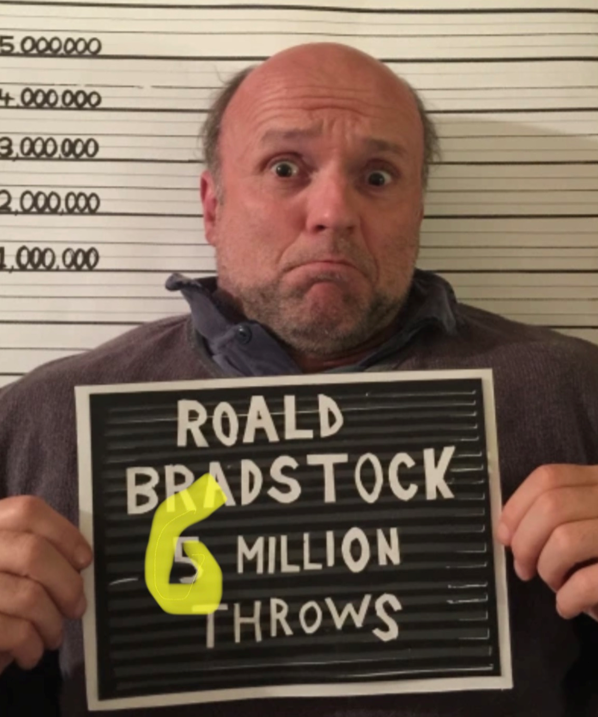
Over 50 years of throwing, I estimate I have performed more than 6 million throws. I broke 50 international and world records with various objects, competed around 750 times, made two Olympic teams, served as an alternate for two more, and qualified for 8 Olympic Trials. My final Trials appearance was in 2012 at age fifty, where I finished second.
Despite competing in one of the most shoulder and elbow-demanding sports, I never suffered a strain, tear, or required surgery of any kind. That durability came from embracing repetition with discipline and intention.
The Unexpected End of a Throwing Era
Ironically, my throwing career ended earlier this year, just before my sixty-third birthday, not from sport but from art. I spent four months creating a 24-panel acrylic painting celebrating the first 100 years of the Winter Olympic and Paralympic Games. In the final week, I drew one and a half miles of lines to create a grid of one hundred eighty-four thousand two hundred forty tiny squares. That quiet but relentless repetition left both shoulders inflamed and unusable for months. For the first time in my life, I could no longer throw.
Repetition Found A New Home In My Art
Repetition never left my life. It simply found a new form. The same dedication that powered my athletic career now fuels my artwork. My style, athletic abstraction, uses repeated lines, shapes, and embedded objects across my Olympic and Paralympic-themed pieces. What repetition once expressed through training now flows through my pen and brush.
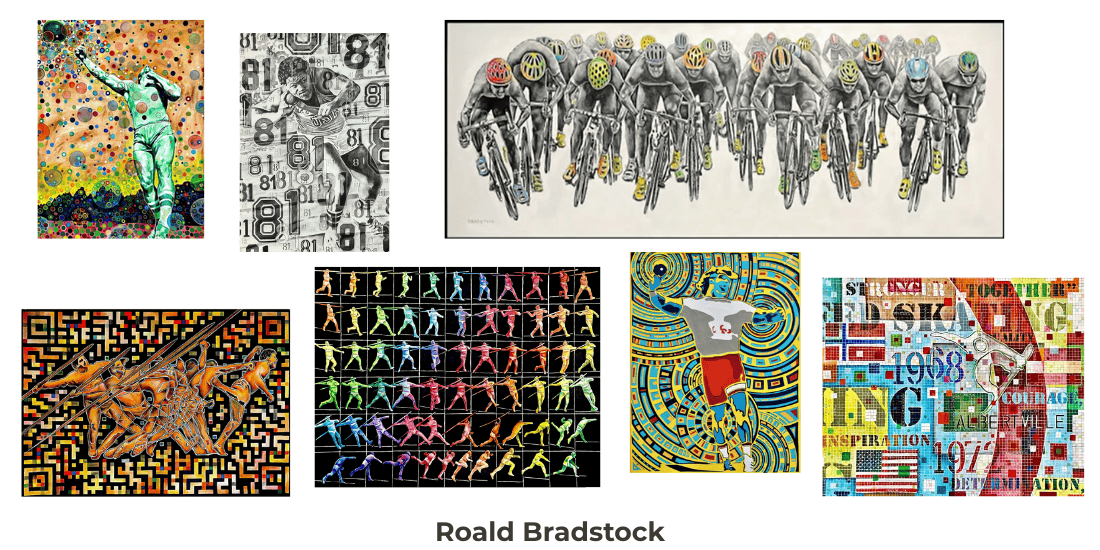
From Olympic Athlete To Olympic Picasso
Embracing repetition helped me reach the highest levels of Olympic sport. Embracing it again has helped me reach the highest levels of Olympic sport art. My work has earned recognition worldwide, I have been called the Olympic Picasso, credited with creating the Olympism Art Genre, and recently surpassed LeRoy Neiman as the most recognized Olympic sports artist according to ChatGPT.