I never expected a sport I love to flip a hidden switch inside me. One moment, I was warming up for a tournament I had signed up for, genuinely excited. Next, it felt as if someone had unplugged my brain.
Not metaphorically. Literally.
Everything I had practiced, hours of drills, footwork patterns, third-shot drops, resets, vanished. Gone. My mind moved through fog, my body through syrup. I could see the court, the ball, the opponents, but it was as if my frontal cortex had quietly stepped out for tea and crumpets and had forgotten to return. I wasn’t thinking. I wasn’t choosing. I wasn’t even playing. I was doing my best not to flatline.
It was a stunning, humbling reminder of how fast anxiety can hijack a nervous system… and how quickly a beloved passion can become the stage for our deepest fears to reveal themselves.

How Stress and Anxiety Affect Pickleball Performance
What I learned, reading after the tournament ended, is that nothing was wrong with me. My brain was doing precisely what a human brain does when it feels threatened.
I never expected a sport I love to flip a hidden switch inside me. One moment, I was warming up for a tournament I had signed up for, genuinely excited. Next, it felt as if someone had unplugged my brain.
Not metaphorically. Literally.
Everything I had practiced, hours of drills, footwork patterns, third-shot drops, resets, vanished. Gone. My mind moved through fog, my body through syrup. I could see the court, the ball, the opponents, but it was as if my frontal cortex had quietly stepped out for tea and crumpets and had forgotten to return. I wasn’t thinking. I wasn’t choosing. I wasn’t even playing. I was doing my best not to flatline.
It was a stunning, humbling reminder of how fast anxiety can hijack a nervous system… and how quickly a beloved passion can become the stage for our deepest fears to reveal themselves.
How Stress and Anxiety Affect Pickleball Performance
What I learned, reading after the tournament ended, is that nothing was wrong with me. My brain was doing precisely what a human brain does when it feels threatened.
The trouble is, it doesn’t know the difference between a pickleball tournament and a tiger that’s missed breakfast.
Under pressure, the amygdala, the part of the brain that scans for danger, can override the frontal cortex, the part responsible for decision-making, strategy, timing, nuance, all the beautiful things pickleball requires. It’s a brilliant survival mechanism, but in moments like this, it feels like betrayal.
That morning, my amygdala hit the panic button.
My thoughts scattered. My vision narrowed. My muscles tightened in ways that made even basic shots feel foreign. I wasn’t playing poorly out of a lack of skill. I was playing poorly because my system was convinced something bad was about to happen, and it shifted me into protection mode.
Freeze. Don’t think. Don’t move. Don’t feel. Just get through this.
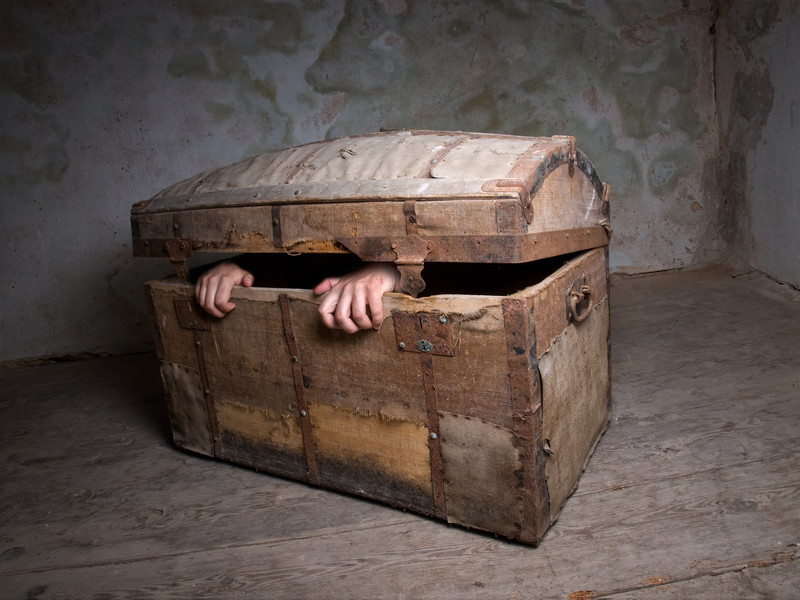
It wasn’t fear of the game. It was the fear of being seen.
Fear of failing publicly.
Fear of disappointing myself.
Fear of confirming some old, dusty belief that I wasn’t good enough to belong here.
Pickleball didn’t put me in a coma.
My unprocessed fear did.
The court was simply the mirror that made it impossible to look away.
Performance Pressure in Pickleball and the Moment Everything Shifted
There was a moment, a split second during the match, when I finally lifted my eyes from the blur of the ball and saw everything I didn’t want to see.
My partner’s face.
My friends on the sidelines.
People who have cheered for me, drilled with me, and believed in me long before I believed in myself.
And instead of feeling supported, I felt something inside me crumble.
I wasn’t just missing shots. I was letting them down.
The disappointment in myself hit harder than any mistake on the court. It was as if every person who had watched me grow as a player suddenly became a witness to my collapse. Not because they judged me, they didn’t. They were rooting for me. But when you care about people, when you’ve said yes to partnerships and practice sessions and shared dreams, the fear of failing publicly is its own kind of heartbreak.
I could feel my partner’s energy shifting, not angry, just confused. It’s jarring to walk onto a court with someone, expecting their game, and finding a stranger standing there instead. I felt responsible for that. I still do.
And maybe that’s the heaviest truth of all. The stress didn’t just shut me down.
It separated me from everyone I cared about on that court, including me.
And here’s the part that still makes me shake my head. Even in that fog, even with my brain on an unscheduled leave of absence, I somehow won the match in doubles and in mixed. It felt less like triumph and more like a cosmic prank. My body showed up and did the job, while my mind was off somewhere, hiding in the parking lot, hoping the whole thing would end soon.

How Childhood Experiences Shape Sports Anxiety in Adulthood
There’s another layer to all of this, one that has nothing to do with pickleball and everything to do with the fifty years before it. I never grew up athletic. I never learned how to move with confidence, trust my body, perform under pressure, or be part of a team in a way that felt natural. While other kids were learning the rhythm of sports, competition, camaraderie, and resilience, I was learning how to survive my own life.
So, standing on that tournament court, frozen and flooded, felt like the bill for all those years came due at once. I wasn’t just fighting a game. I was fighting decades of not knowing how to show up in moments like this. And the grief of that, the sense of having lost half a century of muscle memory, confidence, and belonging, sat heavier than the paddle in my hand.
Why Adult Athletes Often Feel Like Kids Again Under Pressure
What makes this all even more disorienting is that, in every other part of my life, I’m a fully formed adult, developed, evolved, wise, capable. I navigate complex relationships, build businesses, write, teach, lead, and coach. I handle situations that would terrify most people without blinking an eye. I know myself. I trust myself. I’ve earned every inch of that groundedness.
But the moment I step onto a court, all of that maturity evaporates.
I feel eight years old.
Not in the playful, carefree way.
In an unprepared way.
I never learned this way.
It’s a strange kind of time travel, being a grown woman with decades of emotional work behind me, yet meeting a younger version of myself who never had the chance to develop the competencies that sports give naturally: pressure tolerance, body trust, teamwork, competition without fear, losing without shame.
So, when the stress hits, it’s not the adult me who’s overwhelmed.
It’s her, the little girl who never got to work these things out, who never had a coach, a team, a uniform, a moment where she was allowed to try and fail and grow.
And I can feel her in those tournament moments, scared, confused, wanting to run, wanting to disappear, wanting to be good but having no idea how.
It’s humbling, heartbreaking, and humanizing all at once.
Because for all the evolution I’ve done, this part of me is still untouched.
And she’s the one who shows up the minute she calls 0 0 start.

Pickleball as a Mirror for Emotional Growth and Self-Discovery
Somewhere in all this unraveling, a softer understanding has started to form. Everything I didn’t learn as a child, I can still know now. And, strangely and beautifully, pickleball has become the classroom. The court shows me who I am with a kind of honesty that nothing else in my life does. It reflects how I show up when things get hard, how I support someone I care about under pressure, how I communicate when I’m nervous, and how quickly I abandon myself when I’m afraid.
It also reveals parts of me I never knew existed.
Like the part that wants to win.
Really win.
I didn’t grow up with that spark. There was no competitive fire in me as a kid, no desire to outrun or outscore anyone. So when I felt that jolt during certain points, the rush, the hunger, the instinct to beat the players on the other side of the net, it startled me. It felt foreign, almost inappropriate, like I’d uncovered a piece of my humanity I wasn’t sure I was allowed to have.
What do you do when a sport shows you a version of yourself you’ve never met?
For me, the answer has been… You sit with her.
You study her.
You try not to shame her back into hiding.
Pickleball keeps giving me these micro moments where I can either collapse into old patterns or practice a new way of being, speaking up, staying present, staying soft, staying fierce, trusting my body, owning my desire, supporting my partner, and celebrating myself without apology.
It’s humbling work. It’s messy work.
And it’s the most honest personal development curriculum I’ve ever stumbled into.
At this point, I’m convinced the universe looked at my personal development journey and said:
"She’s learned enough from therapy, let’s try pickleball".