Pickleball improvement is not random. It is structured.
Players who improve quickly are not simply more athletic. They understand positioning. They train the correct patterns. They reduce unforced errors. They build shot tolerance. They learn how to construct points.
If you want to get better at pickleball — whether you are a beginner learning consistency or an advanced player refining transition play, improvement comes down to three pillars:
- Technique
- Strategy
- Deliberate Practice
This blog breaks down each pillar in a practical, coach-driven format designed for players at every level.
Know Your Skill Level Before You Train
Improvement begins with honest assessment.
Pickleball improvement is not random. It is structured.
Players who improve quickly are not simply more athletic. They understand positioning. They train the correct patterns. They reduce unforced errors. They build shot tolerance. They learn how to construct points.
If you want to get better at pickleball — whether you are a beginner learning consistency or an advanced player refining transition play, improvement comes down to three pillars:
- Technique
- Strategy
- Deliberate Practice
This blog breaks down each pillar in a practical, coach-driven format designed for players at every level.
Know Your Skill Level Before You Train
Improvement begins with honest assessment.
Many players want to “get better” without defining what better means. The skills required at 2.5 are very different from those required at 4.5.
At 2.5–3.0, the priority is to reduce unforced errors and extend rallies.
At 3.5, players must control the transition zone and develop a reliable third shot drop.
At 4.0, point construction and tempo management become essential.
At 4.5 and above, disguise, precision, and pressure tolerance define performance.
If you are unsure where you stand, review our full breakdown in Pickleball Skill Levels Explained (2.0–5.5): The Reference Guide Players and Clubs Should Use. Proper calibration prevents wasted training.

Technique: Build a Reliable Foundation
Most recreational players lose points through avoidable errors rather than being genuinely outplayed. At the amateur and intermediate levels, rallies often end not because of a brilliant winner, but because of a missed return, an impatient speed-up, a poorly executed third shot, or a ball struck out of balance. These are controllable mistakes. They are technical or decision-making errors, not talent limitations. The fastest and most reliable way to improve is to eliminate inconsistency first. When you reduce unforced errors, you immediately extend rallies, increase pressure on your opponents, and give yourself more opportunities to win points through smart positioning and shot selection rather than low-percentage aggression.
The Ready Position Matters More Than You Think
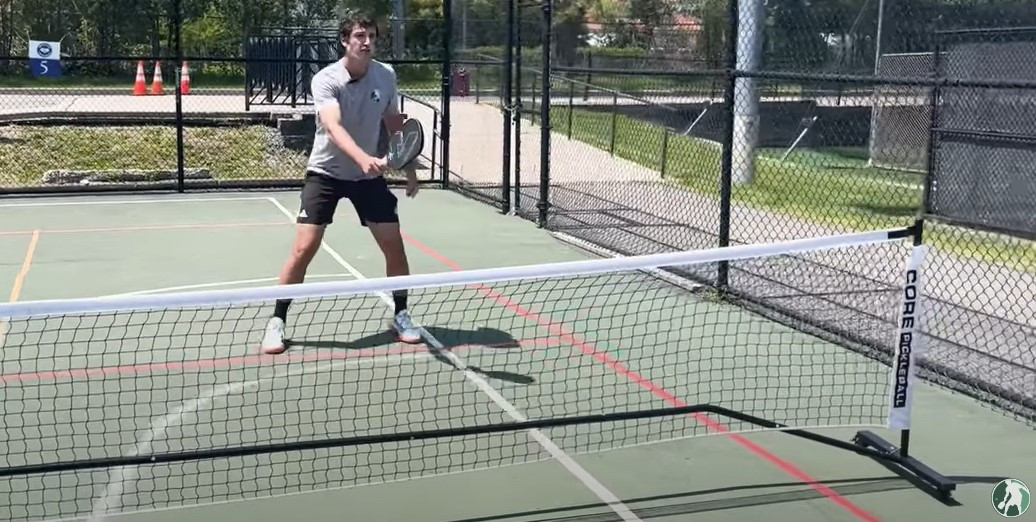
Every rally begins before the ball is struck.
Your paddle should be at chest height. Elbows slightly away from your body. Knees flexed. Weight on the balls of your feet.
A low paddle position delays reaction time and exposes you to speed-ups at the non-volley zone. Clean preparation immediately increases defensive and offensive efficiency.
Control Before Power
Power without precision creates volatility.
Focus on compact mechanics:
- Short backswing
- Stable paddle face
- Contact in front of the body
- Balanced follow-through
Consistency builds confidence. Confidence allows controlled aggression.
Master the Third Shot Drop
The third shot drop separates intermediate from advanced players.
Its purpose is to:
- Neutralize pace
- Force opponents to hit up on the ball
- Allow safe transition to the kitchen line
Drill structure:
Partner at the non-volley zone.
You start at the baseline.
Hit 20 third shot drops.
Count only unattackable balls that land softly in the kitchen.
If you cannot land 15 out of 20 consistently, this skill deserves priority attention.
Dink With Intention
Dinking is controlled pressure, not passive pushing.
Effective dinks:
- Move opponents laterally
- Target the backhand
- Force contact below net height
- Change tempo occasionally
Avoid predictable patterns. High-level players manipulate space and balance.
Strategy: Play High-Percentage Pickleball
Pickleball is a geometry-driven sport.
Shot selection matters more than shot difficulty.
Own the Non-Volley Zone
The kitchen line is the most dominant position on the court.
Why?
- Shorter reaction distance
- More offensive angles
- Ability to hit downward
If you remain in midcourt, stronger players will exploit you. Transition with discipline. Split step before your opponent strikes the ball.
Use Crosscourt Patterns
Crosscourt shots offer:
- Lower net clearance
- Longer court length
- Higher margin for error
Down-the-line shots are lower percentage unless you have created space first.
High-percentage players win more matches.
Target Feet and Backhands
You do not need perfect winners. You need uncomfortable balls.
Aim at:
- Opponent’s backhand
- Opponent’s feet
- The middle, when opponents are unsure who should take the shot
Most errors occur from indecision or low contact points.
Drills That Actually Improve Your Game
Repetition without purpose wastes time. Drills must simulate match pressure.
Transition Zone Drill
- Start at baseline
- Hit the third shot drop
- Move forward
- Opponent attempts to keep you back
Your goal is controlled advancement without panic.
Speed-Up and Reset Drill
From the kitchen line, one player initiates controlled speed-ups.
The other resets softly into the kitchen.
Learning to absorb pace under pressure is critical at higher levels.
Serve and Return Consistency Drill
Hit 25 serves focusing on depth.
Hit 25 returns focusing on height and depth.
If your serve or return lacks depth, you immediately give away an advantage.
Mental Discipline: The Hidden Separator
Advanced players manage emotion.
- They accept long rallies
- They avoid reckless attacks
- They understand patience creates opportunity
Ask yourself during matches:
Am I losing because of my opponent’s skill or my own impatience?
Often, the answer is impatience.

Common Mistakes That Limit Improvement
- Standing flat-footed at the kitchen
- Attacking from below the net height
- Driving every third shot
- Ignoring footwork
- Avoiding structured drilling
Improvement requires intentional repetition, not recreational play alone.
Frequently Asked Questions About Getting Better at Pickleball
How long does it take to get better at pickleball?
With structured practice two to three times per week, most recreational players notice measurable improvement within four to eight weeks. Players who combine drilling, match play, and video or coaching feedback usually improve faster than players who only play casual games.
What is the fastest way to improve at pickleball?
Reducing unforced errors is usually the fastest path to improvement. Most recreational players lose more points from inconsistency and poor shot selection than from opponent winners.
Is drilling more important than playing games?
Both are important, but structured drilling develops technical consistency faster than recreational match play alone. Games improve decision-making and pressure management, while drills help reinforce mechanics and repetition quality.
What is the most important skill in pickleball?
Consistency and court positioning are often more important than power. At intermediate and advanced levels, third shot drops, transition resets, and kitchen-line control become major factors in winning matches.
Why is the third shot drop so important in pickleball?
The third shot drop helps the serving team move safely toward the non-volley zone line by forcing opponents to hit upward instead of attacking aggressively.
What is the biggest mistake recreational pickleball players make?
Many players attack balls from below the net height. Low balls are usually defensive situations and should often be reset or dinked rather than sped up aggressively.
How do I improve my dinking consistency?
Use a compact swing, maintain a stable paddle position in front of your body, and focus on height and placement rather than power. Consistency and patience are more important than trying to win every dink exchange immediately.
Why do less athletic players sometimes win in pickleball?
Pickleball rewards positioning, anticipation, patience, and decision-making. Players with better court awareness and shot selection often outperform more athletic players who rely too heavily on speed or power.
How important is footwork in pickleball?
Footwork is critical because good positioning improves balance, shot control, and recovery. Many unforced errors originate from poor spacing and late movement rather than poor paddle mechanics.
Can you improve at pickleball without a coach?
Yes, especially with structured drills, video analysis, and deliberate practice. However, a qualified coach can often accelerate improvement by identifying technical inefficiencies and strategic mistakes more quickly.
What separates advanced pickleball players from beginners?
Advanced players typically demonstrate better patience, transition-zone control, shot selection, consistency under pressure, and understanding of court geometry.
How often should I practice pickleball each week?
Two to four quality sessions per week are usually enough for steady improvement. Consistent, focused practice is generally more effective than occasional long sessions without clear objectives.
Should beginners focus on power or consistency?
Beginners should prioritize consistency, depth, and positioning before attempting aggressive winners. Reliable ball control creates far more opportunities than risky shot-making.
What is the most important area of the pickleball court?
The non-volley zone line, commonly called the kitchen line, is the most strategically important position because it allows players to control angles and apply pressure while limiting opponent attack options.
How do I know my pickleball skill level?
Skill level is best evaluated through consistency, shot tolerance, transition play, and decision-making rather than occasional highlight shots. SportsEdTV’s pickleball skill level guide provides a detailed breakdown of each level.
A Structured Path Forward
If you want measurable progress:
- Train specific skills twice per week
- Play competitive matches once or twice per week
- Review your performance honestly
- Track errors rather than winners.
The fastest improvement comes from reducing errors first, then increasing offensive efficiency.

Getting better at pickleball is not about hitting harder. It is about thinking better, positioning better, and training better.
- Master fundamentals
- Respect court geometry
- Train with purpose
- Stay patient under pressure.
If you commit to structured development rather than casual repetition, your level will rise.
Improvement in pickleball is predictable when the process is deliberate.