Pickleball at higher levels is not chaotic. It is calculated.
From the outside, the Non-Volley Zone often looks calm. Two players exchange soft dinks crosscourt. The ball arcs gently over the net. Feet barely move. The pace seems manageable.
But inside that quiet rhythm is tension.
Every dink is a probe.
Every reset is strategic.
Every slightly elevated ball is an opportunity.
And when that opportunity appears, elite players do not take a full swing.
They flick.
The flick shot in pickleball is one of the most efficient and disruptive offensive tools in the modern game. It requires minimal motion, generates a sudden pace, and allows a player to transition from neutral to attack in a fraction of a second.
For players progressing from 3.0 to 4.5 and beyond, mastering the flick is not about learning a flashy trick. It is about understanding how pressure is applied at the kitchen line.
Let’s examine what the flick really is, why it works, and how to build it into your game with precision.

What Is the Flick Shot in Pickleball?
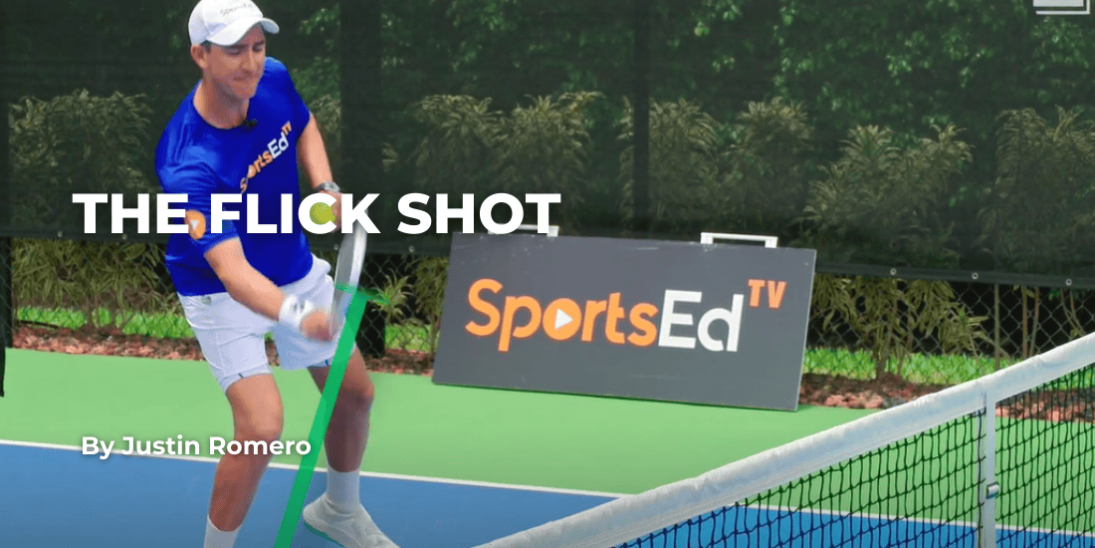
The flick shot is a compact acceleration of the paddle using forearm rotation and controlled wrist action to speed up a ball from a neutral ready position, most often at the Non-Volley Zone.
It is not a full swing.
It is not a slap.
It is not a wild wrist snap.
It is a short, explosive movement that transforms a soft rally ball into an aggressive, well-placed attack without telegraphing intention.
Technically, the flick relies on:
• Early paddle preparation
• Minimal backswing
• Forearm pronation or supination
• Stable paddle face at contact
• Immediate recovery
It is an economy-of-motion shot. The smaller the motion, the faster the recovery. The faster the recovery, the more control you retain during hand exchanges.
That efficiency is what makes the flick so valuable.
Why the Flick Shot Works So Well at the Non-Volley Zone
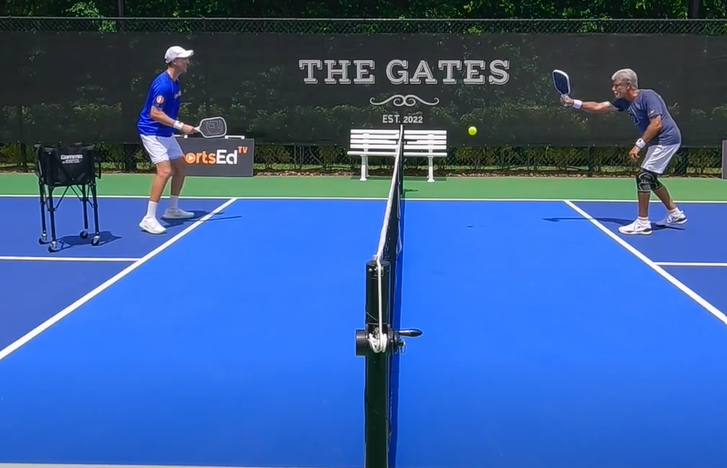
To understand the value of the flick, you must first understand kitchen-line dynamics.
At the NVZ, players operate in compressed space. Reaction time is minimal. Swing length must be short. Large motions create vulnerability.
The flick thrives in that environment for three primary reasons.
It Disguises Intent
Pickleball is a game of reading cues. Opponents scan for backswing size, shoulder rotation, and paddle angle to anticipate the next ball.
A traditional speed-up involves visible preparation. A flick does not.
From a neutral paddle position, the ball can go from soft to fast in an instant. That delay in recognition often forces defensive blocks rather than controlled counters.
At advanced levels, disguise is often more important than raw power.
It Controls the Hands Battle
Fast exchanges at the kitchen are often decided by efficiency. Large swings are too slow. Long follow-throughs compromise recovery.
Because the flick uses a compact motion, it allows you to:
• Accelerate quickly
• Stay balanced
• Reset your paddle immediately
• Remain prepared for the counter
The shot is aggressive, but it does not overcommit your body.
It Punishes Marginal Dinks
At the 3.0 and 3.5 levels, many players hit quality dinks most of the time but occasionally leave the ball a few inches too high.
At 4.0 and above, those few inches are attacked.
The flick is ideal for punishing balls that sit slightly above net height. It converts small technical errors from your opponent into immediate pressure.
The Biomechanics of the Flick Shot
Understanding the mechanics prevents common errors.
The flick is driven primarily by forearm rotation, not excessive wrist snap. The wrist supports the movement, but it is not isolated.
On the forehand side:
• The forearm pronates
• The paddle accelerates forward
• The elbow remains relatively stable
• Contact occurs in front of the body
On the backhand side:
• The forearm supinates
• The paddle stays compact
• The non-dominant shoulder remains quiet
• The core remains engaged
The key is stability. A wildly loose wrist causes loss of control. An overly rigid arm prevents acceleration.
The ideal feel is firm yet explosive.
Paddle Preparation: The Foundation of a Good Flick
The flick does not start when you swing. It starts in your ready position.
Your paddle must be:
• In front of your chest
• Above net height
• Slightly extended away from your torso
• Supported by bent knees and forward weight distribution
If your paddle drops between shots, you eliminate your ability to flick efficiently.
Watch high-level play. Elite players maintain paddle height consistently. Their readiness creates opportunity.
Preparation determines whether the flick is available.
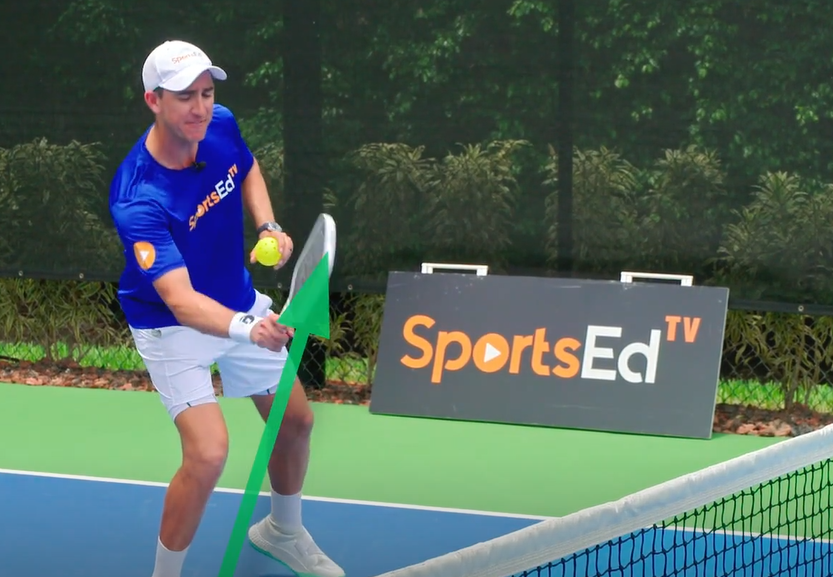
Contact Point and Timing
Timing is everything with this shot.
Contact should occur:
• In front of your body
• At or slightly above net height
• With your weight balanced
• With a controlled but accelerating paddle face
If the ball drops below net height, the percentage play shifts toward a reset, not an attack.
One of the biggest mistakes intermediate players make is attempting to flick balls that are too low. That decision often results in a ball sailing long or getting blocked back aggressively.
Selective aggression separates disciplined players from reckless ones.
Where to Aim the Flick Shot
The flick is most effective when combined with intelligent target selection.
High-percentage targets include:
The Right Shoulder of a Right-Handed Opponent
This location forces awkward paddle positioning and reduces clean blocking angles.
The Paddle-Side Hip
Jamming the opponent limits extension and reduces their ability to generate a counterattack.
The Middle Between Partners
In doubles, confusion wins points. A flick into the seam often creates hesitation.
A Sharp Crosscourt Angle
If the ball is slightly outside your body and elevated, a cross-court flick can produce a severe angle that is difficult to counter.
Placement is more important than velocity. Controlled pressure wins more points than reckless power.
Flick vs Speed-Up: Understanding the Difference
Many players confuse the flick with a traditional speed-up.
A speed-up typically involves:
• Larger shoulder rotation
• Visible backswing
• Greater power generation
• Higher risk
A flick involves:
• Minimal backswing
• Forearm-driven acceleration
• Disguised intent
• Faster recovery
Both have a place in competitive pickleball, but the flick is superior in tight, fast exchanges where reaction time is limited.
How to Practice the Flick Shot
Skill development requires repetition with purpose.
Recognition Drill
Engage in a cross-court dink rally. One player occasionally feeds a slightly elevated ball. The other player must decide instantly whether to flick or continue dinking.
This builds recognition timing rather than mechanical force.
Controlled Hands Exchange Drill
Stand at the NVZ and exchange controlled volleys. Integrate compact flicks without increasing swing size.
Focus on balance and quick paddle recovery.
Body Target Drill
Place visual targets at shoulder and hip height. Practice flicking fed balls into those zones consistently.
Accuracy under control is the goal.
Tactical Integration in Competitive Play
The flick becomes more valuable as competition increases.
At 3.0 to 3.5:
Use the flick to punish high balls and gain confidence in attacking transitions.
At 4.0 and above:
Use the flick strategically to break rhythm and initiate hand battles on your terms.
In mixed doubles:
Body flicks are particularly effective due to differences in reach and reaction speed.
In high-level doubles:
The flick often becomes a tempo-setting tool rather than an outright winner.

The Psychological Impact of the Flick
Beyond mechanics, the flick changes how opponents play.
When players know you can attack from a neutral position:
• They aim lower
• They take fewer risks
• They hesitate during exchanges
• They feel pressure
That hesitation creates mistakes.
Pressure in pickleball is cumulative. The flick contributes to that pressure without requiring constant aggression.
Common Mistakes to Avoid
Attempting to flick from below the net height
Overusing the wrist without paddle control
Standing upright and losing balance
Failing to recover quickly after contact
Forcing the shot when off-balance
The flick rewards discipline. It punishes impatience.

Final Thoughts: Why the Flick Elevates Your Game
The flick shot represents modern pickleball efficiency.
It is compact.
It is controlled.
It is disguised.
It is strategic.
It allows you to move from neutral to offensive without sacrificing recovery or balance.
If you want to progress from recreational consistency to competitive control, this shot should be part of your technical foundation.
Master the preparation.
Master the recognition.
Master the placement.
And you will begin to control kitchen-line exchanges rather than simply surviving them.
In pickleball, the smallest motion can create the biggest disruption.
The flick is proof.