Mental Toughness, Pickleball
Why Pickleball Pressure Hijacks Performance: Attachment Styles and the Nervous System
Curious yet?
Before going further, take a moment to read Sophie Chiche’s article, “Pickleball Put Me in a Coma: A Nervous System Story.” It sets the stage for what follows and captures a reality many players recognize but struggle to explain.
Here’s the question that keeps coming up on the court—and in life:
How is it that we can be prepared in every measurable way—skill, fitness, nutrition, mindset—and then, under competition pressure, lose access to all of it?
This article explores one powerful direction I’ve been studying: how attachment styles shape our nervous system responses when stress is introduced, and how that shows up in partnership sports like pickleball.
At its simplest, attachment theory examines how our early experiences with caregivers wired our nervous systems to anticipate, interpret, and respond to connection. Those early patterns don’t just influence our relationships off the court—they follow us onto the court.
Your nervous system is the command center for breathing, thinking, coordination, timing, and movement. When pressure rises, it decides whether you stay regulated—or go into survival mode. And survival mode doesn’t care how many drills you’ve practiced.

The four attachment styles we’ll explore here are:
1. Secure
2. Anxious
3. Avoidant
4. Disorganized (or Fearful)
Secure Attachment
A secure attachment style reflects a flexible, resilient nervous system—one that activates under stress and then returns to baseline efficiently.
In the body, this feels grounded, steady, and confident. There may be brief spikes of activation during conflict or mistakes, but self-regulation happens quickly. Under pickleball pressure, secure players stay present despite noise, crowds, or setbacks. They reset after errors, communicate clearly with partners, and adapt fluidly.
Their nervous system scans for solutions, not threats. This allows confident decision-making on tight points and a consistent performance zone marked by focus, steadiness, and adaptability. Secure players don’t play perfectly—but they recover well.
Anxious Attachment
The anxious attachment style carries a nervous system that struggles to return to baseline. There is heightened sympathetic activation and hypervigilance to signs of rejection or abandonment—especially from a partner.
In the body, this can feel like racing thoughts, a tight chest, a fluttering stomach, and stress hormones like cortisol and adrenaline staying elevated longer than necessary. This wiring often stems from inconsistent caregiving, in which the nervous system learned that staying activated was the way to stay connected.
Under pressure, this can look like gripping the paddle too tightly, rushing shots, overthinking, and difficulty bouncing back from mistakes. There’s often a hyper-focus on a partner’s reactions and a deep fear of disappointing them. This can lead to playing small, being overly safe, or abandoning instinct.
The internal message is: If I make a mistake, I could lose connection or safety.
From the outside, a partner may read this as scattered or needy—but internally, the player is fighting an abandonment alarm, not a lack of skill.

Avoidant Attachment
Avoidant attachment shows up as a nervous system that leans toward shutdown and disconnection as a form of protection. Here, sympathetic activation is suppressed rather than heightened.
In the body, this can feel flat, numb, or emotionally distant, often paired with physical tension in the jaw, neck, or shoulders. The nervous system learned early that minimizing needs and emotions was safer when caregivers were emotionally unavailable.
Under pressure, this pattern looks like a freeze or shutdown. The player may appear calm—almost robotic—but this is not regulation; it’s disengagement. Communication drops off. Eye contact decreases. Feedback is avoided. After tough points, there’s a visible pullback rather than repair.
To a partner, it can feel like they’re playing with someone who has “checked out.”
Internally, the body is saying: If I feel too much, I’ll lose control—so I detach.
Avoidants often shut down under stress, which slows recovery and makes collaboration harder, even though it may look composed on the surface.

Disorganized (Fearful) Attachment
The disorganized or fearful attachment style reflects a nervous system that oscillates between fight/flight and freeze. There’s confusion about whether connection is a source of safety or threat—because, historically, it was both.
This creates sudden emotional shifts: longing for closeness while being terrified of it, fearing abandonment while also fearing intimacy. In the body, it can feel chaotic and unpredictable, cycling between panic and numbness.
This pattern often develops when caregivers were simultaneously a source of comfort and fear. The nervous system learned that connection is dangerous—but so is disconnection.
Under performance pressure, this can show up as hot-and-cold play: moments of intensity or brilliance followed by sudden panic, anger, confusion, or freeze. There may be difficulty reading partner cues, emotional spirals after mistakes, and trouble adapting during long rallies.
To a partner, this can feel unpredictable or unstable. Internally, the body is saying: Pressure is both threatening and necessary.
The result is inconsistent performance, driven not by effort or desire—but by nervous system overload.
Why skills alone aren’t enough
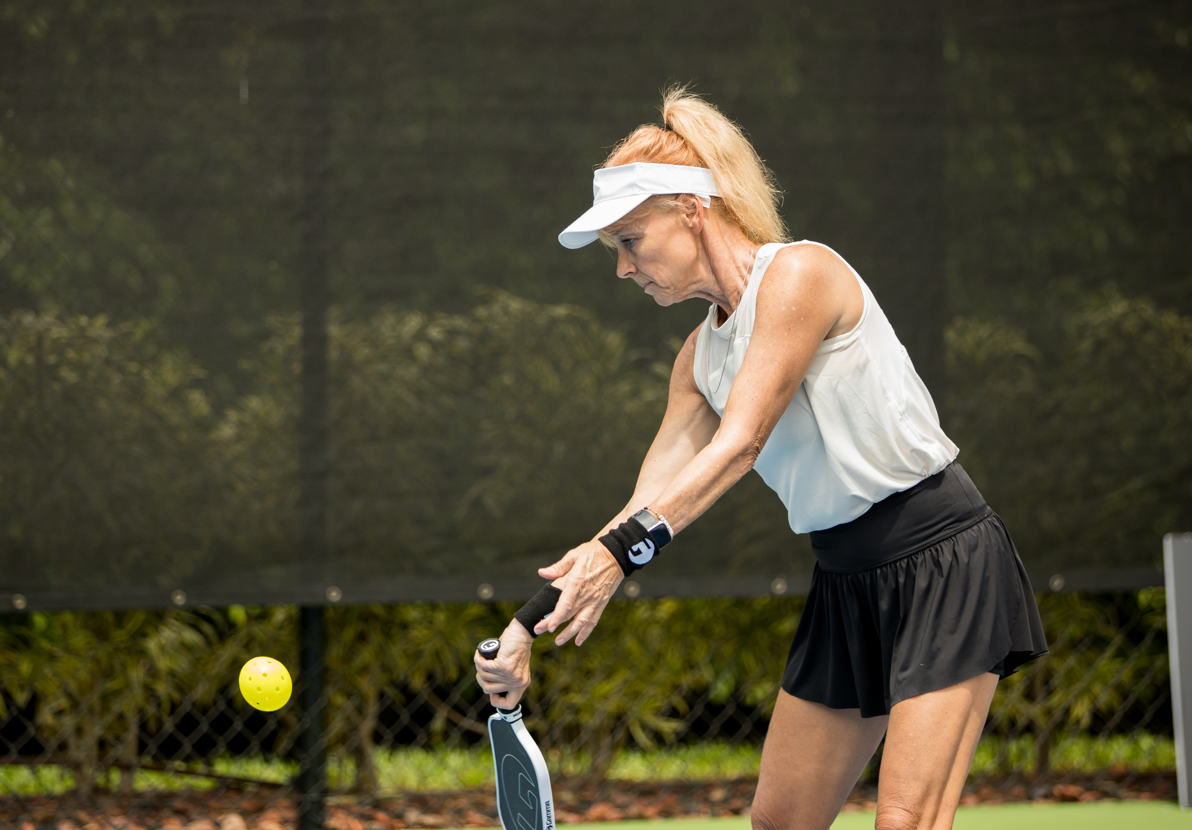
This is why practicing pickleball skills in isolation often falls apart in tournament conditions.
Competition adds relational pressure. It activates your attachment system and lights up your nervous system. Skills live in the thinking brain—but fear lives in the survival brain. And under stress, the survival brain wins.
The good news?
Attachment patterns are modifiable. With awareness and nervous system training, regulation can be learned. Performance can stabilize. And connection—both with yourself and your partner—can become a source of support instead of a threat.
That’s where absolute consistency begins.