Create your free SportsEdTV account to continue reading or viewing.
Free forever. No credit card required.
As a member, you'll also get:
• 4,000+ expert videos and articles
• Coaching tips from world-class experts
• Coverage of 40+ sports
• Favorite content lists
Become a member today!
To use this function, you must be a full member. Membership options:
Free - newsletter, all video & blog access
Yearly - full access & member features
US$179 - may be lower outside US
Lifetime - same as yearly, but forever
US$350 - may be lower outside US
You may also use a promo code for payment
MYSportsEdTV is a community where athletes, coaches and parents connect and share their sport passion. We don’t sell our member data or send spam. Members will receive our FREE email newsletter to alert you about new video and blog content for the sports you follow.
To use this function, you must be a paid member. Membership options:
Free - newsletter, all video & blog access
Yearly - full access & member features
US$179 - may be lower outside US
Lifetime - same as yearly, but forever
US$350 - may be lower outside US
You may also use a promo code for payment
MYSportsEdTV is a community where athletes, coaches and parents connect and share their sport passion. We don’t sell our member data or send spam. Members will receive our FREE email newsletter to alert you about new video and blog content for the sports you follow.
It’s time to get started with knowing some basic rules. In my experience as a coach and player, it’s best to introduce you to a few basics. All of the rules shared are standard rules, no matter your desire to be a recreational or tournament player.
If your aspiration is to be a tournament player (many more rules) or you are a “rules junkie,” I suggest visiting www.usapickleball.com as they have all the latest rules and revisions.
Yes, the rules get changed from year to year, but mostly just for tournament players. The site has a wealth of information, including places to play, how to play, youth training, and referee training …
It’s time to get started with knowing some basic rules. In my experience as a coach and player, it’s best to introduce you to a few basics. All of the rules shared are standard rules, no matter your desire to be a recreational or tournament player.
If your aspiration is to be a tournament player (many more rules) or you are a “rules junkie,” I suggest visiting www.usapickleball.com as they have all the latest rules and revisions.
Yes, the rules get changed from year to year, but mostly just for tournament players. The site has a wealth of information, including places to play, how to play, youth training, and referee training …
This blog reveals the basic rules that stand on their own from year to year and will fulfill the recreational players' desire to get on the court and play with a common understanding.
Pickleball rules on serving
Mechanics:
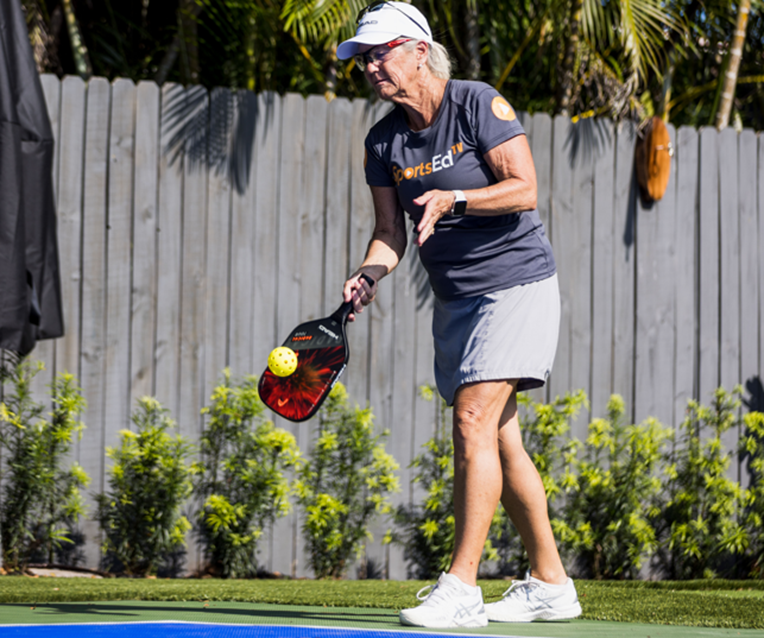
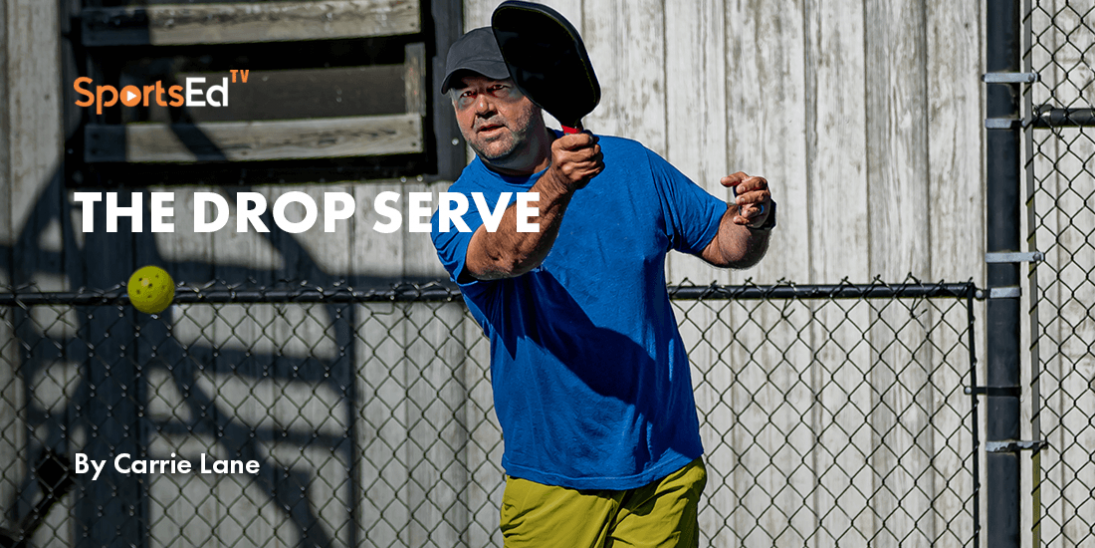
The arm must move low to high with ball contact below the waist
At ball contact, the paddle must be below the wrist
Ball:
Can bounce first “drop serve” or hit without a bounce
One serve attempt per point
Only one bounce on each side
Can touch the net but must bounce beyond the non-volley zone line on serve only
Boundaries:
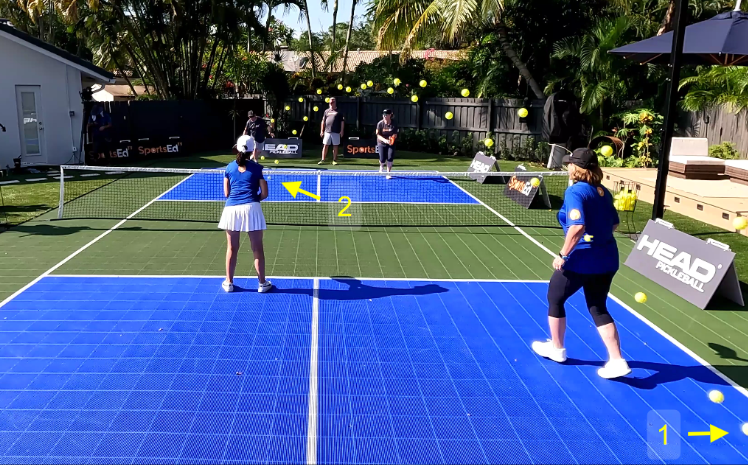
Serve to diagonal quadrant across the net beyond the non-volley zone line
Imaginary lines extending the center and sidelines past the baseline ball contact has to happen within these boundaries
Sequence:
It always starts in the right quadrant on each side of the net
The beginning serving team gets one player in the right quadrant to start
If a point is made by the serving team, the server switches quadrants with the partner and serves from the left quadrant. Continue until a point is lost. Serve then starts with the opposing team player in the right quadrant. The sequence continues with both players serving and switching quadrants. When the ball returns to the starting service team, then each player continues the sequence.
The ball must be hit off a bounce on the service return shot, and the serving team must hit their shot off a bounce when it’s returned. The next shot and from then on would give you the option to hit a volley (out of air).
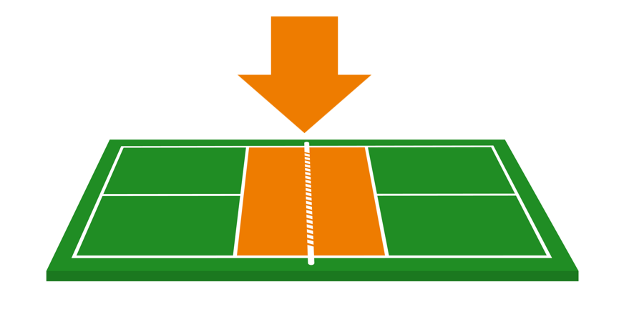
Non-volley zone:
(7 feet past the net on each side designated by a horizontal line across the court)
You cannot step in this area to hit a volley- if momentum makes you step into this zone, it’s considered a fault even if the ball is out of play.
Can step in to hit a ball off a bounce
You cannot hit the net with your paddle
Pickleball Court Lines:
If the ball hits any part of the line, it is considered “in” except on the serve (see #6)
Pickleball Scoring:
The serving team can only score
Games are usually played to the first team to reach 11 wins by 2
The score should be called before each serve
There is only a small difference between pickleball singles and doubles rules. In the USAPickleball Rules Summary, the only addition is this single line: In singles, the server serves from the right/even court when his or her score is even and from the left or odd court when the score is odd.