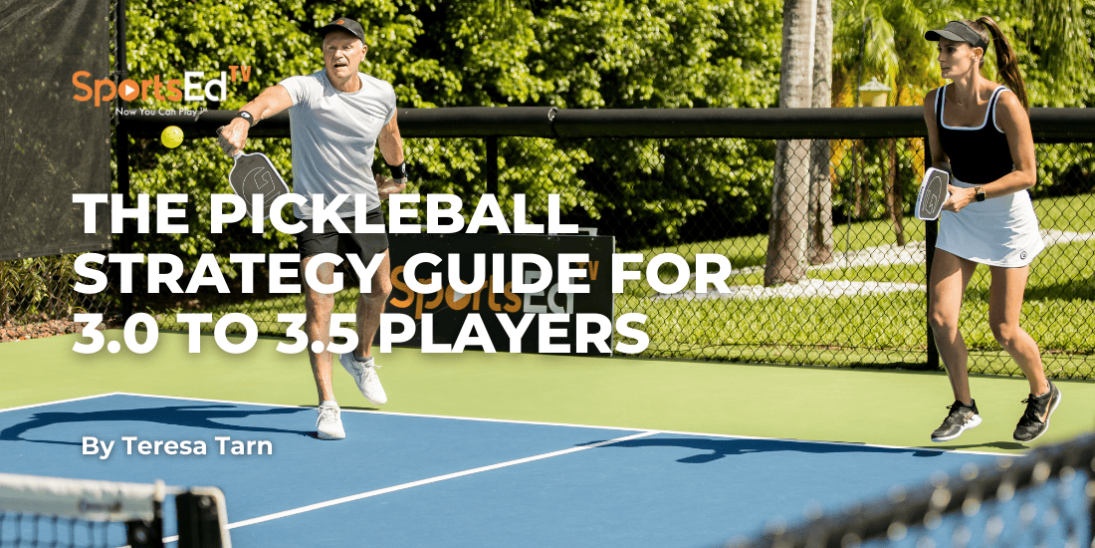
Reaching the 3.0 to 3.5 level in pickleball is an exciting milestone. At this stage, players have enough skill to enjoy long rallies, compete in organised leagues, and feel the momentum and rhythm that make pickleball so popular. Yet this level is also known as the place where many players get stuck. They feel competitive, but progress slows. Their shots are decent, but not dependable. They win points with athleticism but lose others due to rushed decisions or poor positioning.
The truth is that going from 3.0 to 3.5, and eventually to 4.0, is not about learning flashy new techniques. It is about understanding strategy. It is about shifting from reactive play to intentional play. And it is about developing habits that reduce errors, control the pace of the game, and put you in positions where your existing skills work more effectively.
This guide walks mid-level players through the ideas that matter most. These concepts come from the patterns used by strong competitive players, the coaching principles taught by experienced pros, and the tendencies that separate rising players from those who plateau. No gimmicks. Just the fundamentals that truly change match outcomes.

1. Win the First Three Shots
The early phase of every rally sets the tone. At the 3.0 to 3.5 level, many points are decided before players reach the non-volley zone. These first three shots create either stability or chaos. Focus on mastering them, and your game will rise quickly.
Serve
Your serve does not need to be powerful. What matters is depth, height, and consistency. A deep serve pushes your opponent behind the baseline, reduces their angles, and gives you time to set up your positioning. Aim for a high first-serve percentage, something close to ninety-five percent. Missed serves cost you instant points without providing any strategic benefit.
Choose targets that simplify the rally. Serving to the middle prevents sharp returns and limits how much your opponent can pull you wide. Serving to the backhand creates weaker returns. Over time, these patterns add up and produce predictable opportunities.
Reaching the 3.0 to 3.5 level in pickleball is an exciting milestone. At this stage, players have enough skill to enjoy long rallies, compete in organised leagues, and feel the momentum and rhythm that make pickleball so popular. Yet this level is also known as the place where many players get stuck. They feel competitive, but progress slows. Their shots are decent, but not dependable. They win points with athleticism but lose others due to rushed decisions or poor positioning.
The truth is that going from 3.0 to 3.5, and eventually to 4.0, is not about learning flashy new techniques. It is about understanding strategy. It is about shifting from reactive play to intentional play. And it is about developing habits that reduce errors, control the pace of the game, and put you in positions where your existing skills work more effectively.
This guide walks mid-level players through the ideas that matter most. These concepts come from the patterns used by strong competitive players, the coaching principles taught by experienced pros, and the tendencies that separate rising players from those who plateau. No gimmicks. Just the fundamentals that truly change match outcomes.
1. Win the First Three Shots
The early phase of every rally sets the tone. At the 3.0 to 3.5 level, many points are decided before players reach the non-volley zone. These first three shots create either stability or chaos. Focus on mastering them, and your game will rise quickly.
Serve
Your serve does not need to be powerful. What matters is depth, height, and consistency. A deep serve pushes your opponent behind the baseline, reduces their angles, and gives you time to set up your positioning. Aim for a high first-serve percentage, something close to ninety-five percent. Missed serves cost you instant points without providing any strategic benefit.
Choose targets that simplify the rally. Serving to the middle prevents sharp returns and limits how much your opponent can pull you wide. Serving to the backhand creates weaker returns. Over time, these patterns add up and produce predictable opportunities.
Return of Serve
The return is your first real chance to control the point. The best return at this level is deep, high, and soft. A deep return buys you enough time to move forward toward the kitchen line. Height adds safety. Softness takes pace off the ball so the serving team cannot attack immediately.
Avoid the temptation to hit aggressive returns. You are not trying to win the point here. You are trying to take control of the next phase of the rally, where you and your partner stand at the non-volley zone and force your opponents to hit upward.
Third Shot
The third shot is where many mid-level rallies go wrong. Players often attempt perfect drops that land inches inside the kitchen. These attempts lead to rushed mechanics and unforced errors. Instead, think in terms of simplicity and margin. Your drop should clear the net with a comfortable height and travel with a soft arc. You want the ball to bounce inside the kitchen, but it does not need to be sharp or precise.
Mix your choices based on your opponent’s positioning. If the return is short and high, drive it to create a fourth-shot error. If the return is deep and forces you back, choose the drop. Your goal is not to make a winner. Your goal is to set up a neutral rally at the Non Volley Zone (The Kitchen).
2. Get to the Kitchen Line First and Stay There
Controlling the non-volley zone is the single most important strategic advantage in pickleball. When you and your partner hold that line, you take away your opponents’ angles, reduce their power options, and force them to lift the ball. When you are behind the line, you give them every advantage.
The kitchen line is powerful because it shortens the court. Dinks become easy to control. Attacks are harder for opponents to generate. Pop-ups become more visible. And you can pressure weak players or exploit gaps in doubles teams more effectively.
Many mid-level players lose points by hovering a foot or two behind the line. This hesitation creates small coverage gaps and gives opponents space to hit hard drives at your feet. Commit to the line, stay balanced, keep your paddle up, and trust your hands.
3. Use Patience Instead of Forced Offense
At the 3.0 and 3.5 levels, players often lose points by trying to hit winners too early. They see a ball with a bit of height and swing for a putaway. They flick their wrist during a dink instead of gently guiding the ball. They go for sharp angles instead of controlling the middle.
A smart mid-level player stays patient until a clear opportunity appears. You do not need to attack every ball above net height. You need to attack the right balls when you are balanced and prepared.
When in doubt, reset. A controlled reset that lands in the kitchen is one of the most valuable shots in the game. It neutralizes pressure, slows the tempo, and allows you to regain your position at the kitchen line. A soft reset is a sign of maturity, not weakness.
Patience does not mean passivity. It means choosing your moments with purpose.
4. Aim for the Middle
The middle of the court is the most reliable, most productive target for mid-level players. Middle shots reduce your chances of hitting wide. They reduce your opponent’s angles. And they create communication challenges for teams that are not perfectly coordinated.
At this level, many opponents struggle with who should take the middle ball. Some step back. Some hesitate. Some switch late. Each hesitation creates an opening. Professionals use this idea constantly. Recreational players should embrace it as well.
You do not need to hit the sidelines to win rallies. You need to manage space, simplify your targets, and wait for the right high ball before changing direction or going for a more aggressive shot.
5. Develop a Reliable Dinking Foundation
Dinking is more than soft hitting. It is controlled footwork, paddle discipline, and intention. Strong dinking does not need to be fancy. It needs to be steady. If you can keep five to ten dinks in play without rushing, you already have a competitive foundation.
Focus on three core dinks that make the biggest difference at this stage.
Crosscourt Dink
This is your safest and most important dink. It travels the longest distance, which gives you more margin over the net. The natural angle of the court helps you place the ball deeper in the opponent’s kitchen and pull them out of position.
Middle Dink
A soft ball through the middle creates hesitation and tests opponents’ teamwork. This dink is especially useful against teams that stand too wide or do not communicate well.
Reset Dink
When you are stretched wide or pushed off balance, lift a soft, high dink to the center of the kitchen. This reset slows the point and brings the rally back to neutral. It is the sign of a player who understands long-term tactics.

6. Think and Move as a Team
Doubles is a team sport, and mid-level players often forget that. They play side by side but not together. Their spacing becomes inconsistent. They cover their preferred sides instead of the correct tactical zones. And they communicate reactively instead of proactively.
Good teams move as one. When one player shifts right, the other adjusts slightly to stay connected. When one player steps back to defend a lob, the other rotates. When one player attacks a high ball, the other closes the middle to cover the counterattack.
Communication should be simple and constant. Say “yours” or “mine” early. Call out “middle” or “switch” clearly. Tell your partner what you plan to do between points. Teams that communicate well win even when they are outmatched skill-wise.
7. Build Simple, Repeatable Patterns
Match-winning players do not improvise. They rely on patterns that produce predictable situations. The more predictable your situations become, the calmer and more effective you become.
A reliable pattern might look like this:
Return the ball deep. Move to the kitchen. Settle into crosscourt dinks. Look for a ball that floats high. Aim that ball either at your opponent’s right hip or into the open middle. Close the net and finish with control.
Another helpful pattern is a third-shot drop followed by slow progress toward the kitchen. Do not rush your steps. Drop, pause, observe, then move together with your partner. You are building structure, not speed.
The more you repeat high-percentage patterns, the fewer surprises you face during points.
8. Eliminate the Common Traps that Hold Players Back
Every mid-level player falls into certain traps. These habits are the reason many stay stuck at 3.0 and never make the jump to 3.5 or 4.0. Recognize them and replace them with smarter habits.
Here are the traps that matter most:
- Overhitting the third shot.
- Playing from no-man’s land.
- Trying to force winners from low positions.
- Dinking with wrist flicks instead of simple paddle movement.
- Aiming for the sidelines too often.
- Failing to reset under pressure.
- Ignoring weak opponents or predictable patterns.
Improvement begins when you remove these errors, not when you learn new tricks.
9. The Path to 4.0
The jump from 3.0 to 3.5 and then to 4.0 is not about talent. It is about stability, decision-making, and awareness. You need cleaner footwork, smarter patterns, more controlled resets, and a calmer mindset. You need to recognize the points you are losing and understand why you are losing them.
Players who reach 4.0 are not the ones with the hardest drives or the flashiest putaways. They are the ones who manage the middle, control the kitchen, communicate with their partner, and reduce unforced errors. They are disciplined during dinks, patient during neutral rallies, and aggressive only when the opportunity is truly clear.
You already have everything you need to reach that level. It is not a matter of ability. It is a matter of intention.

At the 3.0 to 3.5 level, the game becomes more strategic, more thoughtful, and more structured. The keys to progress are simple. Master the early phase of the rally. Move together with your partner. Control the kitchen. Aim for the middle. Stay patient. Build reliable patterns. Reduce unnecessary risks.
If you focus on these ideas, your game will become steadier, calmer, and far more effective. You will win more matches. You will feel more confident under pressure. And you will move steadily toward the 4.0 level, where the game becomes even more rewarding.