Taekwondo
Mind-Body Mastery: How Taekwon-Do Builds Resilience Beyond the Dojang
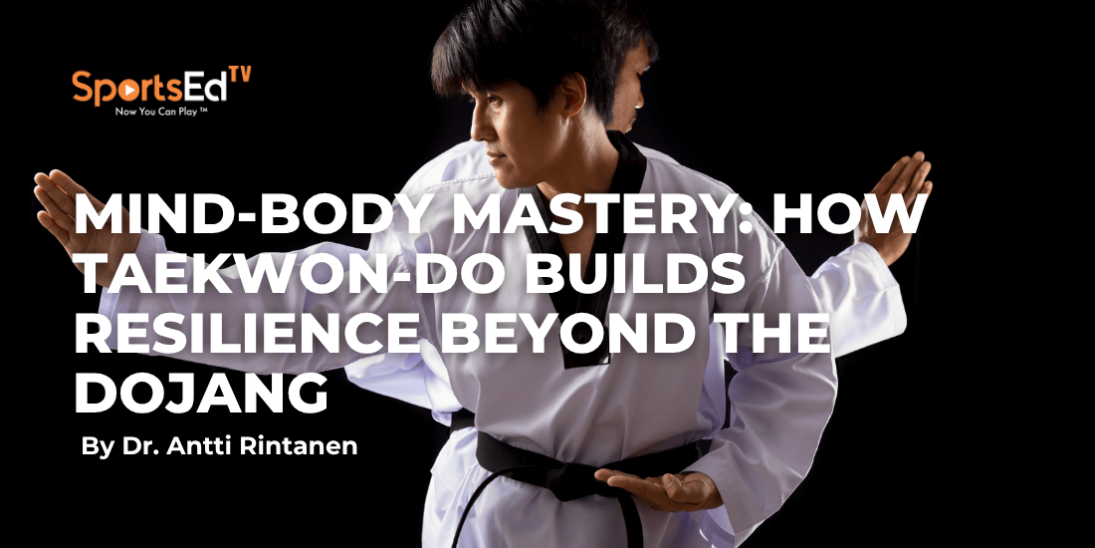
By Dr. Antti Rintanen, MD, MSc, author of The Internet Doctor
In Taekwondo, every movement begins and ends with control — not only of the body but of the mind. The art’s foundations in breathing, balance, and awareness extend well beyond physical combat. They shape a nervous system that stays calm under pressure, a posture that protects the joints, and a mindset that endures setbacks.
As both a doctor and Taekwon-Do practitioner — and a former world champion in ITF sparring — I’ve seen how martial discipline overlaps with modern sports science. Regulated breathing mirrors autonomic training, stances reflect biomechanical efficiency, and mental focus builds neurological resilience. When traditional martial principles meet contemporary physiology, athletes learn to train smarter — not merely harder.

Breathing: The Foundation of Power and Recovery
Breath is the most direct link between the voluntary and involuntary nervous systems. In Taekwon-Do, practitioners coordinate exhalation with strikes — kihap, a controlled breath often vocalized to generate internal pressure and stabilize the spine.
This technique is associated with increased vagal activity and parasympathetic dominance, which can reduce heart rate and improve focus between rounds or drills. Controlled exhalation improves oxygen efficiency and helps maintain composure during high-intensity performance.
A study by Russo et al. (2017) showed that slow, paced breathing (≈6 breaths per minute) enhances vagal tone and parasympathetic activity while reducing anxiety and perceived exertion [1]. Ma et al. (2017) found that diaphragmatic breathing improves attention and reduces stress in healthy adults [2]. Although these studies involve general populations rather than athletes, similar autonomic effects are consistently observed in sport-specific research [3].
Practical application: Between high-intensity sets, athletes can use a 4-second inhale and 6-second exhale pattern to stabilize arousal and speed recovery. Over time, this pattern enhances endurance and focus — the same mechanism underlying Taekwon-Do’s rhythmic breathing control.

The Physiology of Sparring: Calm Under Pressure
ITF Taekwon-Do sparring is a demanding test of the nervous system. Each round challenges the athlete to alternate between explosive bursts and rapid recovery — a cycle that mirrors interval training at the neurophysiological level.
In my own experience competing internationally, maintaining composure between exchanges is as critical as technical precision. Successful sparring requires shifting between sympathetic activation (fight-or-flight bursts for strikes and evasions) and parasympathetic regulation (quick recovery and tactical thinking).
Sports physiology research supports this balance. A 2021 study by Brito et al. demonstrated that elite Taekwon-Do athletes exhibit higher heart-rate variability (HRV) — an indicator of efficient autonomic control — and faster post-fight recovery compared to less experienced competitors [4]. In practice, this means that the best sparrers don’t just move well; they breathe well.
Taekwon-Do’s structured rhythm — the pauses, controlled breathing, and ritualized resets between rounds — functions as built-in nervous system training. Every bout becomes a live laboratory for testing emotional control, reaction timing, and adaptability under duress.
Biomechanics of Posture and Injury Prevention
Taekwon-Do emphasizes correct stance and alignment — from walking stance to L-stance — as the base for power and balance. Proper alignment distributes mechanical loads across the kinetic chain, reducing stress on the knees, hips, and spine.
Research confirms that trunk and core control predict lower-limb injury risk [5]. Long-term Taekwon-Do practice improves sensory organization and postural stability, likely through enhanced proprioceptive feedback [6]. Proprioception — the body’s awareness of movement and position — is fundamental to balance and injury prevention [7].
By repeating forms (tuls) and performing continuous sparring drills, practitioners train small stabilizer muscles and refine postural reflexes, which may help prevent overuse injuries. Even subtle fatigue alters postural control [8]; maintaining upright alignment preserves diaphragmatic function and spinal stability.
Modern biomechanics now validates what martial artists have practiced for generations: efficient movement and mindful alignment are preventive medicine for the musculoskeletal system.
Neural Focus and Emotional Regulation
Competition in Taekwon-Do demands calm under pressure — a skill rooted in nervous-system regulation. Sparring teaches athletes to respond rather than react, building interoceptive awareness: the ability to sense internal states like heart rate, tension, or fatigue.
Higher interoceptive awareness correlates with improved emotional regulation and lower injury risk [9]. Athletes who train focused attention, as martial artists routinely do, show structural and functional brain changes that enhance self-control [10]. These mechanisms underlie “flow” — states of effortless concentration where perception and action synchronize.
In this sense, Taekwon-Do trains the brain as effectively as the body. Sparring becomes a real-time lesson in staying centered when challenged, an ability transferable to any performance context.

Social Connection as a Recovery Tool
Taekwon-Do’s etiquette — bowing to instructors and partners, showing courtesy and humility — may seem ritualistic, yet it has measurable physiological effects. Social bonding and respect are linked to oxytocin-mediated modulation of stress responses and to greater psychological resilience [11].
Oxytocin moderates autonomic function and has anti-inflammatory effects, and may attenuate HPA-axis reactivity [11]. Team-based studies show that athletes with strong group identity and support networks experience less stress and better adherence to training [12].
Although few studies examine martial-arts rituals specifically, the mechanisms are likely similar: structured respect and belonging act as buffers against chronic stress and overtraining. In modern terms, Taekwon-Do’s culture is a built-in recovery system.
Bridging Tradition and Sports Science
Sports science increasingly confirms what Taekwon-Do has embodied for decades: true performance arises from harmony between body and mind.
-
Breathing regulates the nervous system.
-
Posture governs mechanical efficiency and safety.
-
Focus refines neural precision and composure.
-
Respect and community sustain motivation and emotional balance.
Mindfulness-based interventions in athletes reduce negative affect and improve consistency [13]. Neuroscientific reviews also describe how attentional control and working memory form the foundation of skilled performance [14].
Together, these findings illustrate that integrating physiological, cognitive, and emotional regulation yields sustainable performance — precisely the outcome Taekwon-Do has pursued for generations.

Practical Takeaways for Athletes and Coaches
-
Train breath control intentionally.
Use slow, paced breathing between rounds to enhance recovery and focus. -
Reinforce alignment daily.
Every stance or warm-up repetition reinforces neuromuscular memory and joint protection. -
Encourage body awareness.
Brief mindfulness or visualization before training heightens interoceptive control. -
Prioritize social recovery.
Respectful training environments and team cohesion accelerate both mental and physical recovery. -
Blend tradition with evidence.
Use Taekwon-Do’s structure to develop complete athletes — physically capable, mentally centered, and emotionally grounded.
Conclusion
Taekwon-Do is more than a combat sport — it’s a system for nervous-system training that integrates breath, posture, and focus into self-regulation. Contemporary physiology now supports what martial wisdom observed centuries ago: when the mind is balanced, the body performs at its best.
For athletes and coaches seeking longevity and resilience, these principles provide a blueprint that bridges the science of performance with the art of discipline. Whether in the dojang or on the field, mastering the mind-body connection remains the ultimate path to sustainable excellence.
About the Author

Dr. Antti Rintanen is a medical doctor and former World Champion in Taekwon-Do sparring. Combining his background in sports and medicine, he focuses on how movement, mindset, and recovery shape lasting performance. Through his platform, The Internet Doctor, and as a contributing writer for SuccessKnocks.com, he shares science-based insights on training, posture, and resilience to help athletes and everyday individuals build healthier, stronger bodies — and minds — for life.
References
-
Russo MA, Santarelli DM, O’Rourke D. The physiological effects of slow breathing in the healthy human. Breathe (Sheff). 2017;13(4):298–309. https://pmc.ncbi.nlm.nih.gov/articles/PMC5709795/
-
Ma X, Yue ZQ, Gong ZQ, Zhang H, Duan NY, Shi YT, et al. The effect of diaphragmatic breathing on attention, negative affect and stress in healthy adults. Front Psychol. 2017;8:874. https://pubmed.ncbi.nlm.nih.gov/28626434/
-
Laborde S, Mosley E, Thayer JF. Heart rate variability and cardiac vagal tone in sport: A review and recommendations. Eur J Sport Sci. 2017;17(2):243-255. https://pubmed.ncbi.nlm.nih.gov/28265249/
-
Zazulak BT, Hewett TE, Reeves NP, Goldberg B, Cholewicki J. Deficits in neuromuscular control of the trunk predict knee injury risk. Am J Sports Med. 2007;35(7):1123–30. https://pubmed.ncbi.nlm.nih.gov/17468378/
-
Brito CJ, et al. Heart rate variability and stress responses in elite and sub-elite Taekwondo athletes. Front Physiol. 2021;12:695661. https://www.researchgate.net/publication/6153240_Heart_Rate_Responses_to_Taekwondo_Training_in_Experienced_Practitioners
-
Fong SS, Tsang WW, Ng GY. Taekwondo training improves sensory organization and balance control in young adults. J Strength Cond Res. 2012;26(3):756–63. https://pubmed.ncbi.nlm.nih.gov/22093652/
-
Paillard T, Noé F. Techniques and methods for testing the postural function in humans. Front Hum Neurosci. 2015;9:52. https://pmc.ncbi.nlm.nih.gov/articles/PMC4659957/
-
Lin F, Nussbaum MA, Seol H, Singh N, Madigan ML. Acute effects of localized muscle fatigue on postural control and pattern of muscle activation during quiet standing: Influence of fatigue location and age. Eur J Appl Physiol. 2009;106(3):425–34. https://pubmed.ncbi.nlm.nih.gov/19306019/
-
Mehling WE, Price C, Daubenmier JJ, Acree M, Bartmess E, Stewart A. The Multidimensional Assessment of Interoceptive Awareness (MAIA). PLoS One. 2012;7(11):e48230. https://pubmed.ncbi.nlm.nih.gov/23133619/
-
Tang YY, Lu Q, Fan M, Yang Y, Posner MI. Mechanisms of white matter changes induced by meditation. Proc Natl Acad Sci U S A. 2012;109(26):10570–4. https://pubmed.ncbi.nlm.nih.gov/22689998/
-
Carter CS. Oxytocin pathways and the evolution of human behavior. Annu Rev Psychol. 2014;65:17–39. https://pubmed.ncbi.nlm.nih.gov/24050183/
-
Rees T, Haslam SA, Coffee P, Lavallee D. A social identity approach to sport psychology: Principles, practice, and prospects. Sports Med. 2015;45(8):1083–96. https://pubmed.ncbi.nlm.nih.gov/26092187/
-
Baltzell A, Akhtar VL. Mindfulness meditation training for sport (MMTS) intervention: Impact of MMTS with Division I female athletes. J Happiness Stud. 2014;15(6):137–48. https://jhwbjournal.com/uploads/files/2879125465bbffd181dbdb5656cb424d.pdf
-
Cowan N, Bao C, Bishop-Chrzanowski BM, Costa AN, Greene NR, Guitard D, et al. The relation between attention and memory. Annu Rev Psychol. 2024;75:183–214. https://pubmed.ncbi.nlm.nih.gov/37713810/