Create your free SportsEdTV account to continue reading or viewing.
Free forever. No credit card required.
As a member, you'll also get:
• 4,000+ expert videos and articles
• Coaching tips from world-class experts
• Coverage of 40+ sports
• Favorite content lists
Become a member today!
To use this function, you must be a full member. Membership options:
Free - newsletter, all video & blog access
Yearly - full access & member features
US$179 - may be lower outside US
Lifetime - same as yearly, but forever
US$350 - may be lower outside US
You may also use a promo code for payment
MYSportsEdTV is a community where athletes, coaches and parents connect and share their sport passion. We don’t sell our member data or send spam. Members will receive our FREE email newsletter to alert you about new video and blog content for the sports you follow.
To use this function, you must be a paid member. Membership options:
Free - newsletter, all video & blog access
Yearly - full access & member features
US$179 - may be lower outside US
Lifetime - same as yearly, but forever
US$350 - may be lower outside US
You may also use a promo code for payment
MYSportsEdTV is a community where athletes, coaches and parents connect and share their sport passion. We don’t sell our member data or send spam. Members will receive our FREE email newsletter to alert you about new video and blog content for the sports you follow.
Flag football has rapidly evolved from a schoolyard pastime into one of the world’s fastest-growing sports. It keeps the strategy, skill, and excitement of American football but removes tackling, heavy equipment, and the collisions that often define the traditional game. What remains is a fast, creative, and inclusive sport built on movement, teamwork, intelligence, and precision.
With its debut in the 2028 Los Angeles Olympic Games, flag football is now entering a new era. This guide offers a complete, globally relevant overview of the game. It explains what flag football is, how it is played, how the rules can vary across countries, how it differs from tackle football, and why men, women, and youth athletes around the world are embracing it at record levels.
What Flag Football Is
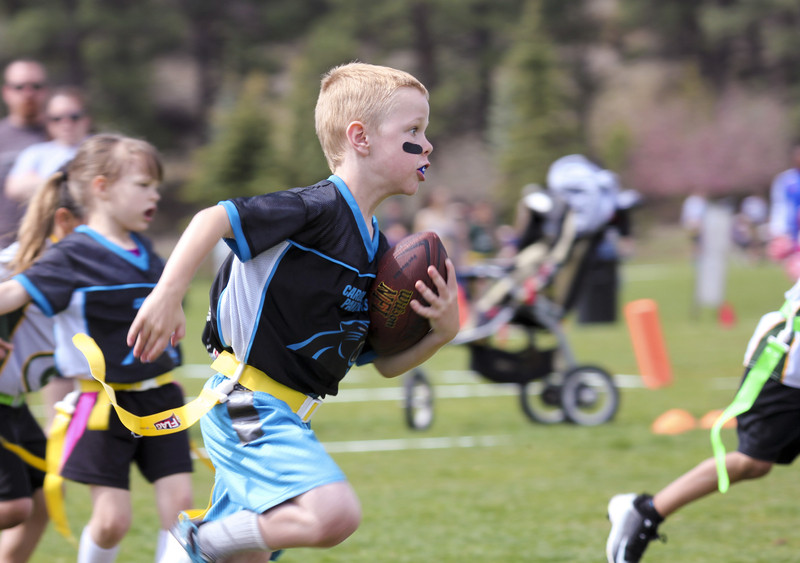
Flag football is a non-contact version of American football played with small teams on a compact field. Instead of tackling, defenders stop the play by pulling a flag attached to the ball carrier’s belt. The objective remains the same as in tackle football. Move the ball down the field and score.
The game emphasizes speed, agility, timing, and decision-making. Without blocking or physical collisions, players must rely on footwork, route running, spatial awareness, and quick reactions. The absence of heavy equipment makes the sport accessible, affordable, and easy to introduce in schools, clubs, and community programs.
How Flag Football Is Played
Flag football rules share a global structure, even though details vary between organizations. Whether played under NFL FLAG in the United States, IFAF rules internationally, or recreational rules in local leagues, most versions follow the same core principles.
Flag football has rapidly evolved from a schoolyard pastime into one of the world’s fastest-growing sports. It keeps the strategy, skill, and excitement of American football but removes tackling, heavy equipment, and the collisions that often define the traditional game. What remains is a fast, creative, and inclusive sport built on movement, teamwork, intelligence, and precision.
With its debut in the 2028 Los Angeles Olympic Games, flag football is now entering a new era. This guide offers a complete, globally relevant overview of the game. It explains what flag football is, how it is played, how the rules can vary across countries, how it differs from tackle football, and why men, women, and youth athletes around the world are embracing it at record levels.
What Flag Football Is
Flag football is a non-contact version of American football played with small teams on a compact field. Instead of tackling, defenders stop the play by pulling a flag attached to the ball carrier’s belt. The objective remains the same as in tackle football. Move the ball down the field and score.
The game emphasizes speed, agility, timing, and decision-making. Without blocking or physical collisions, players must rely on footwork, route running, spatial awareness, and quick reactions. The absence of heavy equipment makes the sport accessible, affordable, and easy to introduce in schools, clubs, and community programs.
How Flag Football Is Played
Flag football rules share a global structure, even though details vary between organizations. Whether played under NFL FLAG in the United States, IFAF rules internationally, or recreational rules in local leagues, most versions follow the same core principles.
Field and Team Size
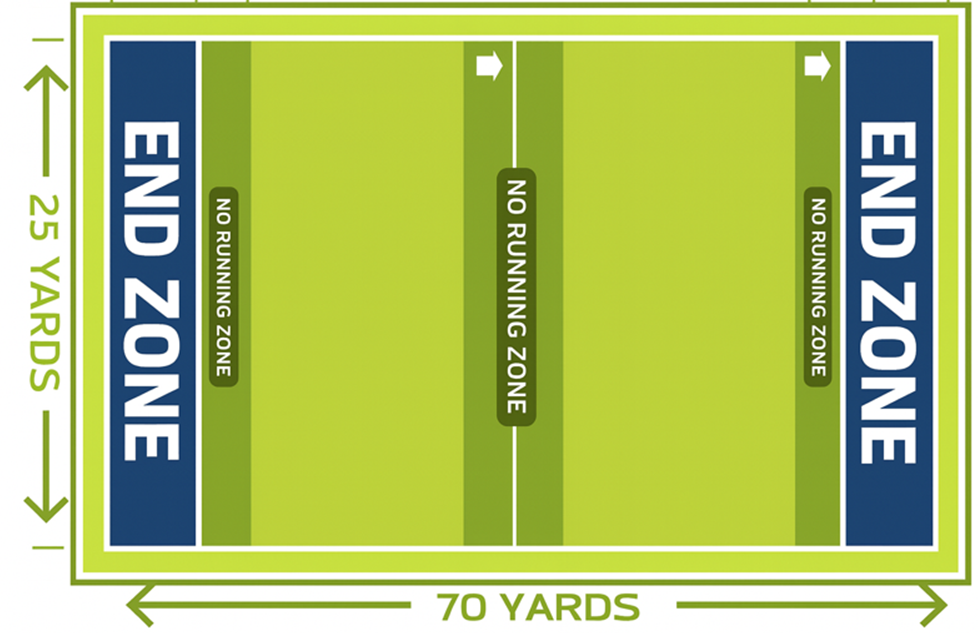
Most formats use five players per team on a field that is about half the size of a traditional American football field. Dimensions are typically 50 to 70 yards long and 25 to 30 yards wide. End zones are marked on each side, and some leagues draw restricted zones near the goal line to shape offensive strategy.
The smaller field creates constant action, short drives, and quick transitions. It also encourages movement and spacing rather than power-based football.
Starting Drives and Earning First Downs
Drives usually begin inside the offensive team’s own end of the field, often near the five or ten-yard line. The offense receives a set number of downs to cross midfield. Once it reaches the middle, it earns a new set of downs to score.
This two-stage drive system appears in most versions of the sport. Some competitions adjust the number of downs, but the structure remains centered on purposeful progress rather than piling up yardage.
The Snap and the Role of the Quarterback
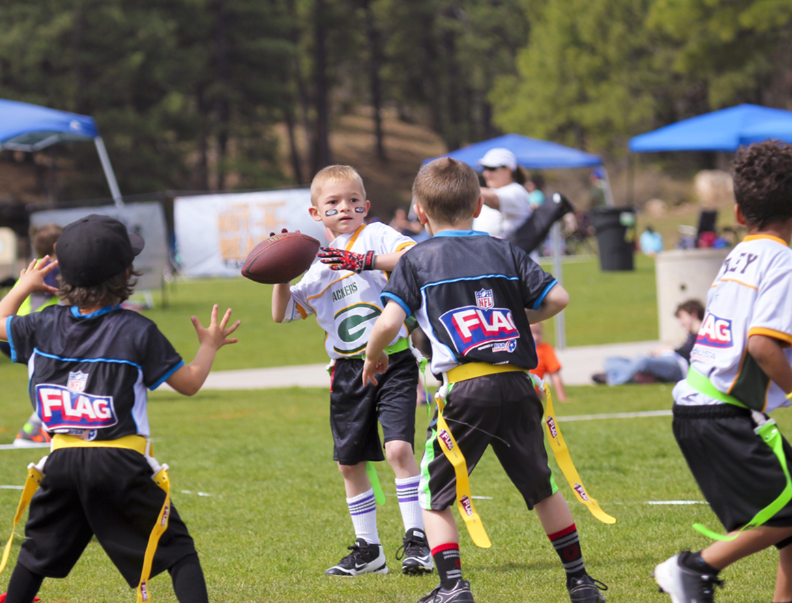
Each play begins with a snap from the center to the quarterback. Many leagues place a time limit on the quarterback’s decision to throw the ball. This encourages tempo, quick reads, and precise execution.
The quarterback can throw forward only from behind the line of scrimmage. Backward or lateral passes may be allowed depending on the league. Hand-offs and short pitches can also be legal in many formats, as long as they occur behind the line. The goal across most rulebooks is to foster skill development in passing and route running rather than forceful rushing.
Running Plays and Restricted Areas
Flag football allows running plays in many versions of the sport, but running is often restricted near the goal line. These no-run zones prevent players from crashing forward into tight spaces and keep games safer and more strategic.
Outside those restricted areas, running remains an integral part of the game. Quick reverses, misdirection plays, short hand-offs, and creative ball movement are all part of flag strategy.
Defense and Flag Pulling
Defenders stop plays by pulling one of the ball carrier’s flags. There is no tackling, blocking, or pushing. Effective defense relies on agility, anticipation, pursuit angles, and teamwork.
Some leagues allow designated pass rushers to line up a few yards behind the line of scrimmage. Others will enable any defender to rush once the ball is snapped. Regardless of format, flag pulling remains the core defensive technique.
Scoring the Game
Most versions of flag football use the same scoring system.
Touchdown: 6 points
Extra point from a short distance: 1 point
Extra point from a longer distance: 2 points
Safety: 2 points
There are no field goals or punts in many formats. All extra points are pass or run attempts from marked spots rather than kicks.
Game Timing and Flow
Flag football games are shorter and faster than tackle football. Many formats use two halves of 15-25 minutes each. The clock often runs continuously except in the final minutes, when it stops more frequently to create strategic end-of-game situations.
Some leagues use rolling substitutions, which keep the tempo high and allow deep, active rosters.
How Flag Football Differs from Tackle Football
Flag football and tackle football share a strategic foundation but create completely different playing experiences.
There is no tackling and no heavy contact
There is no blocking
Players wear no helmets or pads
The quarterback cannot act as a runner in many versions
The field is smaller and more open
The game moves much faster
Passing plays dominate the action
Defense relies on footwork and angles instead of collisions
Flag football places skill, agility, movement, and intelligence at the center of the game. Because the risk of injury is much lower, players can develop confidence and technique without the physical demands of tackle football.
Why Rules Vary Around the World
One of the strengths of flag football is its adaptability. Exact rules vary depending on the league or country's goals.
International federations create standardized rules for global competitions.
Youth organizations adjust rules for safety and skill development.
Adult recreational leagues may adapt rules for speed, fun, or facility size.
Schools and clubs adjust timing, field length, or substitution patterns to meet local needs.
These variations give the sport flexibility without changing its identity. No matter where the game is played, the core idea remains the same. Move the ball. Pull the flag. Play fast, play smart, and win with skill instead of force.
The Rise of Girls and Women in Flag Football
One of the most exciting developments in the sport is the explosive growth of girls’ and women’s flag football. High schools in the United States are adding sanctioned girls’ programs. Colleges are introducing a varsity women’s flag. Internationally, the women’s game is expanding rapidly, with numerous countries fielding competitive national teams.
Flag football gives female athletes equal access to quarterback roles, leadership positions, and skill development. The sport rewards qualities many girls naturally develop through multi-sport backgrounds: agility, decision-making, communication, and creativity.
Mixed-gender recreational leagues are also standard, which is rare among team invasion sports.
Flag Football in the Olympic Games
The announcement that flag football will be featured at the 2028 Los Angeles Olympic Games marks a landmark moment for the sport. The Olympic format will use the five-on-five structure, and both men’s and women’s tournaments will be held.
This inclusion will bring new visibility, new funding, and new opportunities for athletes around the world. It will help countries build developmental programs and inspire a wave of young players who now have a clear pathway from local leagues to the Olympic stage.
Why the Game Is Growing So Quickly
Flag football fits the needs of the modern sports landscape.
It is safer than contact sports.
It requires almost no equipment.
It is easy to organize in schools and communities.
It is gender-inclusive and globally accessible.
It is fun to play and exciting to watch.
It develops athletic qualities that transfer to many other sports.
As more countries formalize leagues and coaching systems, the sport is poised for continued expansion at every level.
The Future of Flag Football
Flag football is not replacing tackle football. It is becoming its own global sport with a unique style, culture, and competitive structure. Its blend of speed, strategy, and inclusivity makes it one of the most promising sports of the next decade.
From school programs to international championships, from community leagues to the Olympic Games, flag football offers athletes a dynamic, intelligent, creative, and inclusive game.
The future of the sport is bright, and its impact on the next generation of athletes is just beginning.