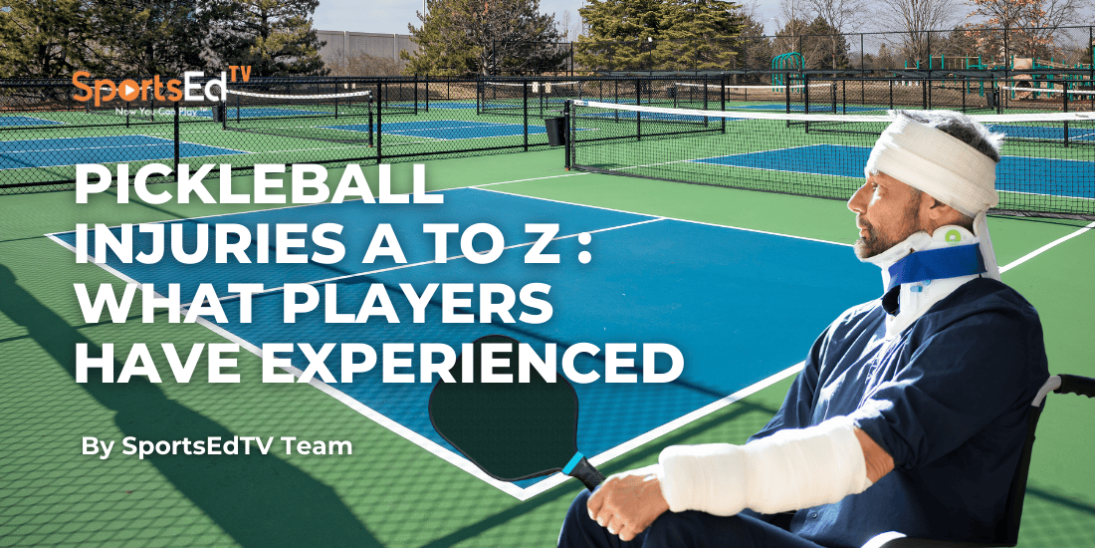
Pickleball is fun, fast, and addictive — and like any sport, it comes with risks. We recently asked players: “What’s the worst pickleball injury you’ve ever had?” Hundreds of people responded, and their answers gave us a clear picture of the most common injuries players face.
This list is not meant to scare anyone away from the game. Injuries happen in all sports, and we believe the benefits of being active far outpace the risks. The purpose here is to share what players have actually experienced so that others can be more aware, better prepared, and safer on court.
The best defense against injury is prevention: warming up properly, maintaining good conditioning, stretching regularly, and learning technique through trusted instruction.

Pickleball is fun, fast, and addictive — and like any sport, it comes with risks. We recently asked players: “What’s the worst pickleball injury you’ve ever had?” Hundreds of people responded, and their answers gave us a clear picture of the most common injuries players face.
This list is not meant to scare anyone away from the game. Injuries happen in all sports, and we believe the benefits of being active far outpace the risks. The purpose here is to share what players have actually experienced so that others can be more aware, better prepared, and safer on court.
The best defense against injury is prevention: warming up properly, maintaining good conditioning, stretching regularly, and learning technique through trusted instruction.
Here are the injuries players reported in our survey, listed alphabetically, with a short note on how players typically manage or think about them. It shows the variety of injuries that can happen, from mild to severe. If you experience a significant injury — especially involving the head, spine, eyes, severe pain, swelling, deformity, or inability to move normally — stop play immediately and seek medical attention.
Achilles strain / tendinopathy
Pain and stiffness from overuse or sudden push-offs; easing play and gentle calf work are often helpful.
Achilles tendon rupture / tear
A sudden “pop” and loss of push-off power indicate a medical emergency requiring urgent care.
Ankle sprain / twisted ankle
A rolled ankle is one of the most common sports injuries; rest, support, and gradual return to activity are usually needed.
Back fracture (spine)
A serious fall can cause vertebral damage and requires immediate medical evaluation.
Back sprain / strain
Twists and overstretching can strain back muscles; rest and core strengthening help recovery.
Biceps tendon tear (shoulder)
A forceful swing may tear the tendon; it typically needs rest and medical follow-up.
Black eye
A stray ball or paddle can leave visible bruising; cold packs are often used.
Broken back
Severe falls can cause fractures; immobilization and professional care are critical.
Broken clavicle
A broken collarbone sidelines players for weeks and always requires medical care.
Broken foot
Awkward landings or collisions can fracture foot bones; they are usually managed with rest and protection.
Broken nail
Minor but painful; trimming and protecting usually help.
Broken patella (kneecap)
One player shattered their kneecap into multiple pieces; surgical repair is often needed.
Broken toe
Stubbed or stepped-on toes can fracture easily; buddy taping or stiff footwear may help.
Broken wrist
A very common injury from falls; splints or casts are often required.
Bruised ego / hurt feelings / wounded pride
Many players admitted their worst “injury” was losing badly or being beaten by someone older — a reminder that the game tests mind and body.
Bruises (contusions)
Falls and collisions leave colorful marks; these generally heal with time.
Bursitis (elbow, hip)
Overuse can lead to swollen, painful joints; reducing the load and engaging in gradual rehabilitation helps.
Calf muscle tear / strain / rupture
A sudden sprint can overstretch the calf; gradual strengthening is key to recovery.
Concussion
Falls or collisions can cause head trauma; they always require rest and medical assessment.
Corneal abrasion (scratched cornea)
Eye injuries happen; protective glasses are strongly advised.
Dislocated rib
Reaching or twisting awkwardly can cause rib dislocation; recovery needs professional care.
Elbow bursa burst
Painful swelling of the elbow from overuse or impact; activity modification is essential.
Face plant / split lip
Classic falls can leave cuts and bruises; keeping wounds clean helps.
Finger fracture
Fingers often take the brunt of a fall; some require splints or taping.
Fractured vertebrae (L2, L5)
Reported by a player after a backward fall; urgent medical care is required.
Groin pull
Stretching too far can cause a painful strain; gradual return and hip strength work are common.
Hamstring pull / tear
Explosive sprints or lunges can pull hamstrings; recovery often takes weeks.
Head injury (paddle strike, stitches required)
One player hit themselves in the head and needed stitches; helmets aren’t common, but awareness matters.
Herniated disc
Back discs can herniate under strain; symptoms often require professional therapy.
Hip bursitis
Hip pain from repetitive stress; strength and mobility work may reduce recurrence.
Knee replacement
Severe knee damage led one player to surgery — an extreme but real outcome.
Knee shift / dislocation
Sudden pivots can displace the kneecap; bracing and rehabilitation are necessary.
Labrum tear (shoulder)
A deep shoulder injury often needs surgery; overhead motions are affected.
Meniscus tear
Common in pickleball, especially with twisting motions; surgery may be required.
MCL tear
Knee ligament injury from awkward landings; structured rehab is important.
Nail injury
Even small injuries like torn nails hurt; trimming and protection help.
Neck pinched nerve
Causes pain and tingling; rest and posture adjustments can ease it.
Nerve entrapment (ulnar / cubital tunnel)
Compression injuries in the arm cause numbness or tingling; medical advice helps.
Patella break
Falls can crack the kneecap; it requires imaging and medical care.
Plantar fascia tear
Sudden pain in the heel/arch; rest and protective footwear are often advised.
Plantar fasciitis
Stubborn heel pain, worse in the morning; stretching and support are typical strategies.
Rotator cuff tear
A frequent shoulder injury in racquet sports; rehab or surgery may be needed.
Sciatica
Back and leg nerve pain; managed with movement modification and therapy.
Shattered wrist
Multiple fractures requiring pins or plates; long recovery reported.
Shoulder tendon tear
Swinging awkwardly can tear tendons; therapy is often required.
Shoulder surgery (reverse shoulder replacement)
Severe damage required full replacement for one player.
Sunburn
Even SPF 70 wasn’t enough for one respondent; covering up is key.
Tennis elbow (lateral epicondylitis)
Overuse of the forearm; often eased with rest, grip adjustments, and strengthening.
Thigh contusion / strain
Hard impact or overstretching caused deep bruises; time usually heals.
Tibial hairline fracture
A small shin fracture that lingered for months; rest and gradual return were required.
Toe fracture
Stubbed or stepped-on toes were common; simple management with taping or footwear.

Play Safe
From torn tendons to bruised pride, these reports show the wide range of injuries players can experience on the pickleball court. But they also highlight how much passion the community has — because even after setbacks, players keep coming back to the game they love.
At SportsEdTV, we believe the joy of staying active far outpaces the risk of injury. By warming up, strength and conditioning, stretching regularly, and following expert instruction, you can reduce your chances of injury and maximize your time on the court.
Want to play safer and smarter? Explore our free SportsEdTV pickleball lessons and get expert guidance on technique, drills, and fitness so you can keep enjoying the game for years to come.