Pickleball
Pickleball Balls: The Complete Buying Guide (Indoor vs. Outdoor, Explained)
By Teresa Tarn, SportsEdTV Pickleball Coach and APP Senior Pro Tour player
Most people who search "pickleball balls" aren't looking for a product page. They're stuck on one question: which ball actually matches the court they play on? Get that wrong, and the ball cracks in two sessions, skids unpredictably, or just feels "off." This guide answers that question first, then gives you a criteria-based way to pick the right ball — one that won't go stale when this season's models get replaced by next season's.

What is the difference between indoor and outdoor pickleball balls?
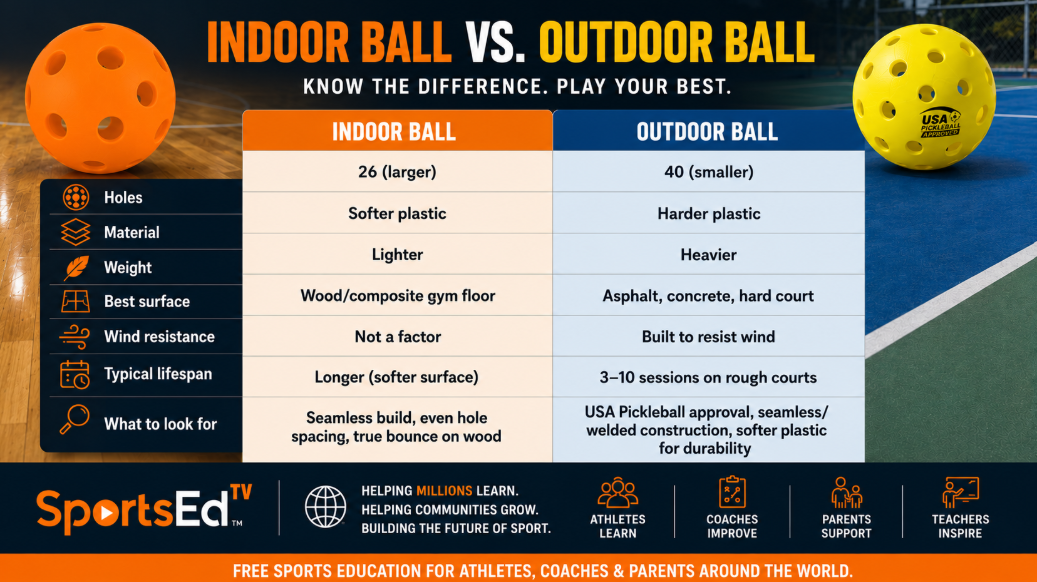
Indoor and outdoor pickleball balls differ in hole count, hardness, and weight — not in where you happen to be standing. Indoor balls have fewer, larger holes (usually 26), are made of softer plastic, and are built for smooth, controlled surfaces like gym wood floors. Outdoor balls have more, smaller holes (usually 40), harder plastic, and slightly more weight to cut through wind and hold up on rougher, textured surfaces like asphalt or concrete.
The label "indoor" or "outdoor" is really about the court surface, not the building. A hard-surfaced court inside a converted warehouse still calls for an outdoor ball. A wood gym floor calls for an indoor ball, even if it happens to be in the same facility as a hard court next door. This is the single most common point of confusion for new players, and it's why so many people buy the wrong ball on their first purchase.
How do I know which ball to buy for my court?
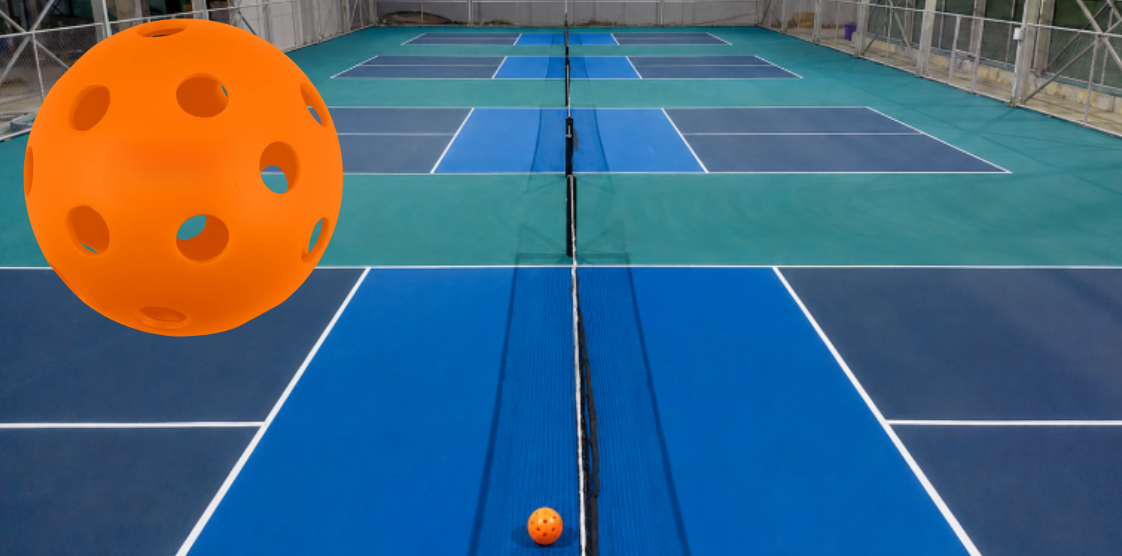
Look at the surface, not the roof. If you're playing on asphalt, concrete, or a converted tennis court — indoors or outdoors — buy an outdoor ball. If you're playing on a smooth wood or composite gym floor, buy an indoor ball. When in doubt, outdoor balls are the safer default: the large majority of dedicated pickleball facilities, including most "indoor" ones, use hard courts and therefore outdoor balls.
How many holes does a regulation pickleball have?
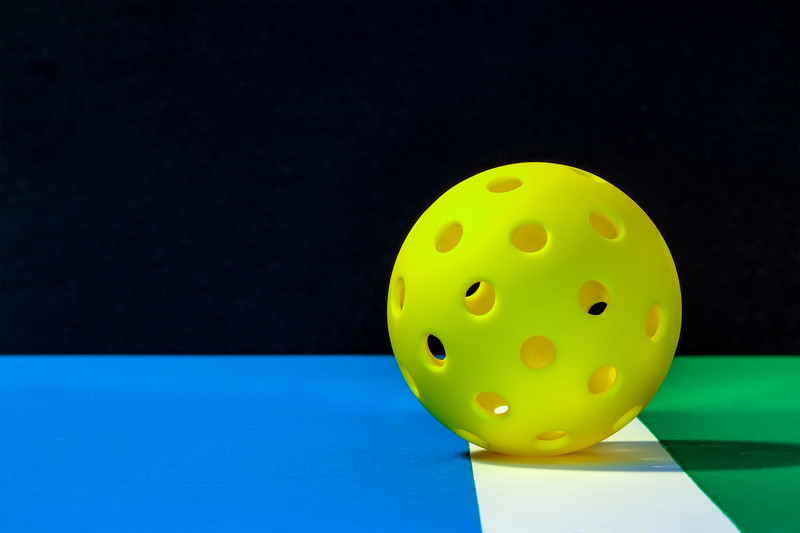
USA Pickleball rules require between 26 and 40 holes, depending on ball type. Indoor balls typically use 26 larger holes, which slow the ball down and make it easier to control on smooth surfaces. Outdoor balls typically have 40 smaller holes, which help them resist wind and maintain a stable flight path.
What weight and size should a pickleball ball be?
A regulation pickleball weighs between 0.78 and 0.935 ounces (22.1–26.5 grams) and must bounce between 30 and 34 inches when dropped from a height of 78 inches. Heavier balls perform better outdoors because wind has less effect on them; lighter balls are common indoors, where wind isn't a factor.
What should I actually look for when buying an outdoor ball?
Look for three things: USA Pickleball approval (required for tournament play and a good quality signal even if you never compete), a seamless, heat-welded or rotationally molded construction (seams are where balls crack first), and a softer-plastic option if you play often or in cold weather, since softer balls resist cracking longer than harder, faster ones. A harder ball will feel livelier and faster off the paddle, but trades away some durability — that's a fair trade for competitive players, less so for everyday recreational play.

What should I actually look for when buying an indoor ball?
Look for a seamless construction with evenly sized, precision-drilled holes (uneven holes cause a wobbly, unpredictable flight), a soft-but-not-mushy feel that gives a true bounce on wood or composite floors, and, if noise matters — shared gyms, apartment buildings, early-morning sessions — a foam or dampened-construction option built specifically to play quietly.
Why do pickleball balls crack so fast, and how do I make them last longer?
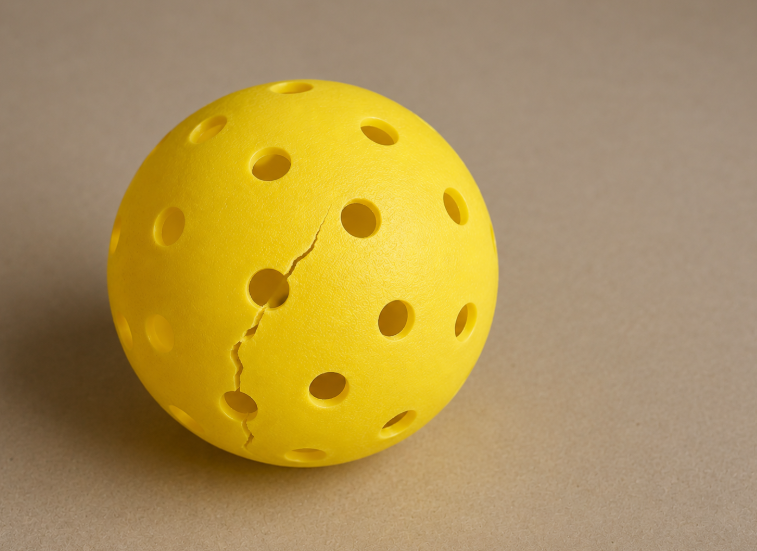
Pickleballs crack because repeated hard impacts stress the plastic at the hole edges, and this happens faster in cold weather or with aggressive hitters. Outdoor balls typically last 3 to 10 sessions before cracking or losing bounce, with harder hitters on rough asphalt at the low end of that range. Softer balls last longer overall but eventually go "squishy" rather than crack outright. To extend ball life: avoid playing your hardest outdoor balls in cold temperatures if you can help it, rotate a few balls in your bag instead of running one into the ground, and buy in bulk (6- or 12-packs) so a worn ball never delays your game.
How do I know when to replace a pickleball ball?
Replace a ball when you notice a visible crack, a soft or "squishy" feel on contact, an erratic or lower-than-usual bounce, or a ball that's visibly out of round. Playing on a compromised ball doesn't just hurt your game feel — it puts extra stress on your paddle and your arm from mis-timed contact.
What color pickleball ball should I buy?
For outdoor play, yellow or neon green offers the best visibility against sky and pavement. For indoor play, orange is the standard choice because it contrasts well against most gym floor colors — though if your court has orange or red flooring, a blue or dark-colored ball will stand out better. Choose a contrast color for your specific court, not just the "default" color.
Quick comparison: indoor vs. outdoor pickleball balls
Which pickleball ball should a beginner buy?
A beginner playing on a typical hard-surfaced local court should buy a 6-pack of USA Pickleball–approved outdoor balls in a softer, more forgiving construction rather than the hardest, fastest option on the shelf. That combination is durable enough that a new player won't need to replace balls every session, and it matches what most instructors and casual tournaments already use. Only switch to an indoor ball if your regular court is a wood gym floor — and only move toward a harder, faster ball once you're playing competitively and want a livelier feel.
Why I teach it this way
The habit I try to instill in every student, regardless of what ball they end up buying, is the one this guide leads with: check your court surface first, everything else second. Specific ball models come and go — brands get discontinued, sponsorships change, new constructions replace old ones — but the surface-to-ball match never does.
I see the same mix-up constantly in lessons and clinics, and it's echoed by other SportsEdTV coaches, too — Justin Romero, Executive Director of Pickleball at the USOP National Pickleball Center in Naples, runs programming on hard courts where new players regularly show up with the wrong ball, expecting it to behave the same as it would on a gym floor. Get the surface-to-ball match right, and everything else in this guide — hole count, weight, color, replacement timing — is just detail.

FAQ
Are indoor and outdoor pickleball balls interchangeable?
Not really. Using an indoor ball outside makes it fly erratically in the wind and wear out fast on rough surfaces; using an outdoor ball on a smooth indoor floor makes it skid and bounce unpredictably. Match the ball to the court surface, not the building.
Is pickleball ball selection really that important to my game?
Yes — ball choice measurably affects shot speed, bounce height, spin, and overall playability. Players who test multiple balls consistently report a different feel in control and pace between models, even within the same indoor or outdoor category.
How many pickleball balls should I keep on hand?
Most regular players keep at least a 6-pack in rotation, since balls wear out gradually and a cracked ball mid-game is a common, avoidable interruption. Buying in bulk also lowers the per-ball cost significantly.
Do professional pickleball tours use indoor or outdoor balls?
Outdoor balls. Even tournaments held in arenas are played on hard courts, so professional tours use outdoor balls that meet USA Pickleball's tournament approval standards.
About the Author
Teresa Tarn is a highly respected pickleball coach, educator, and content creator known for making the game approachable for players of all skill levels. A certified instructor with years of coaching experience, she specializes in helping beginners and intermediate players improve their technique, strategy, and confidence through clear, practical instruction. Teresa has contributed extensively to pickleball education through instructional videos, clinics, and coaching programs, earning recognition for her engaging teaching style and commitment to growing the sport.