Weightlifting training can be systematized. Many individuals entering the sport may not realize that there is a well-defined process for training athletes that accommodates the developmental level. This system was researched and implemented by the weightlifting coaches and sports scientists of the previous Eastern Bloc.
It was developed in recognition of the obvious fact that training must become more rigorous as a weightlifter progresses from beginner stages to intermediate to advanced levels. The training was divided into six classifications.
I personally have made use of this system in programming my weightlifters over a 50+ year period. This has resulted in performances that generated 35 qualifiers for the national championships, four national champions, multiple national records and multiple international team members. It works.
The international weight classes have recently been changed and this has resulted in a change of the qualifying totals for each class. I’ve recalculated them to enable programming and I present them in the following tables.

The women's 2025 table:
|
Weight Categories
|
Class 3
|
Class 2
|
Class 1
|
CMS
|
MS
|
IMS
|
|
48
|
80
|
85
|
95
|
110
|
130
|
165
|
|
53
|
85
|
95
|
105
|
120
|
140
|
180
|
|
58
|
95
|
105
|
115
|
130
|
150
|
190
|
|
63
|
95
|
110
|
120
|
140
|
160
|
205
|
|
69
|
100
|
115
|
130
|
150
|
170
|
215
|
|
77
|
105
|
120
|
140
|
160
|
180
|
220
|
|
86
|
110
|
130
|
150
|
170
|
190
|
230
|
|
>86
|
115
|
140
|
160
|
180
|
200
|
235
|
The men’s 2025 table:
|
Weight Categories
|
Class 3
|
Class 2
|
Class 1
|
CMS
|
MS
|
IMS
|
|
60
|
125
|
140
|
160
|
180
|
210
|
260
|
|
65
|
135
|
160
|
180
|
200
|
225
|
280
|
|
71
|
145
|
170
|
190
|
220
|
255
|
320
|
|
79
|
165
|
190
|
215
|
245
|
285
|
325
|
|
88
|
173
|
203
|
233
|
263
|
307
|
383
|
|
94
|
185
|
214
|
241
|
272
|
314
|
390
|
|
110
|
190
|
220
|
245
|
280
|
325
|
405
|
|
>110
|
190
|
220
|
245
|
280
|
325
|
415
|
The first 3 classes in each table represent the totals for beginners who are on the path to achieving qualifying for national-level events. The training, if well planned, for these classes is designed to prepare the athlete to enter into the more rigorous training of the top three classifications.
Those classifications are named Candidate for Master of Sport, Master of Sport, and International Master of Sport. Only the most gifted lifters will qualify for the final group.
If a lifter has been trained properly, the point at which progress stalls out is an indicator of the talent level of that individual. The speed at which an athlete progresses through the classifications is also a sound indicator of talent.
The ability of an athlete to recover from demanding training is one of the key indicators of talent as well. A top athlete will recover quickly from rigorous training and make steady and regular progress. The point at which training becomes challenging and requires consistent and varied recovery modalities is when an athlete’s mettle is tested.
All the training that takes place in this ascension through the classifications must be made up of well-planned macrocycles that use the accepted practices of sound periodization.

HOW THE TRAINING NUMBERS ARE CALCULATED FOR CLASS 3
I explained how weightlifting training is based on the best two-lift total achieved. This divides athletes into six categories. As an athlete progresses from Class 3 (the lowest category) to International Master of Sport (the highest category), the training volume increases in a systematic process that requires increasingly greater recovery capacity. While weightlifting talent is often focused on strength talent, it is the combination of strength talent and recovery ability that dictates the competitive potential.
Training is organized into macrocycles. A macrocycle is a training cycle that is divided into one or more mesocycles (months) focused on endocrine activation, called preparation, and a single mesocycle (month) focused on nervous system stimulation, called pre-competition.
Yearly Loading Parameters and Other Considerations
The ideal range of the annual volume for Class 3 athletes is from 7,000 to 9,000 lifts. The range of the number of these lifts that are snatches and clean &; jerks in the 90 to 100% range is from 200 to 300 lifts. The average range of the relative intensity of snatches and clean &; jerks should be 65% to 75%.
The recommended number of meaningful competitions is 4 to 5.
A recommended maximum number of hours for weightlifting training is 12 hours per week.
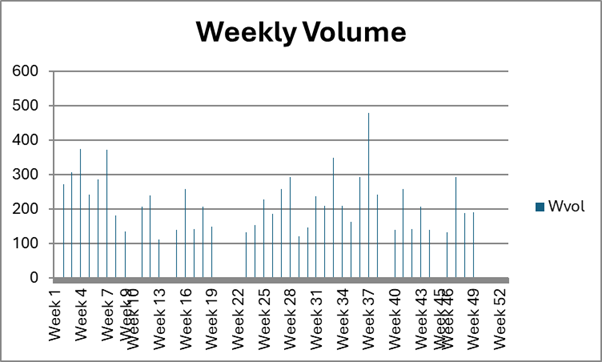
Table 1. The annual distribution of volume by weeks for a Class 3 lifter as proposed by Medvedyev.
This table displays the number of repetitions performed each week by a Class 3 lifter who is attending the Sport School. The bars provide an idea of how training is varied in a cyclical manner. The weeks with no vertical bars are competition weeks, and the repetitions performed in those weeks are not counted as part of the yearly volume. Competitions are scheduled for Weeks 10, 14, 20, 39, 45, and 50. There are two week breaks scheduled during the 21st, 22nd, 51st, and 52nd weeks.
The figures provided in this section are not to be slavishly followed, but are here to provide some idea of how the volume is distributed and to provide a representation of the concept of periodization.
Each week represents three to four workout days in most cases. These days are more or less evenly distributed, and during many of the interim days, the activity taking place is of a General Physical Preparation (GPP) nature.
During the weeks when no weightlifting training is scheduled, the lifter is participating in GPP activities that will continue to develop the vegetative qualities of the athlete for the training loads to be undertaken in the future.

Calculations
Annual Volume
The process of program planning begins with the allocation of volume (number of repetitions) properly in the units of months (mesocycles), weeks (microcycles), and then days. This process is made all the more difficult by the fact that the athlete is still in a developmental state and may not respond as effectively as expected of a more experienced athlete. Nonetheless, the process must be attempted with the coach making appropriate adjustments as the procedure progresses.
The number of repetitions for the first year is prescribed at 7,000 to 9,000. I’ve found that the best results are obtained by planning one preparation month followed by a pre-competition month. The pre-competition month should be followed by a transition week. This adds up to a total of 9 weeks per macrocycle. The athlete can therefore plan on 5 9-week macrocycles or 45 weeks of the training year.
Four weeks may be given over to vacation. These vacation weeks should be interspersed throughout the year so that the athlete does not have a single four-week break. This accounts for 49 weeks of the year. The 3 additional weeks can be added to preparation mesocycles to increase the training volume.
Monthly Volume
If 48 weeks are given over to training, this breaks up the year into 12 4-week mesocycles. For a total annual volume range of 7,000 to 9,000 reps, this breaks down to an average range of 583 to 750 reps per mesocycle. For a two-mesocycle period, this calculates out to a range of 1,166 to 1,500.
Since a reasonable ratio of preparation mesocycle volume to pre-competition volume is 1.5:1, it is possible to divide the aforementioned range by 5 for a quotient range of 233 to 300. Since the preparation month is made up of 3/5 of the time and the pre-competition month is 2/5, the range of reps is calculated as 699 to 900 for the preparation mesocycle and 466 to 600 for the pre-competition mesocycle.
Having calculated the ranges for the mesocycle or “month”, the calculation of the weekly volumes can commence.
Weekly Volume
In this volume range, the best distribution of volume for the four weeks is in the following percentages 35%, 28%, 22% and 15%. In an example of gradually descending weekly volumes, this means that 35% of the monthly volume is performed during week 1, 28% during week 2, 22% during week 3, and 15% during week 4. They do not have to be planned in this order, but the coach must keep in mind that the final week will impact the first week of the following month.
For the preparation month with a range of 699 to 900 reps, the weekly volumes will have the following ranges:
|
Week
|
1 (35%)
|
2 (28%)
|
3 (22%)
|
4 (15%)
|
|
Volume Range
|
245—315
|
196—252
|
154—198
|
105--135
|
If the exercises and percentages are properly assigned, these ranges will find that 63% of the volume will be lifted in the first two weeks, causing an impact on the endocrine system. The 3rd and 4th weeks will account for 37% of the reps. Some of this time in the third week will be given over to recovery from the first two weeks, but the very light volume of the fourth week will allow for a high volume in the first week of the following month.
Another effective distribution of the weekly volumes might be 35%, 22%, 28%, 15% or even 35%, 15%, 28%, 22%. These sequences can be adjusted by the coach as deemed necessary by the response of the athlete.
The arrangement of the weeks may be modified by the coach as necessary in response to the fitness of the athlete. It is generally beneficial to have the first week bear the largest volume. Many athletes, especially the younger and lighter ones, may still feel energetic at the end of the first week, and thus the second week can be of a sufficient load to further impact the body. The lightest week should be the last week as this provides for restoration before the next Mesocycle commences.
For the Pre-competition month with a range of 466 to 600 reps, the weekly volumes will have the following ranges:
|
Week
|
1 (35%)
|
2 (28%)
|
3 (22%)
|
4 (15%)
|
|
Volume Range
|
163—210
|
130—168
|
102—132
|
69—90
|
In a pre-competition month, the weekly volumes can also be rearranged, but Week 4 should always have the lowest volume since it immediately precedes the competition.
Daily Volume
The weekly volume can now be distributed into the daily volumes with the following prescribed percentages. These percentages are being presented in ascending order. They are not necessarily to be assigned during these days. The training days are designated here to show the distribution of training sessions throughout the week.
|
No. of Workouts/Week
|
Day 1
|
Day 2
|
Day 3
|
Day 4
|
Day 5
|
Day 6
|
|
3
|
26%
|
|
32%
|
|
42%
|
|
|
4
|
15%
|
22%
|
|
28%
|
|
35%
|
|
5
|
13%
|
15%
|
15%
|
|
27%
|
30%
|
|
6
|
11%
|
11%
|
11%
|
19%
|
22%
|
26%
|
These daily volumes can also be arranged in different sequences while keeping in mind how the volume from a given day might impact the training in a subsequent session. A day of large volume should be followed by a day of light volume or rest in order to allow the body to take on a larger volume on the next training day.
For a class 3 athlete, the optimal number of training sessions is generally in the 3 to 4 per week range. During exceptionally high volume weeks a five day training week may be planned.
For a Class 3 athlete with a preparation mesocycle week of 300 reps, the volumes might be distributed over 4 training days as follows;
Day 1: 105 (35%), Day 2: 45 (15%), Day 3 rest, Day 4: 84 (28%), Day 5: 66 (22%), Day 6 rest, Day 7 rest.
Sample Training
With the following guidelines in place, and a list of available exercises available for selection, the calculations can be made to determine the volumes for each training day.
For a macrocycle composed of one preparation mesocycle and one pre-competition mesocycle, the volumes can be represented in the following table and graph. The percentages in the tables represent the repetitions or volumes, and not the intensity of the weights.
|
Mesocycle
|
Preparation Mesocycle (900 reps)
|
|
|
|
Weeks
|
1
|
|
|
2
|
|
|
|
3
|
|
|
4
|
|
|
|
Weekly Percent
|
22%
|
|
|
35%
|
|
|
|
15%
|
|
|
28%
|
|
|
|
Weekly Volume
|
198
|
|
|
315
|
|
|
|
135
|
|
|
252
|
|
|
|
No. of Days
|
3
|
|
|
4
|
|
|
|
3
|
|
|
3
|
|
|
|
Days
|
M
|
W
|
F
|
M
|
Tu
|
Th
|
Sa
|
M
|
W
|
F
|
M
|
W
|
F
|
|
Daily Percent
|
42%
|
26%
|
32%
|
22%
|
35%
|
15%
|
28%
|
42%
|
26%
|
32%
|
32%
|
26%
|
42%
|
|
Daily Volume
|
83
|
51
|
63
|
69
|
110
|
47
|
88
|
57
|
35
|
43
|
81
|
66
|
106
|
The Preparation mesocycle
|
Mesocycle
|
Pre-Competition Mesocycle (600 reps)
|
|
|
|
Weeks
|
5
|
|
|
6
|
|
|
|
7
|
|
|
8
|
|
|
|
Weekly Percent
|
28%
|
|
|
35%
|
|
|
|
22%
|
|
|
15%
|
|
|
|
Weekly Volume
|
168
|
|
|
210
|
|
|
|
132
|
|
|
90
|
|
|
|
No. of Days
|
3
|
|
|
4
|
|
|
|
3
|
|
|
3
|
|
|
|
Days
|
M
|
W
|
F
|
M
|
Tu
|
Th
|
Sa
|
M
|
W
|
F
|
M
|
Tu
|
Th
|
|
Daily Percent
|
26%
|
42%
|
32%
|
35%
|
15%
|
28%
|
22%
|
42%
|
32%
|
26%
|
42%
|
32%
|
26%
|
|
Daily Volume
|
44
|
71
|
54
|
74
|
32
|
59
|
46
|
55
|
42
|
34
|
38
|
29
|
23
|
The Pre-competition mesocycle
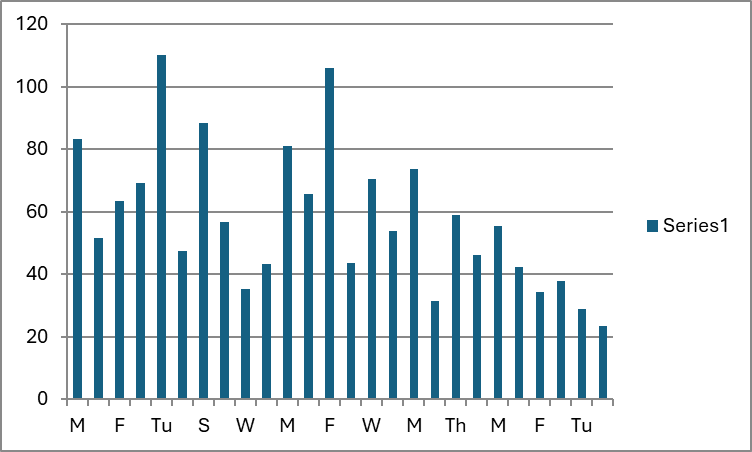
The graph representing the daily volumes of a two-mesocycle macrocycle for a Class 3 weightlifter.
Notation Conventions in the Standard Programs
The percentage figures provided are based on the four 100% maxima described in Chapter 8. The denominator is the number of repetitions performed with that intensity. If there are parentheses, the coefficient is the number of sets. For compound exercises, e.g., Power Snatch &; Overhead Squat (60%/3+3), the first number of the denominator is the number of repetitions for the first exercise, and the second number is the number of repetitions for the second exercise. Whether the two exercises are performed in an alternating pattern or if all the repetitions of the first exercise are completed before the second exercise is performed is left to the discretion of the coach. In the case of lunges, the two numbers represent the reps performed with the right leg forward and then the number of reps performed with the left leg, in no particular order.
The three numbers at the right of each line, separated by colons, represent, respectively, the number of repetitions performed in that particular exercise, the number of repetitions performed in that training day, and the number of repetitions performed in that training week. Thus, 12:52:135 means 12 repetitions of the given exercise are prescribed, while 52 represents the number of repetitions performed that day, and 135 represents the number of repetitions performed that week. This convention allows me to keep track of the training volume.
Week 1 (Preparation Mesocycle) 198 repetitions
The numbers to the right represent the number of repetitions in the exercise, respectively, the number of repetitions in the workout, and the number of repetitions for the week.
Day 1—Monday (83 repetitions)
1)Hang Power Snatch: 50%/3, 60%/3, 65%/3, (70%/2)2 13:13:13
2)Behind the Neck Power Jerk: 50%/3, 60%/3, (65%/3)2, (70%/2)2 16:29:29
3)Back Squat: 60%/3, (70%/3)2, 80%/3 12:41:41
4)Snatch Deadlift: (80%/3)2, (85%/3)2 12:53:53
5)Press: (X/4)4 16:69:69
6)Hyperextension: (X/7)2 14:83:83
Day 3—Wednesday (51 repetitions)
1)Clean: 50%/3, 60%/3, 70%/3, (75%/3)2 15:15:98
2)Front Squat: 60%/3, (70%/3)2, 80%/3 12:27:110
3)Push Press: 50%/3, 60%/3, 65%/3 (70%/2)2 13:40:123
4)Good Morning: (X/4)3 12:52:135
Day 5—Friday (63 repetitions)
1)Snatch: 50/2, 60%/3, 70%/3, (75%/3)2, (80%/2)2 18:18:153
2)Back Squat: 60%/3, (70%/3)2, (80%/3)2 15:33:168
3)Clean Deadlift: (80%/4)4 16:49:184
4)Overhead Squat: 50%/3, (60%/3)2, (70%/3)2 15:64:199
Week 2 (Preparation Mesocycle) 315 repetitions
Day 8—Monday (69 repetitions)
1)Hang Power Clean: 50%/3, 60%/3, 65%/3, (70%/3)2 15:15:15
2)Snatch High Pull: 70%/3, (80%/3)3 12:27:27
3)Power Jerk: 60%/3, 65%/3, (70%/3)2 12:39:39
4)Bench Press: (X/4)4 16:55:55
5)Hyperextension: (X/7)2 14:69:69
Day 9—Tuesday (110 repetitions)
1)Snatch off blocks: 50%/3, 60%/3, 65%/3, 70%/3, (75%/3)2 18:18::87
2)Power Clean: 50%/2, 60%/2, (70%/2)2 08:26:95
3)Jerk off Rack: 60%/3, 70%/3, (75%/3)3 15:41:110
4)Back Squat: 60%/4, (70%/4)2 (75%/4)2 20:61:130
5)Snatch Deadlift with 2 halts: (75%/3)2, (80%/3)3 15:76:145
6)Press: (X/4)4 16:92:161
7)Good Morning: (X/6)3 18:110::179
Day 11—Thursday (47 repetitions)
1)Behind the Neck Push Press: 50%/3, 60%/3, 65%/3, (70%/3)2 15:15:194
2)Overhead Squat: 50%/4, 60%/3, 65%/3, 70%/3 13:28:207
3)Clean Deadlift: 70%/4, (80%/4)4 20:48:227
Day 13—Saturday (88 repetitions)
1)Power Snatch: 50%/3, 60%/3, 65%/3, (70%/2)2 13:13:240
2)Clean &; Jerk: 60%/3+2, 70%/3+2, 75%/2+1, (80%/2+1)2 19:32:259
3)Snatch High Pull: (80%/3)4 12:44:271
4)Front Squat: 60%/4, 70%/4, 75%/3, (80%/3)2 17:61:288
5)Lunge with bar between legs: (X/3+3)4 24:85:312
Week 3 (Preparation Mesocycle) 135 repetitions
Day 15—Monday (57 repetitions)
1)Snatch: 50%/2, 60%/2, 70%/2, 80%/2, 85%/1, 90%/1 10:10:10
2)Power Clean: 50%/2, 60%/2, 65%/2, (70%/2)2 10:20:20
3)Back Squat: 60%/3, 70%/3, 80%/3, 85%/2, 80%/3 14:34:34
4)Clean Deadlift: 80%/3, 85%/3, (90%/2)2 10:44:44
5)Press: (X/3)4 12:56:56
Day 17—Wednesday (35 repetitions)
1)Overhead Squat: 50%/4, 60%/4, 65%/3, (70%/3)2 17:17:73
2)Front Squat: 60%/3, 70%/3, (80%/2)2, 75%/2 12:29:85
3)Good Morning: (X/3)3 09:38:94
Day 19—Friday (43 repetitions)
1)Hang Clean: 60%/2, 70%/2, (80%/2)3 10:10:104
2)Jerk off Rack: 60%/2, 70%/2, (80%/2)2 08:18:112
3)Back Squat: 60%/2, 70%/2, 80%/2, (85%/2)2 10:28:122
4)Snatch Deadlift: 70%/3, (80%/3)3 12:40:134
Week 4 (Preparation Mesocycle) 252 repetitions
Day 22—Monday (81 repetitions)
1)Clean &; Jerk: 60%/2+1, 70%/2+1, 75%/2+1, (80%/2+1)2 15:15:15
2)Hang Power Snatch: 50%/3, 60%/3, 65%/3, (70%/2)2 13:28:15
3)Back Squat: 60%/4, 70%/4, (75%/4)2, (80%/3)2 22:50:50
4)Behind the Neck Push Press: 50%/3, 60%/3, 65%/3, (70%/2)2 13:63:63
5)Overhead Lunge: (X/3+3)3 18:81:81
Day 24—Wednesday (66 Repetitions)
1)Snatch off blocks: 50%/3, 60%/3, 70%/3, 80%/3, 85%/1 13:13:94
2)Snatch High Pull off blocks: (90%/3)4 12:25:106
3)Front Squat: 60%/3, 70%/3, 80%/3, 85%/2, 75%/3 14:39:120
4)Power Jerk: 50%/3, 60%/3, 65%/3, 70%/3, 65%/2 14:53:134
5)Good Morning: (X/7)2 14:67:148
Day 26—Friday (106 repetitions)
1)Power Clean: 50%/3, 60%/3, 65%/3, 70%/3, 65%/3 15:15:163
2)Hang Power Snatch &; Overhead Squat:
50%/1+3, 60%/1+3, 65%/1+3, (70%/1+3)2 20:35:183
3)Clean Extension: 70%/4, (80%/3)3 13:48:196
4)Back Squat: 60%/3, 70%/3, (80%/3)2, (85%/2)2 16:64:212
5)Press: (X/4)4 16:80:228
6)Lunge: (X/3+3)4 24:104:252
Week 5 (Pre-competition Mesocycle) 168 repetitions
Day 29—Monday (44 repetitions)
1)Snatch: 60%/2, 70%/2, 80%/2, 85%/2, 90%/1 09:09:09
2)Power Clean &; Power Jerk: 50%/3+3, 60%/2+2, 65%/2+2, 70%/2+2 18:27:27
3)Front Squat: 60%/3, 70%/3, 75%/3, 80%/3, 85%/2 80%/3 17:44:44
Day 31—Wednesday (71 repetitions)
1)Power Snatch &; Overhead Squat: 50%/3+3, 60%/2+2, 65%/2+2, 70%/2+2 18:18:62
2)Clean: 60%/2, 70%/2, 75%/2, 80%/2, 85%/2, 90%/1, 85%/2 13:31:75
3)Snatch High Pull: 80%/3, 85%/2, (80%/3)2 11:42:86
4)Back Squat: 60%/3, 70%/3, 80%/3, 85%/2, 80%/3 14:56:100
5)Press: (X/3)5 15:71:115
Day 33—Friday (54 repetitions)
1)Snatch High Pull &; Snatch: 60%/2+2, 70%/2+1, 80%/2+1, 85%/2+1 12:12:127
2)Hang Power Clean: 50%/3, 60%/3, 65%/3, 70%/3 12:24:139
3)Front Squat: 60%/2, 70%/2, 80%/2, 85%/2, 80%/2 10:34:149
4)Clean High Pull: (80%/2)4 08:42:157
5)Bench Press: (X/3)4 12:54:169
Week 6 (Pre-competition Mesocycle) 210 repetitions
Day 36—Monday (74 repetitions)
1)Snatch: 60%/2, 70%/2, 80%/2, 85%/2, 90%/1, 85%/2 11:11:11
2)Power Clean &; Power Jerk: 50%/2+2, 60%/2+2, 65%/2+2, (70%/2+2)2 20:31:31
3)Snatch Deadlift with 2 halts: (80%/3)4 12:43:43
4)Back Squat: 60%/3, 70%/3, 80%/2, (85%/2)2, (90%/1)2 14:57:57
5)Push Press: 50%/3, 60%/3, 65%/3, (70%/3)3 18:75:75
Day 37—Tuesday (32 repetitions)
1)Clean &; Jerk: 60%/2+2, 70%/2+2, 80%/2+1, 85%/2+1, 90%/1+1, 85%/2+1 19:19:94
2)Clean Extension: (80%/3)4 12:32:106
Day 39—Thursday (59 repetitions)
1)Hang Power Snatch; 50%/3, 60%/3, 65%/2, (70%/2)3 14:14:120
2)Snatch High Pull: 80%/3, (85%/2)3 09:23:129
3)Front Squat: 60%/3, 70%/3, 80%/3, 85%/3, 90%/2, 85%/3 17:50:146
4)Press: (X/3)3 09:59:155
Day 41—Saturday (46 repetitions)
1)Power Clean: 50%/3, 60%/3, 65%/3, (70%/3)2 15:15:170
2)Jerk off rack: 60%/3, 70%/3, 75%/3, (80%/3)2 15:30:195
3)Clean deadlift: (85%/3)5 15:45:210
Week 7 (Pre-competition mesocycle) 132 repetitions
Day 43—Monday (55 repetitions)
1)Snatch: 60%/1, 70%/1, 80%/1, 85%/1, 90%/1, 95%/1, 90%/1 08:08:08
2)Clean &; Jerk:
60%/1+1, 70%/1+1, 80%/1+1, 85%/1+1, 90%/1+1, 95%/1+1, 90%/1+1 16:24:24
3)Front Squat: 60%/2, 70%/2, 80%/2, 85%/2, 90%/1, 95%/1, 85%/2 12:36:36
4)Snatch High Pull: (85%/2)4 08:44:44
5)Press: (X/3)4 12:56:56
Day 45—Wednesday (42 repetitions)
1)Power Snatch: 50%/2, 60%/2, 65%/2, 70%/2, 75%/1 09:09:65
2)Power Clean &; Power Jerk: 50%/2+1, 60%/2+1, 65%/2+1, 70%/2+1, 75%/1+1 14:23:79
3)Clean High Pull: 80%/3, 85%/2, (90%/2)2 09:32:88
4)Back Squat: 60%/2, 70%/2, 80%/2, 85%/2, 90%/2, 95%/1, 85%/2 11:43:99
Day 47—Friday (34 repetitions)
1)Snatch: 60%/1, 70%/1, 80%/1, 85%/1, 90%/1, 95%/1 06:06:105
2)Clean &; Jerk: 60%/1+1, 70%/1+1, 80%/1+1, 85%/1+1, 90%/1+1, 95%/1+1 12:18:117
3)Front Squat: 60%/2, 70%/2, 80%/2, 85%/2, 90%/1, 95%/1, 85%/2 12:30:129
Week 8 (Pre-competition mesocycle) 90 Repetitions
Day 50—Monday (38 repetitions)
1)Snatch: 60%/2, 70%/2, 80%/2, 85%/2 08:08:08
2)Clean &; Jerk: 60%/2+1, 70%/2+1, 80%/2+1, 85%/2+1 12:20:20
3)Front Squat: 60%/2, 70%/2, 80%/2, 85%/2 08:28:28
4)Press: (X/3)4 12:40:40
Day 51—Tuesday (29 repetitions)
1)Power Snatch: 60%/2, 65%/2, (70%/2)2 08:08:48
2)Power Clean &; Jerk: 60%/2+1, 65%/2+1, (70%/2+1)2 12:20:60
3)Back Squat: 60%/2, 70%/2, (80%/2)2 08:28:68
Day 53—Thursday (23 repetitions)
1)Power Snatch: 60%/2, 65%/2, 70%/2 06:06:74
2)Power Clean &; Jerk: 60%/2+1, 65%/2+1, 70%/2+1 09:15:83
3)Snatch: Extension: (80%/2)4 08:23:91
Day 55—Saturday
Competition
At this competition, the athlete should be capable of lifting personal records in the snatch and clean &; jerk, provided that the psychological preparation has been appropriate, the warm-up has been well managed, and the competition weights have been properly selected.
After the competition, the task of the coach is to determine whether or not the training was effective, to what extent it was effective, and what modifications need to be administered in the next macrocycle.