Here's the full blog, SEO/AEO optimized, clean prose format:
Pressure-Driven Performance
You know the feeling. In practice, you're free. The ball comes, you swing, and it goes where you meant it to. You move well, you feel the strings, you play the tennis you know you have. Then the match starts — and somewhere around four-all in the first set, a different player turns up wearing your shirt.
It's the most common complaint in all of tennis. Coaches hear it more than almost anything else: I play so much better in practice than in matches. And it carries a particular kind of frustration, because it isn't a talent problem. You're not asking how to hit a better backhand. You've got the backhand. You hit it beautifully on Tuesday. You just can't find it at five-all on Saturday.
So you do what everyone tells you. You try to relax. You breathe. You tell yourself it's just a match, it doesn't matter, stay positive, focus on the process. And it doesn't work — or it works for a game and then deserts you the moment it actually counts. After years of this, you start to wonder if some people are just born with it and you're not.
I want to offer you a different explanation. Not because it's kinder, but because it's true — and because once you see it, you can train it.

Why do tennis players perform better in practice than in matches?
In practice, players operate in automatic mode — strokes run on trained instinct without conscious interference. Under match pressure, the brain shifts into a slower, supervisory mode, consciously monitoring movements that normally happen automatically. This disrupts timing, fluency, and feel. The fix isn't mental — it's training a pressure routine so reliable that instinct takes over when it matters most.
Why Even Pro Tennis Players Rarely Feel "On"
Here's something that should change how you think about all of this. The players walking out onto the grass at Wimbledon next week — qualifiers, main draw, the names you know — most of them, most days, do not feel great either.
I've spent a lot of time around touring professionals, and what surprises people is how rarely any of them feel "on." They wake up flat. They don't feel the ball cleanly onto the strings. Their timing is half a beat off. Their feet feel slow. One pro told me he felt genuinely good maybe one percent of the time — and the rest of the time he simply had to find a way to win anyway.
Sit with that. The best players in the world, on the sport's biggest stage, mostly competing without their A-game — and still winning the matches, the ranking points, the prize money. Roger Federer, in his now-famous commencement speech, pointed out that across the nearly 1,500 matches of his career, he won almost 80% of them — but only 54% of the points. Even the greatest player of his era lost nearly half of every point he ever played.
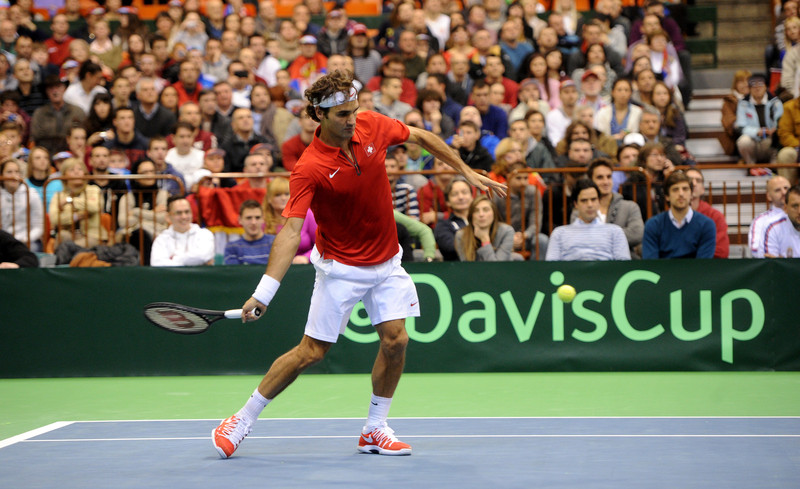
Roger Federer - Davis Cup 2014
If feeling good were the requirement for winning, professional tennis would be impossible. It isn't the requirement. It never was. And that single realization is the doorway out of the practice-court problem — because if your good tennis only shows up when you feel good, you've built your whole game on the one thing that almost never reliably arrives.
Why "Just Relax" Doesn't Work Under Pressure
Under pressure, the brain does something specific and well-documented. It stops trusting the body to do what it has done ten thousand times, and it starts supervising. You begin consciously monitoring strokes that normally run on their own. You think about your toss. You manage your follow-through. You steer.
And here's the cruel part: that conscious, supervising mind is far too slow and far too narrow to run a tennis stroke. A served ball arrives in under half a second. There is no time for deliberate, step-by-step control. Your trained game lives in a fast, automatic, instinctive channel — and the moment pressure drags you into the slow, conscious channel, the tennis you own gets worse. Tighter. More mechanical. Exactly the player who turned up at four-all.
This is why "just relax" has never fixed it for you. The advice asks your conscious brain to solve a problem that your conscious brain is causing. You cannot think your way loose, because the thinking is the tightness. Telling a tense player to "stop thinking and play freely" is like telling someone to stop noticing the word "blue." The instruction guarantees the opposite.
The honest truth almost nobody in the mental-game world will tell you: you don't fix this between the ears with better thoughts. You fix it by building an instinct so trustworthy that, when the pressure comes, there's something solid to hand the controls to.
How Djokovic Wins Tight Matches Without Going for Winners
Watch the best pressure player of the modern game, and you'll see the principle in the flesh.
Novak Djokovic is, by common consent, the finest tie-break player the game has seen. So you'd expect, when it tightens to seven-all in the breaker, to see fireworks — the moment to take the match by the throat. You don't. You get something far more uncomfortable to play against.
Ball after ball, hard and deep, rising off the court, down the middle — a couple of meters either side of the center line. No angles. No lines. Nothing flashy. Just heavy, early, relentless, right at you. And it's horrible to face. The depth keeps pushing you back. There's no width to feed off, no pace to redirect, no easy way out. The pressure never lifts, so it builds — in your legs first, then in your head.
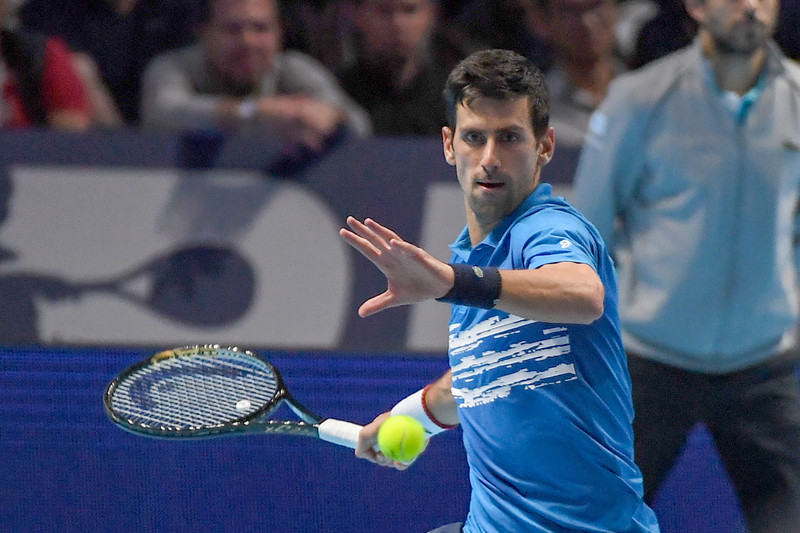
And under that weight, you are the one who cracks. You go for the winner that finally makes him stop, or you reach for an angle to buy yourself some air. But the winner is low-percentage with a tight arm, and the angle off a deep, heavy ball comes back as a half-angle that sits up. Either way, the point is his.
Here's the part that matters: he didn't win most of those points. You lost them. And that was the plan.
It works because of a truth most club players have never had spelled out. Across a match, errors decide roughly four points in five. Clean winners account for only about one in five — and of those, perhaps half have a slice of luck in them, a ball that caught the line or came off the sweet spot. Truly constructed, repeatable winners are few and far between. So the best pressure player alive doesn't chase the sliver. He builds pressure, refuses to miss, and forces you to come up with the impossible shot. He isn't trying to take the point. He's making you give it to him.
That is not talent you're watching. It's a pattern, run without flinching at the highest pressure in the game. And a pattern is trainable.

You Don't Need to Be a Better Player — You Need a Pressure Routine
You do not need to become a better player to win the matches you keep losing. At your level, the player who loses the tight ones and the player who wins them are, on the day, very nearly the same player. The difference is a handful of points — the ones where the head stayed clear and the trained pattern held. It's the difference between a 7-6, 7-6 you'll replay all week and a 6-2, 6-1 that felt routine. Same shots. Same forehand you hit so well on Tuesday. A different person holding the racket.
You can't add ten miles an hour to your serve this month. You can change who shows up at four-all, deuce — and that change is faster than almost anything else in the game, because you're not learning new tennis. You're learning to let the tennis you already own survive the heat.
Here's a place to start, today. Build yourself a routine between points and run it every time, whether you won the last one or lost it. Forget — touch the emotion, let the point go, eyes to your strings, one slow breath to empty your head. Fill — load the next ball completely: where you're serving, the shape of the shot, the target. Crowd your mind so full of the concrete task that there's no room left for the story about losing. Fire — then let go and play, no steering, no outcome, just the shot you've trained. Forget, fill, fire. It sounds simple. Under real pressure, it's the difference between your A-game and the stranger in your shirt.
The Method Behind Playing Your Best When It Matters Most
I didn't come to this through tennis. I came to it through the Army.
I trained for Northern Ireland — house-to-house, street-to-street, with the threat hidden in plain sight among schoolchildren and crowds. You drill a dozen skills at once, under simulated pressure, until they're automatic. I once told my staff sergeant I could do every drill on the range, but I was afraid of what I'd actually do when the sniper fired, or the petrol bombs came out of nowhere. He gave me the line I've never forgotten: "Trust the training, sir. The training will kick in."
Years later, I stood on a grass court at Wimbledon, two match points up on a number one I wasn't supposed to beat — and I found a way to lose, sabotaged by my own nerves the moment it was there to be taken. Head buried in my towel afterward, I remembered my sergeant's words, and wondered why tennis had no training you could trust to kick in when it was all on the line. I made it my mission to build one. That became the TRUST method, five years in the making, tested with players of all ages and levels around the world.
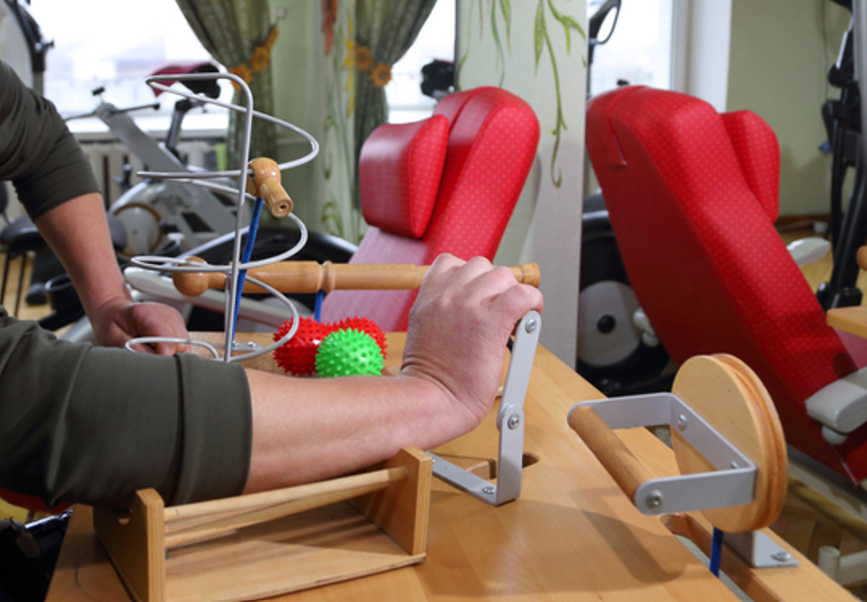
Then it was tested on me. A severe stroke took my movement, my balance, and my walking in fifteen minutes. In the rehab gym, they manipulated one muscle at a time, and I knew it wouldn't be enough. So I asked the same question the method asks of a tennis player: what is the four percent I can train thousands of times to win back the sixty-four? The answer came back: heel to toe. I did it ten thousand times, holding the bed rail, training my brain to send one signal. I walk now — heel to toe — because of the very thing I teach.
That's why I can tell you, with complete confidence, that the tennis you leave on the practice court is not lost. It's just untrained for the moment that matters. And that moment can be trained.
This Applies Beyond Tennis
The principle holds for every ball-striking sport played under pressure — pickleball, golf, baseball, squash, and table tennis. Wherever there's a swing, a target, and a moment that counts, the same truth applies: you don't think your way loose, you train an instinct you can trust.

Frequently Asked Questions
Why do I play better in tennis practice than in matches?
In practice, there is no consequence, so the brain stays out of the way and lets trained instinct run your strokes. In matches, perceived stakes trigger conscious supervision of movements that normally happen automatically — slowing them down and making them mechanical. The solution is building a between-point routine that returns your brain to automatic mode before each ball.
Why do I get nervous in tennis matches, and how do I stop it?
Nerves are the brain's threat response to situations where the outcome feels uncertain and important. You cannot eliminate them, and trying to suppress them makes them worse. What you can do is train a reliable pre-point routine — a specific sequence of actions between points — that gives the nervous system something concrete to execute instead of spiraling into outcome thinking.
What is the best pre-point routine in tennis?
A proven structure is Forget, Fill, Fire. After each point: release the emotion and reset physically (Forget); load the upcoming shot with a specific target, pattern, and intention (Fill); then execute without steering or monitoring (Fire). The routine works because it occupies the conscious mind with a concrete task, leaving the trained stroke free to run automatically.
How does Novak Djokovic perform under pressure in tiebreaks?
Djokovic's tiebreak strategy is built around relentless depth and consistency rather than aggression. He hits heavy balls down the middle, denying opponents angles and building pressure until they attempt a low-percentage shot. Because errors account for roughly four out of every five points in professional tennis, this approach wins more points through opponents' mistakes than through outright winners.
Can choking under pressure in tennis be fixed through training?
Yes. Choking is not a character flaw — it is a predictable neurological response to perceived threat that pulls a player out of automatic mode and into slow conscious control. Training a specific pressure routine, rehearsed under simulated match conditions until it becomes instinctive, consistently reduces the gap between practice performance and match performance.
Does mental game coaching actually improve tennis match performance?
Conventional mental coaching that focuses on positive thinking or relaxation techniques has limited effectiveness because it asks the conscious mind to solve a problem that it is causing. Approaches that instead train automatic, pre-point behavioral routines — rehearsed under pressure until they run without effort — show measurable improvement in competitive performance at all levels.
Mark Jeffery, a former Army tennis champion in singles and doubles, teaches performance under pressure with Grand Slam coaches Vlado Platenik and Dan Kiernan. Want to know where your own game cracks first under pressure? The Clutch Quotient — a free four-minute diagnostic — gives you the number underneath your rating and the one thing to train on next. Register for early access.