Becoming a Weightlifting Coach: What the Journey Really Looks Like
If you’re one of those individuals considering becoming a weightlifting coach, it might be a good idea to consider what’s involved and what’s in store. After all, no one is writing novels about weightlifting coaches, nor making well-circulated films about them. Now, even though fictional media often gets things wrong, we don’t even have an inaccurate representation of what weightlifting coaching entails. So who becomes a weightlifting coach?
The majority of coaches are not former great lifters. Many were, and/or are, current competitors and felt a desire to share their experience with other aspiring lifters. Now, while many lifters aspire to greatness, most novice coaches are not as ambitious. As time passes, however, many coaches will decide to pursue more ambitious goals. Some will become addicted to coaching and begin seeking a path to fulfill their ambitions.
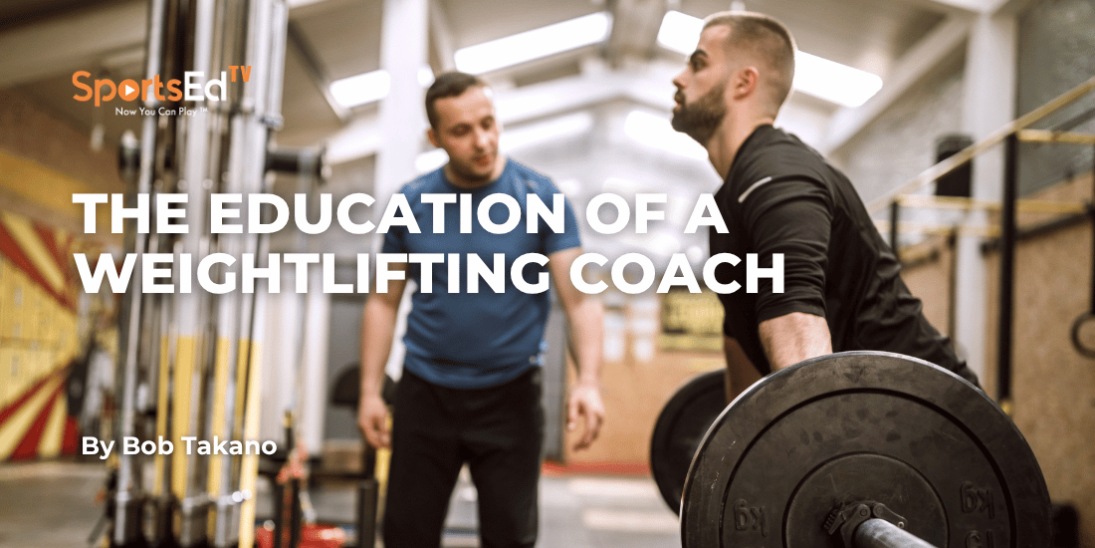
Unfortunately, there are no available standardized curricula for weightlifting coaches. Beyond the USAW L1 and L2, there are no formalized programs to provide further education for coaches. It’s pretty much up to coaches to become autodidacts. In this article, I’d like to offer some suggestions to further weightlifting coaching knowledge.

Becoming a Weightlifting Coach: What the Journey Really Looks Like
If you’re one of those individuals considering becoming a weightlifting coach, it might be a good idea to consider what’s involved and what’s in store. After all, no one is writing novels about weightlifting coaches, nor making well-circulated films about them. Now, even though fictional media often gets things wrong, we don’t even have an inaccurate representation of what weightlifting coaching entails. So who becomes a weightlifting coach?
The majority of coaches are not former great lifters. Many were, and/or are, current competitors and felt a desire to share their experience with other aspiring lifters. Now, while many lifters aspire to greatness, most novice coaches are not as ambitious. As time passes, however, many coaches will decide to pursue more ambitious goals. Some will become addicted to coaching and begin seeking a path to fulfill their ambitions.
Unfortunately, there are no available standardized curricula for weightlifting coaches. Beyond the USAW L1 and L2, there are no formalized programs to provide further education for coaches. It’s pretty much up to coaches to become autodidacts. In this article, I’d like to offer some suggestions to further weightlifting coaching knowledge.
Where Weightlifting Coaches Gain Knowledge
Factual Knowledge
The obvious sources of knowledge still hold here:
- Publications
- Videos
- Conferences
- Courses
The problem is determining the veracity of the sources. Peer-reviewed articles that deal with the specific topic are helpful as are articles covering related topics. Anyone, however, can produce videos and post them, so it is up to the viewer to determine their value.
The same caution applies to conferences and courses. While there are very few sources devoted exclusively to weightlifting coaching, there are events that provide content on diet, recovery, mobility, explosiveness, and strength development that can contribute to the overall knowledge of the coach.
Learning Through Apprenticeship in Weightlifting
If you can find an active weightlifting club in your area, you might inquire whether they would be open to having a volunteer coach work with their athletes. This will provide opportunities to work with athletes of varying levels as well as a chance to observe how an experienced coach plies his/her craft.
For many developing coaches, this practical experience becomes one of the most valuable forms of education because it exposes them to real athlete behavior, competition preparation, technical correction, and day-to-day coaching decisions.

Why Coaches Should Document Their Own Coaching
While you are coaching, you should keep a journal to document the insights you encounter on your journey. It might include anecdotes about a specific situation and the questions that come to mind.
You may even come up with solutions, only to find later that they were not all valid and thus remain queries.
Over time, documenting training observations, athlete responses, technical errors, and competition outcomes can help coaches recognize patterns and refine their coaching philosophy.
The Importance of Informal Coaching Discussions
One of the most valuable parts of my coaching education was the insights I gleaned from informal coaching discussions.
I was fortunate to have established a relationship with my own coach, Bob Hise II, who was well-connected in the international coaching community. Anytime an international-level coach came to town, he would connect with Bob, and I’d tag along just to hear the banter. This was especially helpful.
If you are a new coach, you could strike up a relationship with a veteran coach with whom you could hang out at national events. This will likely give you opportunities to join discussions with other veteran coaches.
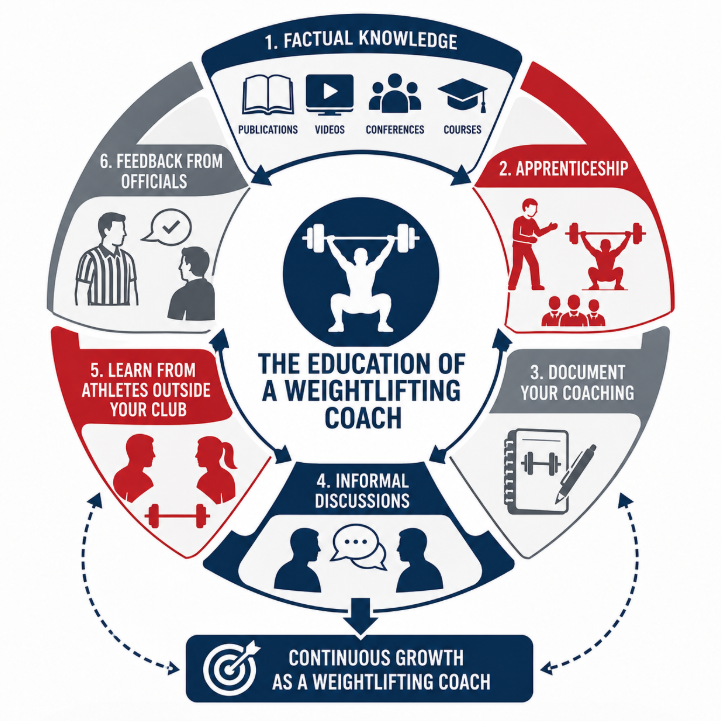
Learning From Athletes Outside Your Own Club
Informal discussions with athletes from other clubs can reveal what approaches have worked well for them. This can provide you with some food for thought that you can implement or use to modify your own approach.
Different coaching systems, communication styles, and programming philosophies often produce different athlete experiences. Listening carefully to those experiences can broaden a coach’s understanding beyond the methods used inside their own gym.
What Officials Can Teach Weightlifting Coaches
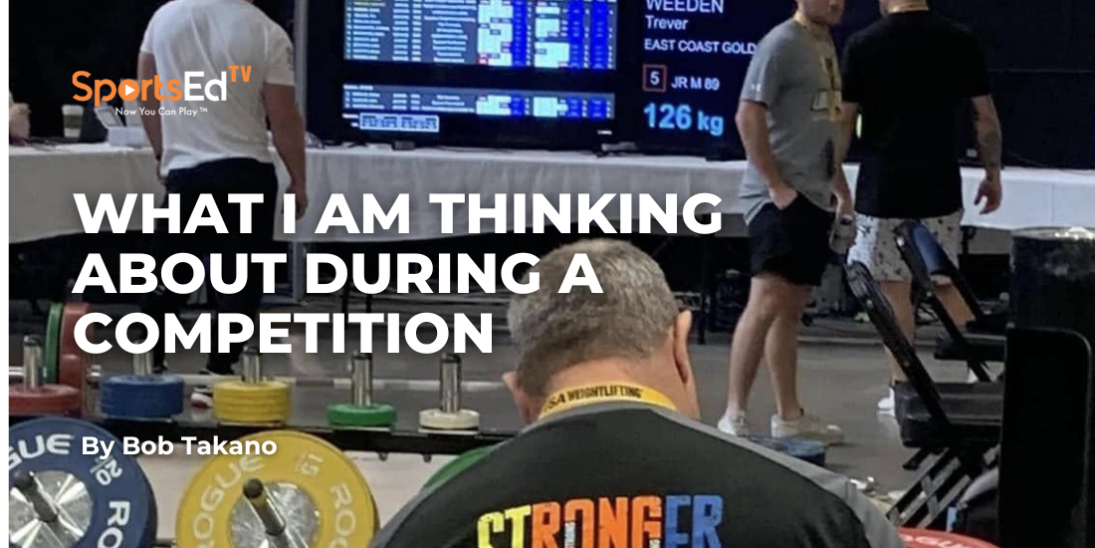
After the next session in which you have an athlete competing, you might want to ask officials if they have any feedback about your lifter.
They can provide you with information about your athlete’s approach or demeanor that can help you with your platform coaching.
Officials observe countless athletes and coaches throughout competitions and can sometimes identify behavioral tendencies, timing issues, or platform habits that may not be obvious from the coaching area.

Building Your Own Developmental Pathway as a Coach
In conclusion, you, as a weightlifting coach, must craft your own developmental pathway moving forward. The aforementioned suggestions can help you in your development.
Be focused on your goals and don’t be afraid to listen to coaches in other sports, as they can provide you with perspectives that you’ve overlooked.
The education of a weightlifting coach is rarely linear or formally structured. It is built through observation, experience, curiosity, discussion, and continual self-evaluation. Coaches who remain open to learning often develop a broader understanding not only of lifting mechanics but also of athlete management, communication, and long-term performance development.