Why Grip Tension Can Hurt Your Overhead Lifts
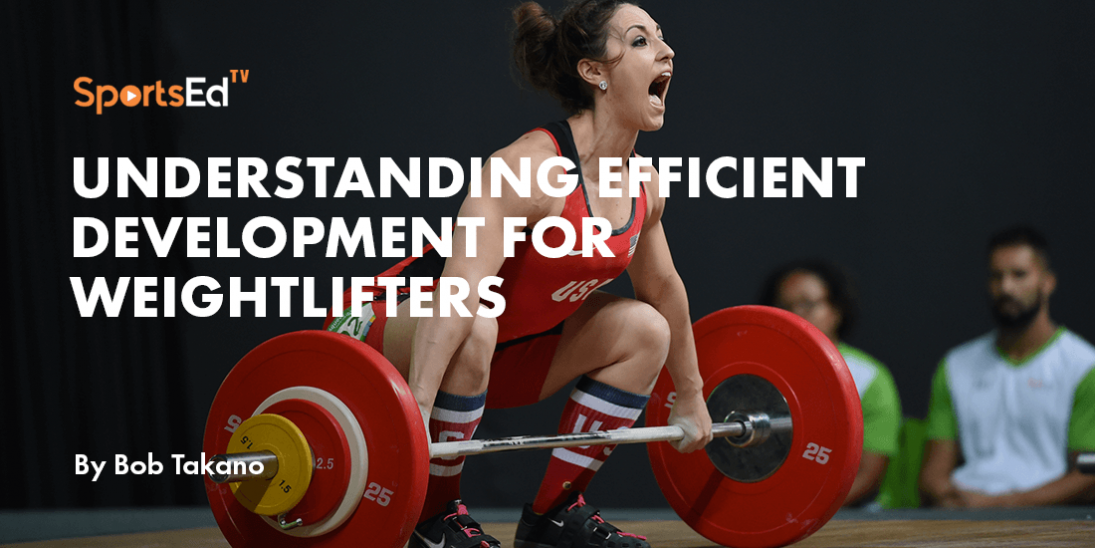
It’s not uncommon to observe that most competitive lifters have developed exceptional strength. This is notable in the strength of the legs, hips, and grip, as well as, for the cognoscenti, the ability to tighten the torso under heavy loads. This incredible, exceptional strength can be undermined, however, by the inability of the elbows to straighten quickly and lock out barbells precisely overhead.
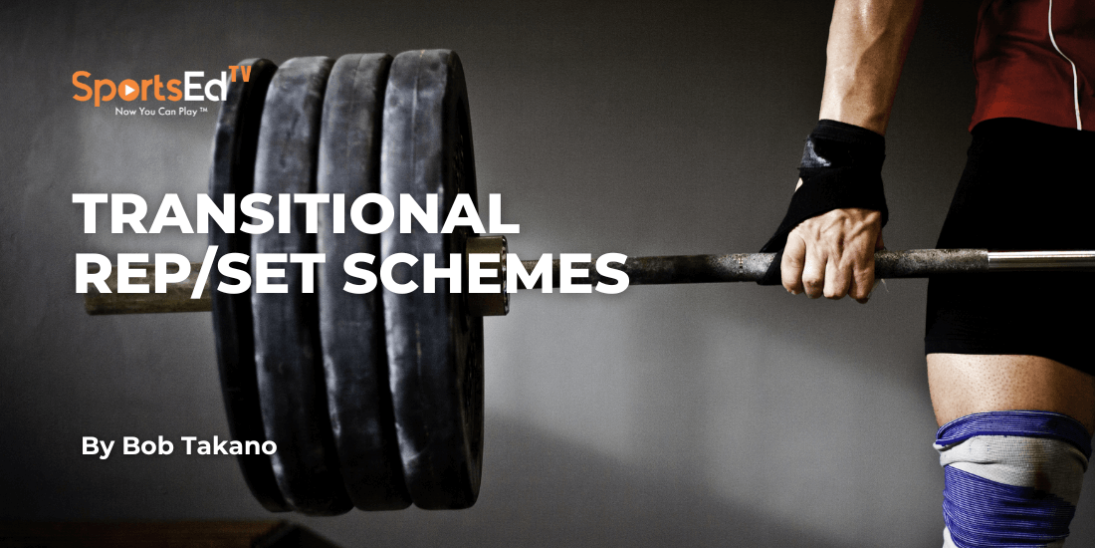
This problem often arises because the lifter may not relax the grip on the barbell when transitioning from the pull to the overhead lockout in the snatch or from the jerk drive to the overhead jerk position. These two problems will cause a slowing of the bar that can be obvious to the coaching eye.
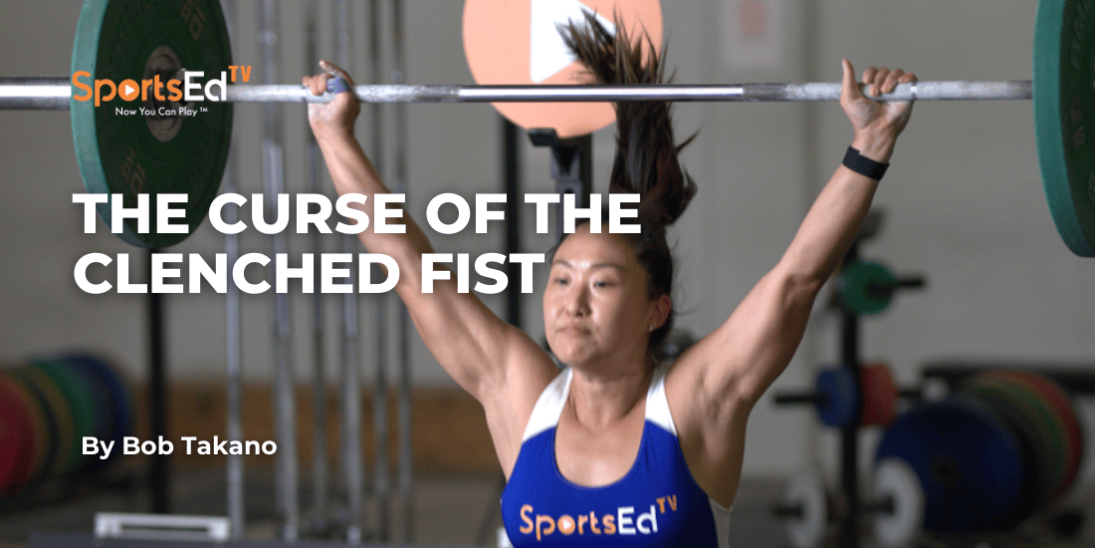
In short, the clenched fist is a handicap when lifting weights overhead.

The Hidden Problem: Slow Elbow Extension
Many coaches and lifters are concerned with speed, and they are correct when applied to the speed of the bar. Speed dropping under the bar, however, is equally important.
I learned about how a tightly clenched fist actually inhibits the speed of elbow extension during a conversation with a boxing coach. The coach explained to me that a tightly clenched fist inhibits the speed of a punch. Consequently, boxers spend a great deal of time learning the motor pattern of relaxing the grip until nearing the point of contact, at which time the fist tightens to become a club, so to speak.
During the Snatch: Relax for a Faster Push Under
Many lifters may not realize that during the lockout phase of the snatch, the lifter is actually pushing the body down quickly by locking out quickly during the drop. The speed of elbow extension is critical on maximal efforts, and a good coach should be able to note the speed difference between a relaxed grip and a “white knuckler.”
Why Grip Tension Can Hurt Your Overhead Lifts
It’s not uncommon to observe that most competitive lifters have developed exceptional strength. This is notable in the strength of the legs, hips, and grip, as well as, for the cognoscenti, the ability to tighten the torso under heavy loads. This incredible, exceptional strength can be undermined, however, by the inability of the elbows to straighten quickly and lock out barbells precisely overhead.
This problem often arises because the lifter may not relax the grip on the barbell when transitioning from the pull to the overhead lockout in the snatch or from the jerk drive to the overhead jerk position. These two problems will cause a slowing of the bar that can be obvious to the coaching eye.
In short, the clenched fist is a handicap when lifting weights overhead.
The Hidden Problem: Slow Elbow Extension
Many coaches and lifters are concerned with speed, and they are correct when applied to the speed of the bar. Speed dropping under the bar, however, is equally important.
I learned about how a tightly clenched fist actually inhibits the speed of elbow extension during a conversation with a boxing coach. The coach explained to me that a tightly clenched fist inhibits the speed of a punch. Consequently, boxers spend a great deal of time learning the motor pattern of relaxing the grip until nearing the point of contact, at which time the fist tightens to become a club, so to speak.
During the Snatch: Relax for a Faster Push Under
Many lifters may not realize that during the lockout phase of the snatch, the lifter is actually pushing the body down quickly by locking out quickly during the drop. The speed of elbow extension is critical on maximal efforts, and a good coach should be able to note the speed difference between a relaxed grip and a “white knuckler.”
Being conscious of this push-under also enhances the kinesthetics for the athlete and consequently improves the success rate.
During the Jerk: Don’t Over-Grip Too Early
Many untrained lifters will grip the bar tightly, starting with the dip for the jerk. This is especially true for those individuals who feel that they are supporting the bar with their arms, rather than allowing it to be cradled on their shoulders.
The majority of the power for the jerk drive comes from the extension of the knees and hips. The arms do not truly come into play until the bar rises above the head. At that point, the arms complete the jerk by quickly pushing the lifter under the bar. A relaxed grip facilitates this final, rapid extension.

Remedial Exercises to Fix the Clenched Fist
The two most effective exercises for teaching proper motor patterns are the snatch balance and the jerk balance. The weights employed need not be very heavy, at least initially. Learning the motor patterns is the most important aspect.
Four sets of 3–4 reps should be sufficient, and they can be included at just about any point in the session. These exercises, which are designed to improve motor patterns, should not be included in the training load and can be discontinued once the goal is achieved.
Key Takeaways for Coaches and Lifters
A clenched fist may feel strong, but in overhead weightlifting, it often slows down the elbows and ruins the timing of a lift. Relaxing the grip allows faster extension, greater efficiency, and a higher rate of success. With mindful coaching and the proper remedial drills, lifters can break the curse of the clenched fist and reach new levels in their snatch and jerk performance.

FAQs About Grip and Overhead Lifting
Why does a clenched fist slow down overhead lifts?
It restricts the speed of elbow extension, which is crucial for locking out the bar quickly in the snatch and jerk.
What sports teach us about grip relaxation?
Boxing demonstrates that a relaxed fist improves speed, only tightening at impact — a lesson lifters can apply overhead.
Which exercises fix the clenched fist problem?
The snatch balance and jerk balance are the most effective drills for retraining motor patterns to achieve a faster lockout.
Should I always relax my grip during lifts?
Not entirely — the grip must be firm enough to control the bar but relaxed enough to allow rapid elbow extension when locking out.
How can coaches spot this problem?
By observing the speed of elbow extension, a lifter with a relaxed grip moves under the bar faster than a “white knuckler.”