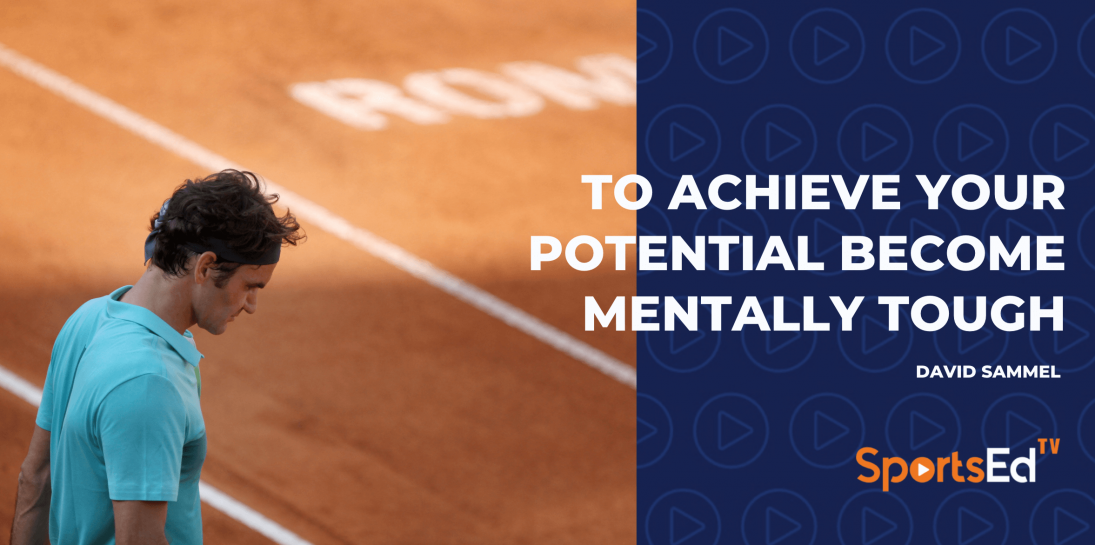
Mental Toughness, Tennis
Passion in Sports: Why Discipline, Practice, Recovery and Patience Matter

Passion is one of the most celebrated qualities in sport. Coaches look for it, parents try to encourage it, and athletes often believe that the intensity of their desire will determine how far they can go. There is good reason for that. Passion gives an athlete energy, creates emotional commitment, and can make long hours of practice feel worthwhile. It can also be the force that convinces someone to begin a difficult journey in the first place. But passion, by itself, is not enough to produce performance.
A useful way to think about passion is to compare it with the fire inside a blacksmith's forge. The fire creates heat and makes the steel malleable, but it does not create the finished weapon. Without the blacksmith, the hammer, the repeated shaping, and the patience required to complete the process, the forge is simply heat. It contains tremendous potential, but that potential has no direction. The same is true of passion in sport. Passion provides energy, but discipline, coaching, repetition, recovery, and patience determine what that energy eventually becomes.

Passion Creates Potential, but It Does Not Guarantee Progress
An athlete who is passionate about a sport often feels an enormous desire to improve. A young tennis player may suddenly want to spend every available hour on the court. A basketball player may become obsessed with improving a jump shot. A swimmer may begin measuring every fraction of a second. A weightlifter may start thinking constantly about technique, strength, and the next personal record. In all of these cases, passion is providing something valuable: the willingness to invest time and effort.
The problem is that effort and progress are not automatically the same thing. An athlete can train extremely hard and still train poorly. A player can repeat the same mistake thousands of times. Someone can spend many hours working without addressing the specific limitation that is holding back performance. Passion can therefore become inefficient when it is not guided by knowledge and structure.
This is where coaching becomes particularly important. A good coach helps turn motivation into purposeful work by identifying what to improve, setting priorities, and determining how training should progress over time. The athlete supplies the energy, but the training process gives that energy direction. In the forge, the fire may soften the steel, but the blacksmith still has to know where to strike.
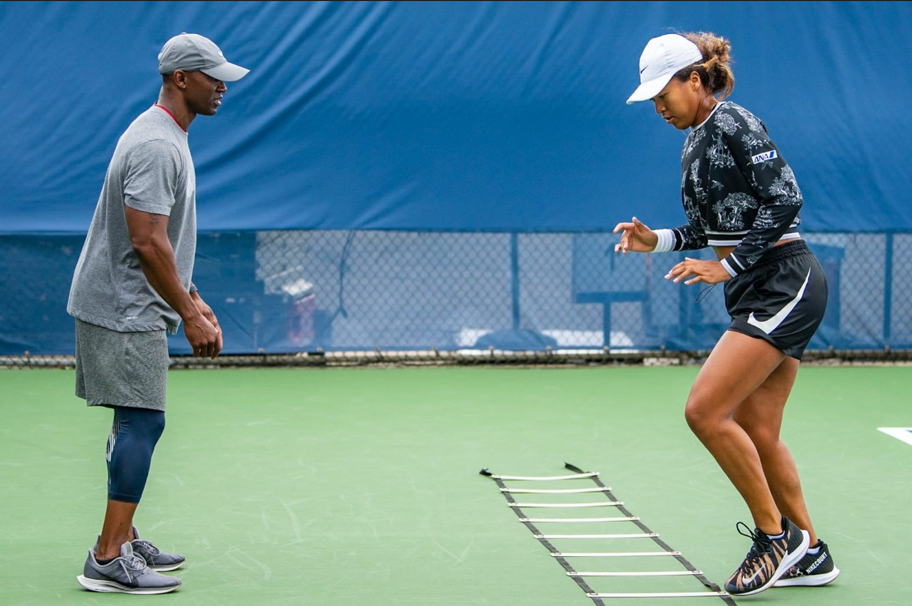
Coach Sillah with Naomi Osaka
The Emotional Spark Is Only the Beginning
Most athletes enjoy the beginning of a new challenge because early progress often comes quickly. Learning a new skill is exciting, improvements are easy to see, and motivation tends to be high. The athlete experiences the immediate satisfaction of becoming noticeably better. That early period can create a powerful emotional connection with the sport.
As skill increases, however, progress usually becomes more difficult. The athlete may need weeks or months to make what seems like a very small improvement. A tennis player may work extensively on the toss and racquet path of a serve. A golfer may spend countless hours adjusting one element of the swing. A sprinter may dedicate an entire training block to improving mechanics that change performance by only fractions of a second. At higher levels, small improvements can require enormous amounts of work.
This is often the point at which passion is tested. The excitement that was present at the beginning starts to fade, while repetition and frustration become more prominent. The athlete still wants the result, but the process no longer produces the same emotional reward. The critical question becomes whether the athlete can keep working effectively when the work is no longer exciting.
This is one of the major differences between motivation and commitment. Motivation is a feeling, and feelings naturally fluctuate. Commitment is the willingness to continue doing what is necessary despite those fluctuations. Passion may get an athlete into the gym, onto the court, or onto the field. Commitment is what keeps the athlete returning when the novelty disappears.

Repetition Is Where Refinement Takes Place
The image of the blacksmith's hammer is particularly relevant to athletic development because skill is rarely created through a single breakthrough. It usually results from repeated exposure to the correct movement, decision, or training stimulus. The athlete performs the action, receives feedback, adjusts, and tries again. Over time, the movement becomes more efficient, consistent, and reliable.
This repetition can look monotonous from the outside. Spectators see the finished performance but rarely see the thousands of repetitions that produced it. A great serve, free throw, golf swing, weightlifting movement, or technical skill often appears effortless precisely because so much deliberate work has taken place before the moment of competition.
The important point is that repetition alone is not enough. Repetition must be purposeful. If an athlete performs a movement incorrectly over and over again, the repetition can simply reinforce the error. Effective practice requires attention, appropriate feedback, and an understanding of what the athlete is trying to change. In that sense, the hammer cannot simply strike repeatedly. It has to strike in the right place.
This is also why elite training often looks less dramatic than people expect. High-level athletes spend significant amounts of time refining basic movements and improving small details. They understand that consistency comes from repeatedly doing simple things correctly, not from constantly searching for something new or spectacular.
Discomfort Is Often Part of Learning
One difficulty athletes face is that improvement does not always feel like improvement. Changing technique may initially make a movement feel awkward. Learning a new tactical concept can slow decision-making before it eventually becomes automatic. Moving into a stronger competitive environment may cause an athlete to lose more often, even though those losses are contributing to development.
It is easy to interpret this discomfort as evidence that something is wrong. Sometimes that is true, and athletes and coaches should always be willing to adjust a training approach that is not working. But temporary discomfort can also be a normal part of adaptation. The body and brain often need time to reorganize around a new movement or strategy.
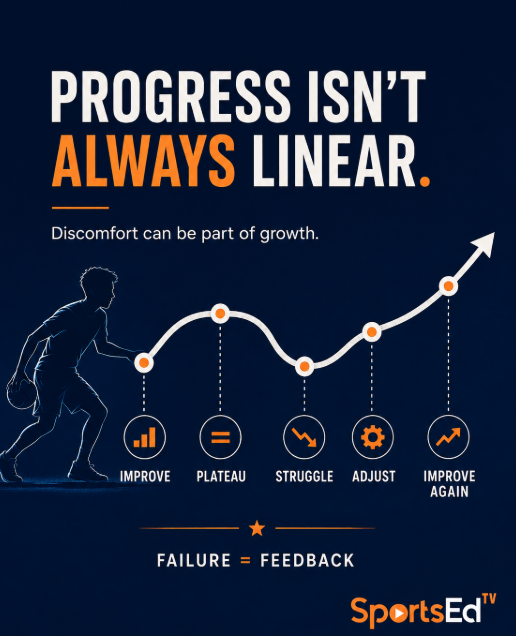
This is why athletic development is rarely linear. Athletes improve, plateau, struggle, adjust, and improve again. There may even be periods when performance temporarily declines while a technical change is being incorporated. The challenge is learning to evaluate the direction of the process rather than reacting emotionally to every individual training session or competition.
An athlete who understands this begins to interpret difficulty differently. Correction is no longer automatically viewed as criticism. Failure becomes information. Weaknesses become areas to develop rather than evidence of permanent limitations. The hammer is not there to punish the steel. It is there to shape it.
Passion Must Be Balanced by Patience
The forge metaphor also teaches another important lesson. Steel cannot remain in intense heat indefinitely. It must be heated, shaped, cooled, examined, and then reheated when necessary. The sequence matters because the objective is not simply to expose the steel to as much heat as possible. The objective is to create the right combination of stress and recovery.
Athletic training works in much the same way. Training creates a stimulus, but adaptation occurs when the body has an opportunity to respond to that stimulus. That is why recovery isn't separate from training. It is part of the training process.
Passionate athletes sometimes struggle with this concept because their instinct is to do more. They believe that if one hour of practice is valuable, two hours must be better. If five training sessions are productive, six must produce even greater results. Additional training is appropriate in some situations, but increasing volume or intensity indefinitely does not guarantee better performance.
Fatigue can reduce movement quality, concentration, coordination, reaction time, and decision-making. It can also reduce the quality of practice itself. An athlete who is technically practicing but too fatigued to execute movements correctly may accumulate repetitions without receiving the intended benefit.
This is why patience is an important component of passion. Athletes need to understand that development occurs over time and that constantly pushing harder is not always the fastest route to improvement. Sometimes the disciplined decision is to work. At other times, the disciplined decision is to recover.

Recovery Is Part of Performance
Recovery is often misunderstood because it can appear passive. Training is visible. The athlete is lifting, running, hitting balls, practicing movements, or competing. Recovery can look like nothing is happening. Yet the physiological and psychological adaptations that allow an athlete to improve depend heavily on what happens between training sessions.
Sleep, nutrition, hydration, appropriate rest, and training-load management all influence an athlete's ability to perform. Mental recovery is equally important. Athletes need periods in which they are not constantly evaluating their performance, thinking about competition, or trying to improve.
Without that balance, the same passion that initially energizes an athlete can begin to have the opposite effect. The sport can gradually become an obligation rather than a source of motivation. Training begins to feel like something the athlete has to do rather than something they want to do. In extreme cases, the constant pressure to train and perform can contribute to burnout.
The objective should therefore not be to maximize the amount of passion an athlete displays. It should be to create an environment in which that passion can be sustained over a long period of time.

When Passion Becomes Obsession
The intensity that helps athletes succeed can sometimes become difficult to control. Passion naturally encourages athletes to think more about their sport, train more often, and place greater importance on results. Those tendencies can be productive, but they can also become problematic when the sport begins to dominate every part of an athlete's identity.
An athlete may begin judging the quality of an entire day based on how training went. Rest days can create guilt. A poor competition result may feel like a personal failure rather than a performance problem. The athlete may start believing that every available moment should be used to improve.
At that stage, passion is no longer simply being directed toward development. It is beginning to control the athlete.
Long-term performance requires perspective. Sport can be extremely important without becoming the only measure of personal value. In fact, athletes who maintain a broader sense of identity may be better equipped to handle setbacks because a single poor performance does not threaten their entire sense of self.
The objective is to use passion rather than be consumed by it. Fire is enormously useful when it is contained and directed. When it spreads without control, it becomes destructive.
Discipline Is More Sophisticated Than Simply Working Hard
Discipline in sport is often reduced to one idea: doing the work when you do not feel like doing it. That is certainly an important part of discipline, but it is not the entire concept.
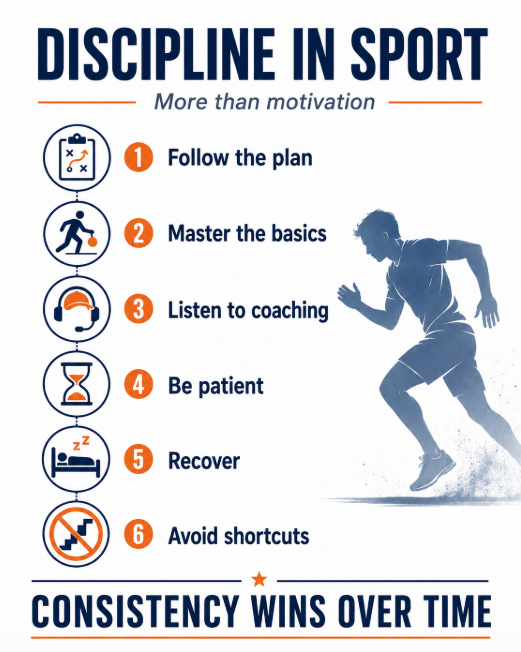
True athletic discipline also involves following a training plan rather than continually adding more work. It means performing basic technical drills even when they are less exciting than competition. It means listening to coaching feedback that may be difficult to hear. It means being patient enough to allow a technical change to develop instead of abandoning it after a few unsuccessful attempts.
Discipline can also mean stopping when the training session is complete. It can mean taking a recovery day when the athlete would prefer to train. It can mean resisting the temptation to chase every new training technique, piece of equipment, or shortcut that appears on social media.
This form of discipline is less dramatic than passion, but it is often what allows passion to produce long-term results. Athletes who continually rely on emotion tend to experience large fluctuations in behavior. Athletes who develop disciplined routines create greater consistency.
Over time, consistency is one of the most powerful forces in sport.
Good Coaching Helps Athletes Understand the Process
The relationship between passion and discipline also highlights the importance of coaching. Athletes, particularly young athletes, often judge training by how difficult it feels. A hard practice can feel productive simply because it was exhausting. A lighter technical session may feel less valuable even when it is exactly what the athlete needs.
A knowledgeable coach can provide the perspective that the athlete may not yet have. The coach can explain why a particular drill matters, why training intensity is being adjusted, why recovery is necessary, or why a technical change needs more time.
This educational role is important because athletes become more effective when they understand the purpose behind their training. They are more likely to tolerate repetition when they understand what is being developed. They are more likely to accept temporary performance declines when they understand why a technical change is necessary.
The best coaching does more than prescribe work. It teaches athletes how to think about development.

Learning to Trust Long-Term Development
As athletes gain experience, they often begin to understand that improvement does not need to be visible every day. Some training sessions feel excellent. Others feel ordinary. Some may feel terrible. None of those sessions, taken individually, necessarily tells the athlete whether the overall process is working.
Development occurs through accumulation. One practice builds on another. Technical changes become gradually more stable. Physical qualities improve over weeks and months. Tactical understanding develops through repeated competitive experiences.
This is why athletes need to evaluate progress across meaningful periods of time rather than judging themselves after every session. An athlete who constantly needs immediate confirmation of improvement can become frustrated very quickly. The athlete who understands that adaptation takes time is better positioned to remain consistent.
The blacksmith does not examine the steel after every hammer strike and expect to see a finished sword. The process works because each strike contributes to a larger transformation.

The Goal Is Not to Eliminate Passion
None of this means that passion is unimportant. Quite the opposite. Passion can be one of the greatest advantages an athlete possesses. It can provide the willingness to attempt difficult things, tolerate long periods of training, and remain connected to a sport for many years.
The mistake is believing that passion can replace the other elements of development.
It cannot replace good coaching. It cannot replace technical knowledge. It cannot replace deliberate practice. It cannot replace recovery. It cannot replace patience.
Passion can provide the energy that allows an athlete to engage deeply with all of those things.
The most productive form of passion is therefore not uncontrolled intensity. It is sustained energy directed toward a clear purpose.
Most People Want the Sword Without the Forge
Sport naturally focuses attention on outcomes. We see the championship, the medal, the record, the winning point, or the extraordinary performance. What is less visible is the process that created those moments.
We do not see every technical correction that happened years earlier. We do not see the repetitive practices that produced consistency. We do not see the frustrating periods when an athlete's performance temporarily declined. We do not see every recovery session, every conversation with a coach, or every moment when an athlete had to decide whether to continue.
In other words, we see the sword more often than we see the forge.
That can create a distorted view of success. It becomes easy to believe that exceptional athletes are simply more talented, more motivated, or more passionate than everyone else. Those qualities certainly matter, but performance usually results from a much longer process of repeated refinement.
The strength of the finished product is connected to what happened during that process.

Stepping Into the Forge
The real question for athletes, then, is not simply whether they are passionate about their sport. Many athletes are passionate. The more important question is whether they are prepared to use that passion productively.
Are they willing to work on weaknesses instead of only practicing what they already do well? Are they willing to repeat fundamental skills when repetition becomes boring? Are they willing to accept coaching and make changes that initially feel uncomfortable? Can they continue training when progress becomes difficult to see? Can they also recognize when recovery is necessary?
These behaviors transform passion into performance.
The athlete who learns to combine passion with discipline, patience, coaching, purposeful practice, and recovery begins to develop something far more durable than temporary motivation. The emotional spark remains important, but it becomes part of a much larger system.
Passion is the fire in the forge. It provides the heat that makes change possible. Discipline provides the repeated shaping. Coaching helps determine where the hammer should strike. Recovery allows the material to adapt. Patience gives the entire process enough time to work.
Most athletes would like the finished sword. The harder challenge is accepting everything required to create it.
In sport, there is no way to separate the athlete from the process that shaped them.
Passion provides the fire.
The forge is where the athlete is built.