Weightlifting
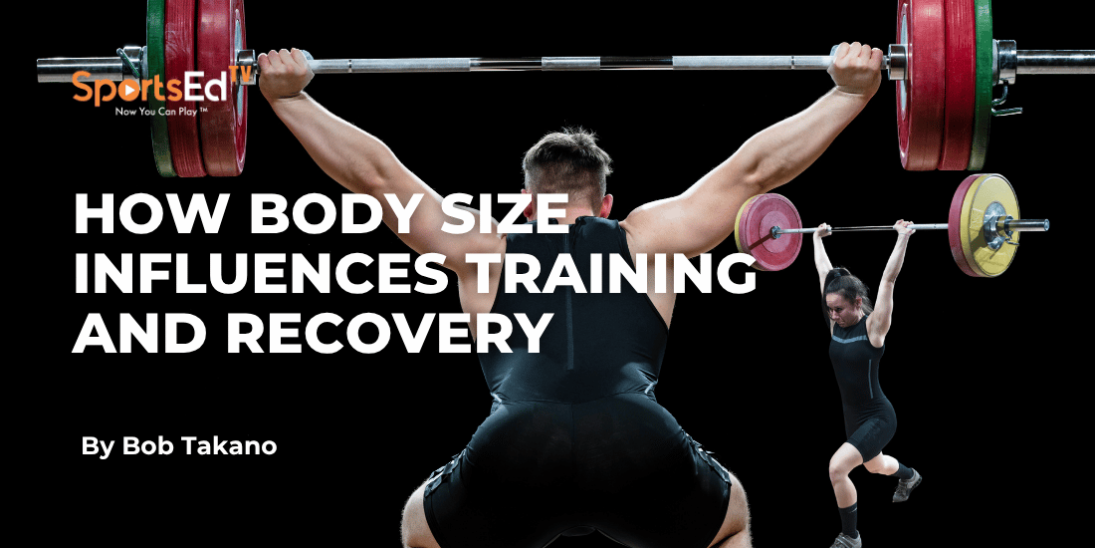
Large vs. Small Weightlifters: How Body Size Influences Training and Recovery
By Bob Takano
Should a 65 kg weightlifter follow the same training program as a 100 kg weightlifter, with only the weights adjusted?
The exercises may be identical. The sets, repetitions, and percentages may match. But that doesn't guarantee both athletes will experience the same fatigue or be ready for their next demanding session at the same time.
Body size deserves consideration when planning training volume, intensity, and recovery. Understanding why begins with a simple principle of geometry.
How Weight Classes Changed Weightlifting
Weightlifting appeared at the first modern Olympic Games in 1896, before the international federation was founded in 1905. In the early Olympic competitions, athletes competed without bodyweight categories.
By the 1920 Antwerp Olympics, weightlifting featured five weight classes. Smaller athletes could now compete against opponents of comparable body weight, rather than face the largest lifters regardless of size.
Recognizing these differences in competition raises an equally important question about preparation: how should coaches account for athletes of different sizes in training?

Why Surface Area and Body Volume Matter
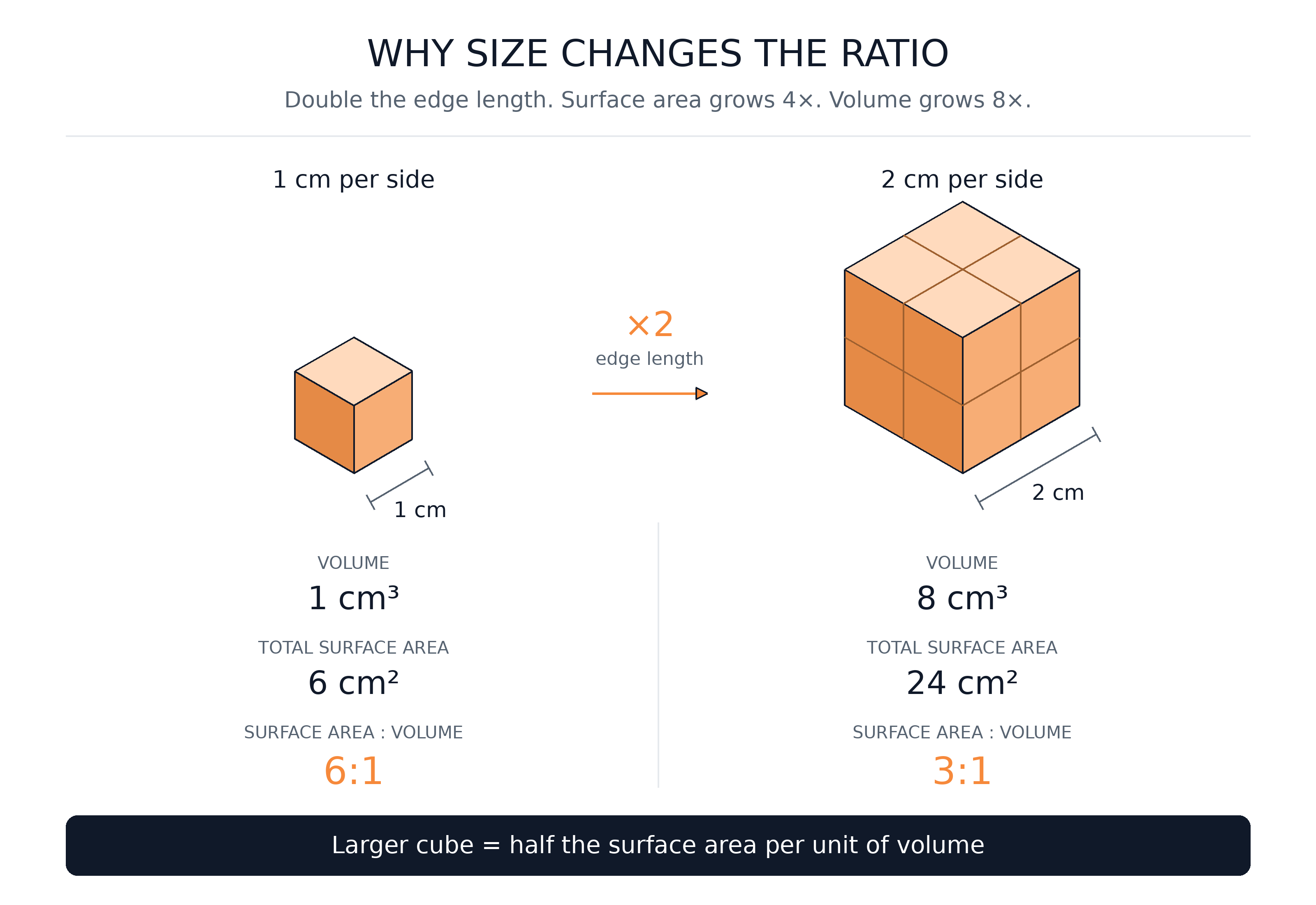
Consider a cube measuring 1 cm on each side. Its volume is 1 cm³, and its total surface area is 6 cm². That gives it a surface-area-to-volume ratio of 6:1.
Now double each dimension so that the cube measures 2 cm on each side. Its volume increases to 8 cm³, while its surface area increases to 24 cm². The ratio is now 3:1.
The larger cube has more total surface area, but only half as much surface area relative to its volume.
Human bodies are more complex than cubes, but the example illustrates an important principle: as size increases, volume grows faster than surface area.
How Body Size Affects Heat Loss
Working muscles generate heat, and the body must manage that heat during exercise. Body size influences this process because heat exchange occurs through the body’s surface.
Smaller athletes generally have more surface area relative to their mass. When heat can move from the skin into the surroundings, this can favor heat loss relative to body mass.
However, surface area is only part of the picture. Heat production, sweating, environmental conditions, and the amount of body mass available to absorb heat also matter. A larger athlete will not necessarily overheat more easily simply because of body size.
For coaches, the practical lesson is to consider both the athlete and the training environment when managing workloads and rest periods.
The Same Workout Can Produce Different Responses
Imagine a 65 kg lifter and a 100 kg lifter completing the same number of repetitions at the same percentage of their respective maximum lifts.
Their relative intensity is matched, but their responses to the session may differ.
A larger lifter may need a different distribution of demanding work and recovery. A session that one athlete tolerates comfortably may leave another struggling to maintain the quality of the next day’s training.
This does not mean heavier athletes must always train less. Body weight alone cannot establish an athlete’s recovery time or readiness for another heavy session.
The coach’s task is to observe how each lifter responds and adjust the program accordingly.

Adjusting Volume, Intensity, and Frequency
Three variables deserve particular attention when designing a weightlifting program.
Training volume is the amount of work performed. Coaches should assess whether the athlete can complete the planned work while maintaining the intended technique and effort.
Training intensity reflects how demanding the loads are. Two athletes working at the same percentage of their maximum may not experience the same difficulty throughout a session.
Training frequency determines how often sessions occur and how close demanding workouts are scheduled. An athlete who performs well during one heavy session may still need more recovery before the next.
For example, if a lifter repeatedly shows unusually high effort and deteriorating technique after a demanding training day, the coach can reduce the following session’s volume or change the weekly schedule.
The adjustment is based on the athlete’s demonstrated response. Body size helps inform the assessment, but it does not replace it.

Recovery Requires an Individual Approach
Recovery deserves the same attention as the training itself.
Athletes should have recovery plans that reflect their workloads, training histories, and individual needs. Body size may matter, but it should not be the only factor in determining which recovery methods an athlete needs.
The same applies to injuries. The surface-area-to-volume relationship does not establish how quickly an injury will heal. Persistent pain or loss of function requires an appropriate assessment rather than assuming it is simply normal training fatigue.
As athletes gain experience, their training tolerance can change. Coaches should reassess the program over time rather than assume that body weight or years in the sport provides a fixed answer.
Large and small weightlifters share the same competitive movements, but they may need different paths to prepare for them. The most effective program reflects how the individual athlete performs, adapts, and recovers.