Weightlifting
How to Improve Weightlifting Performance: Training Capacity and Recovery
By Bob Takano
Several factors will keep your weightlifting progress going. You'll have to master most of them progressively and early in your career. One, however, will carry through most of your lifting career and will decide whether you reach your true potential. In the early days of weightlifting training, people argued about whether technique or strength should come first. We’ve come a long way since then.
Building the Foundation
Kinesthetics and Motor Learning
Kinesthetics and motor learning are the first two factors you should master in your weightlifting journey. They allow you to mimic good technique and make your movements efficient, so whatever strength you develop later is used as effectively as possible. Ideally, you would have good kinesthetic and motor learning skills before you even begin the sport.
Mobility
Focus on adequate mobility early in your training. Keep in mind that all infants have good mobility, so most people tend to lose this quality as they get older. If you maintain good mobility from a young age, you won't have to spend much time developing this quality.
Speed Characteristics
Speed characteristics are another factor you can develop even before you start weightlifting. The ability to sprint, jump explosively, and throw implements with great explosiveness are key factors you can develop before starting weightlifting training.

Developing Strength, Technique, and Performance Skills
Strength Development
Strength development will likely take place with the greatest emphasis during actual weightlifting training. Strength development should complement movement performance. All strength development should be done in a way that balances the body. Pay special attention to grip strength.
Technical Skill
Once weightlifting training begins, technical skill must be trained while strength develops. Youngsters can develop very good technique early in their weightlifting careers, and their technique should be sound before they even consider competition.
Performance Skills
Performance skills can be partially developed before weightlifting training begins. Young athletes with a background in the performing arts can transition more easily to weightlifting competition if they've already mastered performance skills, especially in solitary activities. However, the specifics of weightlifting competition performance must be finalized during the early phases of the weightlifting career because they are highly sport-specific.

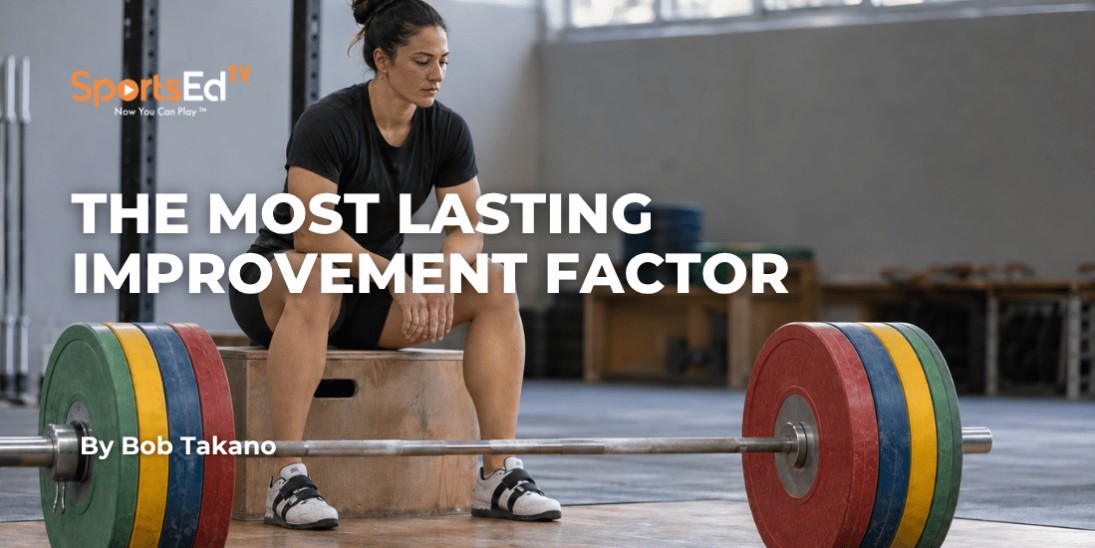
The Lasting Factor: Training Capacity and Recovery
One factor, however, that continues to develop throughout the weightlifter's career is training capacity and recovery from that training. Both training capacity and recovery improve from the beginning to the end of adolescence. But once physical maturity is reached, the athlete must train regularly to a point that exceeds the body's ability to recover.
Preparation and Pre-Competition Mesocycles
This is why we have a preparation mesocycle, as mentioned in my previous blog posts about training programs. During the preparation mesocycle, the goal is to regularly train the body beyond its capacity to recover, putting the athlete in a state of fatigue, or what is commonly called overtraining. That stage of overtraining should not be chronic, but rather a state from which the body can recover during the first 2 weeks of the pre-competition mesocycle. During that time and throughout the pre-competition mesocycle, recovery mechanisms function fast enough to achieve supercompensation, and the greatest results occur at the end of the pre-competition mesocycle.
Therefore, the development of the athlete is one in which there is progressive overtraining over an extended period of time, from, say, age 18 up until, oh, say, age 32 or 33. This varies depending on the athlete's size. Smaller athletes can continue to increase training volume for a longer period of time.

What This Looks Like in Practice
Recognizing Readiness for More Volume
A lifter tells me they are ready for more volume by how they talk about outside activity. If he or she regularly plans to engage in other vigorous sports or social activities, the volume is insufficient. They should be talking about eating and sleeping if the volume is adequate or appropriate.
Monitoring Recovery Before Competition
Recovery during pre-competition mesocycles can be monitored by movement speed during the classic lifts. The changes are subtle, and the coach needs to be able to spontaneously determine the speed variants. As the pre-competition mesocycle progresses, the athlete will move more explosively and precisely.
Chris Altieri: Four Years of Increasing Training Capacity
My superheavyweight lifter, Chris Altieri, is an example of an athlete who built greater training capacity over four years. He first began training with me after the 1984 Olympics. He weighed 95, and he was probably doing around 10,000 annual reps. His lifts during that first year hovered around 105 and 135. By the 1988 Olympic Trials, his annual volume rose to about 19,000 reps, with best lifts of 147.5 and 195. His bodyweight had risen to 127. I increased his volume with each successive macrocycle.
The Long-Term Goal
The overall pathway is to master skills appropriate at an early stage of development, while recognizing that building greater training capacity and improving recovery are long-term goals of weightlifting training.