Weightlifting
The Three-Hour Weigh-In: What It Means for Weightlifting
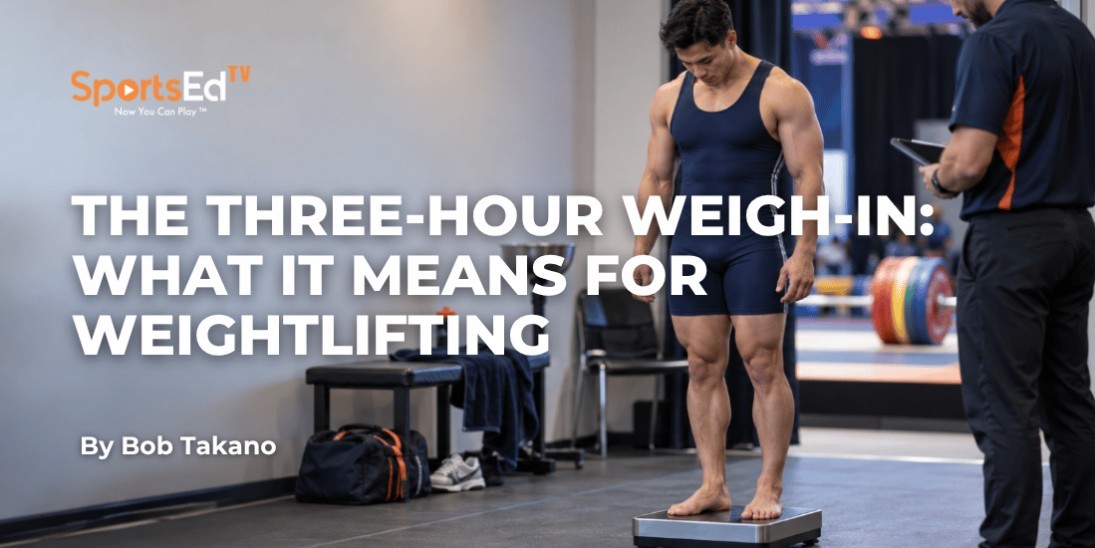
The International Weightlifting Federation has announced a change to its weigh-in rules. Weigh-ins will now begin three hours before competition and conclude two hours before the session starts. The weigh-in itself still lasts one hour, but the entire process moves one hour earlier.
That may seem like a modest scheduling adjustment. I believe it deserves a closer look, particularly at what it might encourage athletes and coaches to do.
How Does a Weightlifting Weigh-In Work?
Before competing, each lifter steps onto an official scale so officials can confirm their bodyweight falls within the category they entered.
For example, a man competing in the 75 kg category must weigh more than 70 kg and no more than 75 kg. He does not need to weigh exactly 75 kg.
An athlete who is outside the required range can return to the scale during the allotted weigh-in period. Under IWF rules, an athlete who fails to make the entered category before that period ends is excluded from the competition.
Under the newly announced schedule, a session starting at 10 a.m. would have its weigh-in from 7 a.m. to 8 a.m. That leaves two to three hours between an athlete's successful weigh-in and the scheduled start of the session, depending on when they weigh in.
That interval is central to this discussion: more time before competition may affect how athletes and coaches approach making weight.

The New IWF Bodyweight Categories
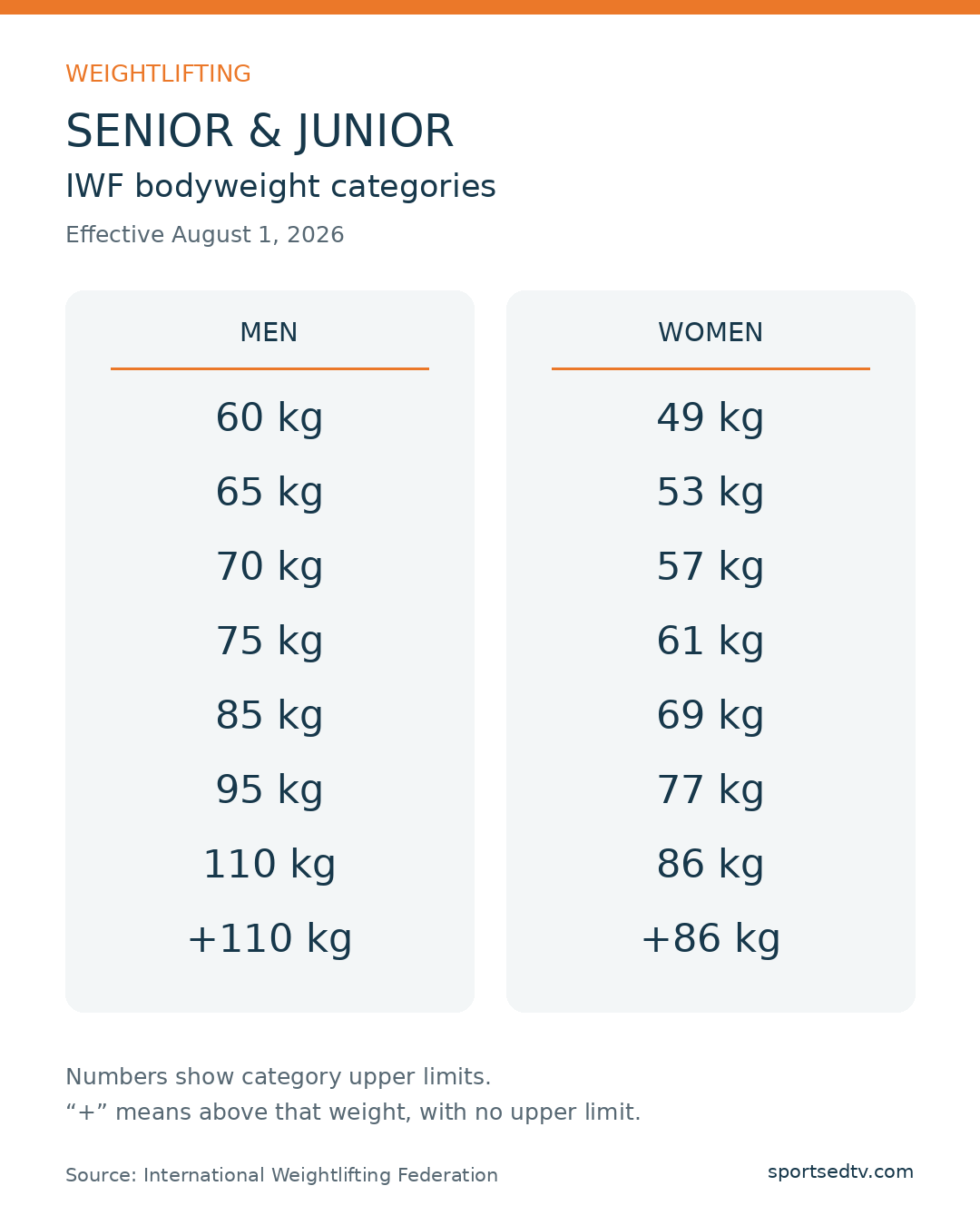
The following categories took effect on August 1, 2026. This category change is separate from the newly announced change to weigh-in timing.
Senior and Junior Categories
Youth Categories
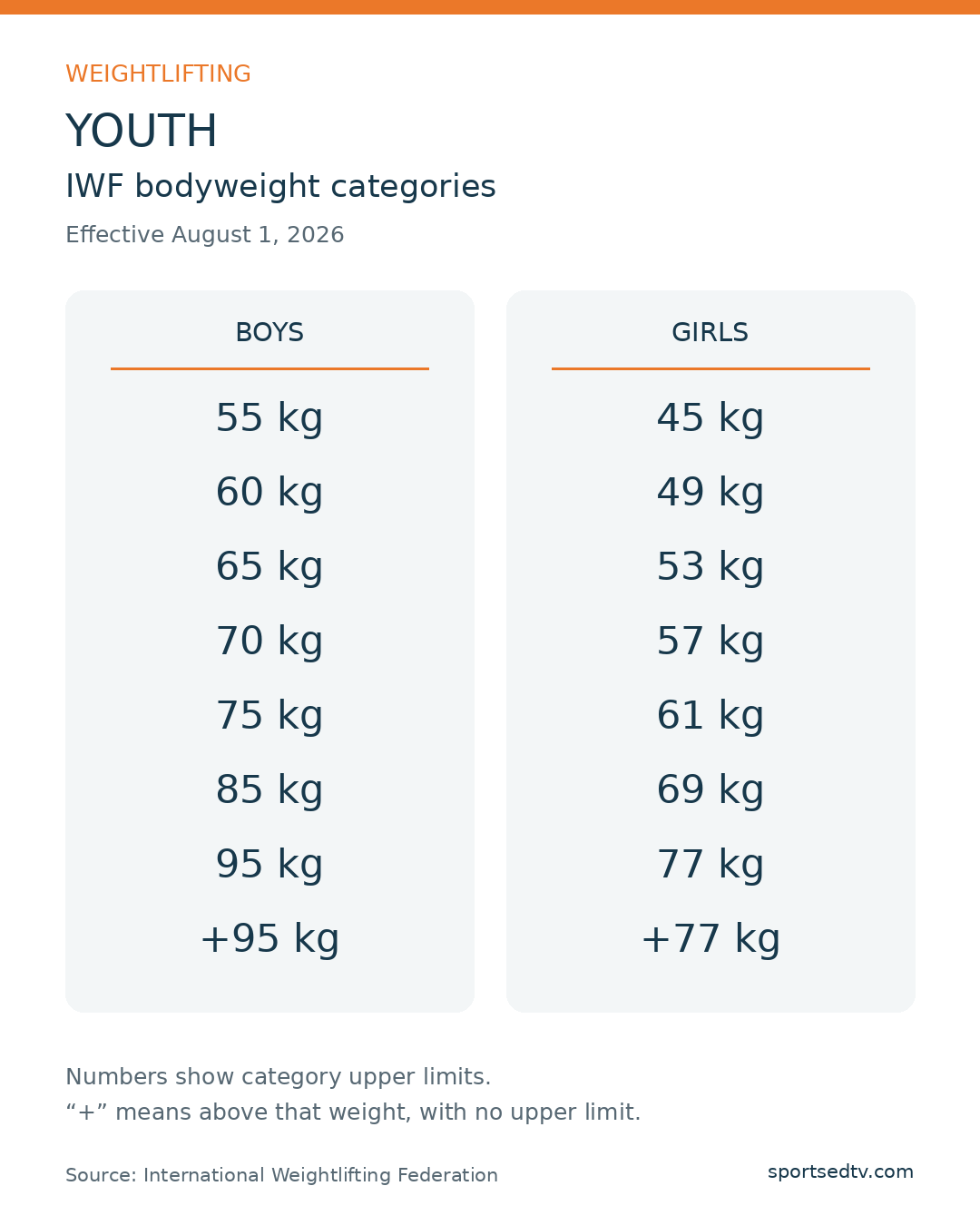
The number identifies each category's upper bodyweight limit. A plus sign indicates an open-ended category above that weight: for example, +110 kg is for men weighing more than 110 kg, with no upper limit.
These are the full IWF categories for the age groups shown. The Olympic Games use fewer categories.
These categories give athletes of different sizes competitive opportunities. For developing lifters, moving into a heavier category can be a natural part of getting stronger.
How Weightlifting Weigh-Ins Have Changed
Over my years in the sport, weigh-ins have gradually moved further away from the start of competition.
I remember when weigh-ins began one hour before competition and ended when the session was scheduled to start. As I recall, sometime around the 1970s, that window shifted to start one hour and 15 minutes before competition and end 15 minutes before the start time.
That gave athletes who needed the full weigh-in period at least a little time to warm up. It also gave officials a brief break before competition began.
For decades, the familiar schedule has been a weigh-in that begins two hours before competition and ends one hour before the start. That certainly allowed a less hurried warm-up.
The latest change adds another hour between the weigh-in and competition.
An Earlier Start for Officials
One immediate concern is practical.
For an 8 a.m. session, officials would need to begin weighing athletes at 5 a.m. Their own preparations would have to start earlier still.
It is understandable that officials would question that burden. But my greater concern is how athletes and coaches might respond to the additional time.
Could More Recovery Time Encourage Bigger Weight Cuts?
Some combat sports use weigh-ins approximately a day before competition. My concern is the incentive it can create: athletes may believe a longer recovery window lets them make a more aggressive weight cut.
Weightlifting's new schedule still differs significantly from a day-before weigh-in. An extra hour doesn't mean the sport is adopting that model, nor does it prove athletes will change their behavior.
Nevertheless, I worry about where things are headed.
Will some lifters see the extra hour as an opportunity to arrive better prepared and less rushed? Or will they see it as permission to cut more weight because they believe they have longer to regain it?

What Bodyweight Classes Are For
I cannot speak for every combat sport, but I know why bodyweight classes matter in weightlifting: they allow athletes of different sizes to compete fairly.
These classes do not exist to tell an athlete what to weigh. They exist to provide an appropriate competitive setting for athletes across a range of body sizes.
That distinction is especially important for developing lifters. The goal should be to build the athlete, not force them to remain in a particular category.
Weightlifting Is an Additive Activity
I think of weightlifting as an additive activity.
Most beginners who stay in the sport for several years will need to add muscle and body weight as they develop. Their competitive category may need to change as they do.
From a coaching perspective, repeatedly trying to hold a developing athlete at a lower bodyweight can work against that long-term objective. This is especially true for juniors.
During demanding preparation phases, the priority should be supporting training and recovery. Athletes may carry somewhat more bodyweight during these periods than they do in competition.
In my coaching approach, regular meals throughout the day help support that process. The precise eating schedule should reflect the athlete's needs, rather than a universal rule about how many meals every weightlifter must eat.
Competition preparation should be planned around an appropriate bodyweight category, with qualified nutrition support where needed.

A Change in Weightlifting Culture
We need a change in how the sport thinks about making weight.
Weightlifters, especially juniors, should not feel that drastic weight cuts are a normal requirement of competition. I want coaches to prioritize development and performance over chasing a lower number on the scale.
My fear is that the additional hour will encourage some lifters to attempt larger cuts because they believe they have enough time to recover before lifting.
That is a possible unintended consequence worth watching. It should be part of the conversation alongside scheduling, warm-up logistics, and the workload placed on officials.
Competitive sport is primarily about performance. Even so, those of us who coach athletes or help manage the sport have a responsibility to consider their well-being.
The extra hour should help athletes prepare to lift. It should not become another reason to push their bodyweight lower.
Sources
- IWF announcement of the revised weigh-in schedule, October 19, 2026
- IWF bodyweight categories effective August 1, 2026
- IWF Technical and Competition Rules and Regulations