Weightlifting
The Halting Deadlift for Olympic Weightlifting
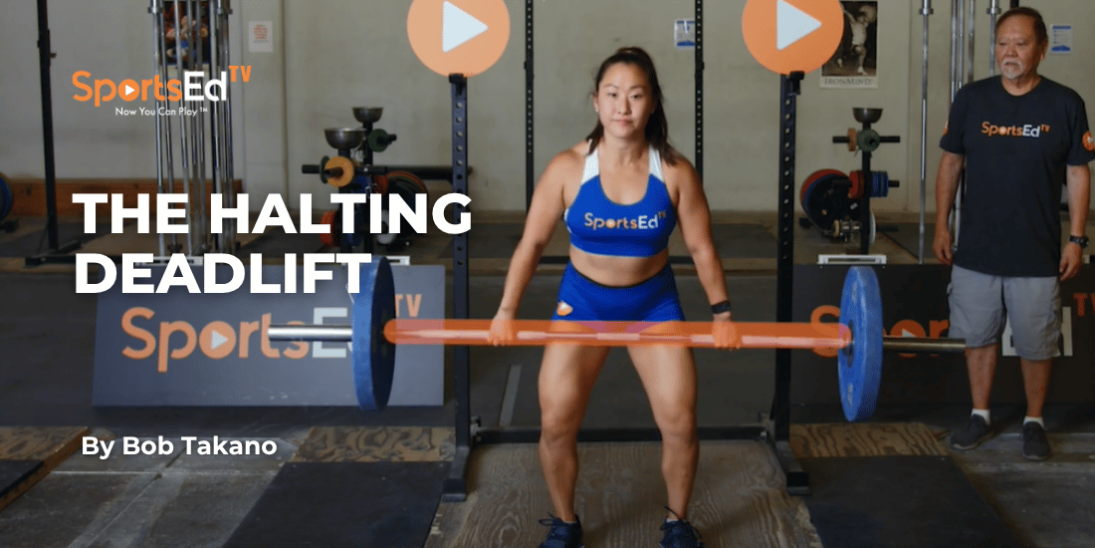
One variation you can incorporate into deadlifts is a 2-3 second pause. Halting can serve three special benefits for beginning and, occasionally, more advanced lifters.
What Is a Deadlift?
A deadlift is a strength exercise in which the athlete lifts a barbell from the floor while maintaining control of the body and the bar throughout the movement.
In weightlifting, the deadlift also reinforces the positions and movement patterns required during the pull phase of the snatch and the clean. Unlike a conventional strength-training deadlift, an Olympic weightlifting deadlift emphasizes bar path, torso angle, balance, and the relationship between the shoulders, hips, feet, and bar.
The halting deadlift adds a brief pause at a specific point during the movement, allowing the athlete to reinforce proper positioning and develop strength in that position.

Benefits of the Halting Deadlift
- It strengthens the muscles in the position where the halt occurs, especially those that contract isometrically to maintain the prescribed position.
- It reinforces the “feeling” at the specific position. Furthermore, it lets the athlete focus on aspects that might be overlooked during a classic lift.
- It enables the athlete to place more attention on the kinetics of moving toward the halting position.
Proper Performance of the Halting Deadlift
Starting Position
Stance: Be sure the stance width is consistent. Again, this will be reinforcing for the beginning lifter. The stance may vary slightly between the snatch and the clean.
Grip width: This is another whole topic area, but for the purposes of this article, be consistent with the width. Since this exercise will likely be performed toward the end of a session, strap use is acceptable.
The shoulders need to be slightly in front of the bar.
Center of Pressure on the Foot
This center of pressure should be on the ball of the foot. The positioning of the shoulders in front of the bar will enable this specific center of pressure.
As the bar rises to knee level, the center of pressure will move in a lateral path to the front of the heel.
As the bar moves up to the Power Position, the center of pressure will move in a medial path to the ball of the foot.
The First Pull
As the bar rises from the floor to the knees, the lifting is achieved by pushing the floor down with the feet. The shoulders, hips, and bar should all rise at the same speed.
The athlete should keep the shoulders ahead of the bar by maintaining tension with the latissimi. Failure to do so will result in the body overcompensating by moving the center of pressure too far back on the heels.
Speed to the Knees
The speed of the bar during the first pull should enable the maintenance of the angle of the torso to remain the same throughout the first pull.

Transition to the Power Position
The Power Position is the position from which a human can generate the greatest amount of power. It is the position the body descends into before a vertical jump.
The bar velocity drops slightly as the bar moves from knee height to Power Position.
The Halt
Once the bar reaches Power Position, the athlete should freeze for approximately 3 seconds.
At this halt position, the athlete needs to focus on 3 factors.
- The feeling of all the body parts at that position.
- The tension maintained in the latissimi.
- The center of pressure on the foot, which should be at the ball.

Halting Deadlift Rep/Set Scheme and Placement in the Session
- (80%-85%/4)4 (derived from 100% figures for goal snatch or goal clean)
- Since they do not require much explosiveness, they can be placed at the end of a session.
- Program them most frequently for beginners, but you can also program them for intermediate or advanced lifters to strengthen the muscles used.
- They are most effective when programmed during the Preparation mesocycles.
More Olympic Weightlifting Training Advice
In addition to all my weightlifting videos here, you can find more training advice at my YouTube page:
https://www.youtube.com/@bobtakanoweightlifting