The Highest Classification in Weightlifting
The International Master of Sport is the highest classification. It is based on the average of 8th place at the world championships and Olympic Games of the preceding quadrennium. If one considers the qualifying totals for this class to be 100% figures, the percentage gap between this class and the next lowest one (Master of Sport) is the greatest. The percentage difference here is approximately 20%, whereas the differences between the lower classes are in the single digits.
This means that talent plays a great part in determining which class an athlete is to eventually find themselves. IMS weightlifters are considered professionals and are paid enough to be able to accommodate the many time demands of training for the IMS standards. These lifters are trained by professional coaches and in all probability in a team setting where other athletes help to form the human psychic ambience. They are also able to access restoration facilities and personnel, as well as sports medicine professionals, sports nutritionists, sports psychologists and other specialists as needed.
They have already represented their nations at world or continental junior championships, and at the very least, minor international competitions. They have mastered the art of weightlifting preparation and performance from the athlete’s perspective, and they are driven to complete a career as a professional athlete before age limits the restorative capacities.

International Master of Sport Qualifying Totals
Men’s Qualifying Totals
The International Master of Sports qualifying totals for men are as follows:

The Highest Classification in Weightlifting
The International Master of Sport is the highest classification. It is based on the average of 8th place at the world championships and Olympic Games of the preceding quadrennium. If one considers the qualifying totals for this class to be 100% figures, the percentage gap between this class and the next lowest one (Master of Sport) is the greatest. The percentage difference here is approximately 20%, whereas the differences between the lower classes are in the single digits.
This means that talent plays a great part in determining which class an athlete is to eventually find themselves. IMS weightlifters are considered professionals and are paid enough to be able to accommodate the many time demands of training for the IMS standards. These lifters are trained by professional coaches and in all probability in a team setting where other athletes help to form the human psychic ambience. They are also able to access restoration facilities and personnel, as well as sports medicine professionals, sports nutritionists, sports psychologists and other specialists as needed.
They have already represented their nations at world or continental junior championships, and at the very least, minor international competitions. They have mastered the art of weightlifting preparation and performance from the athlete’s perspective, and they are driven to complete a career as a professional athlete before age limits the restorative capacities.
International Master of Sport Qualifying Totals
Men’s Qualifying Totals
The International Master of Sports qualifying totals for men are as follows:
Table 1
Women’s Qualifying Totals
The International Master of Sports qualifying totals for women are as follows:

Table 2
Training Volume, Intensity, and Support Requirements
The training volumes for athletes in this category are exceptionally high, although they are modified somewhat to accommodate older and heavier athletes. The average intensity is very high, with most of the intensities at the 80% and above level. This is especially demanding and cannot be accomplished without the support of proper restoration. The amount of time occupied in the daily schedule by restoration and sports medicine prohibits the athlete from doing very much other than being involved in the preparatory process. Proper nutrition plays a great part as well in terms of nourishing the organism and ensuring that nutrients are available to repair the tissues that are broken down through the training process. This includes the adequate supply of vitamins, minerals and other micronutrients that facilitate the various metabolic processes that must be accelerated in order to train in a demanding manner over prolonged periods.
This level of coaching also requires that the coach manage the various aspects of the athlete’s regimen. The organisation of the daily schedule to accommodate training, restoration, and feeding must occupy a significant amount of the coach’s time, and as a result, each coach cannot be directly responsible for more than four lifters during a period that extends over several macrocycles.
Exercise Selection
The exercises to be employed are the same as those employed for the Master of Sport Class. The exercises are geared toward developing strength in an individual and to maintaining and increasing dynamic characteristics. There will be fewer pulling movements performed from the various hang heights and from blocks. Those that are will take place during the preparation mesocycles. There will be very few partial movements unless the athlete is returning from an injury. The proportion of classical lifts and their derivatives to strength-building exercises will vary considerably between the preparation mesocycles and the pre-competition mesocycles.
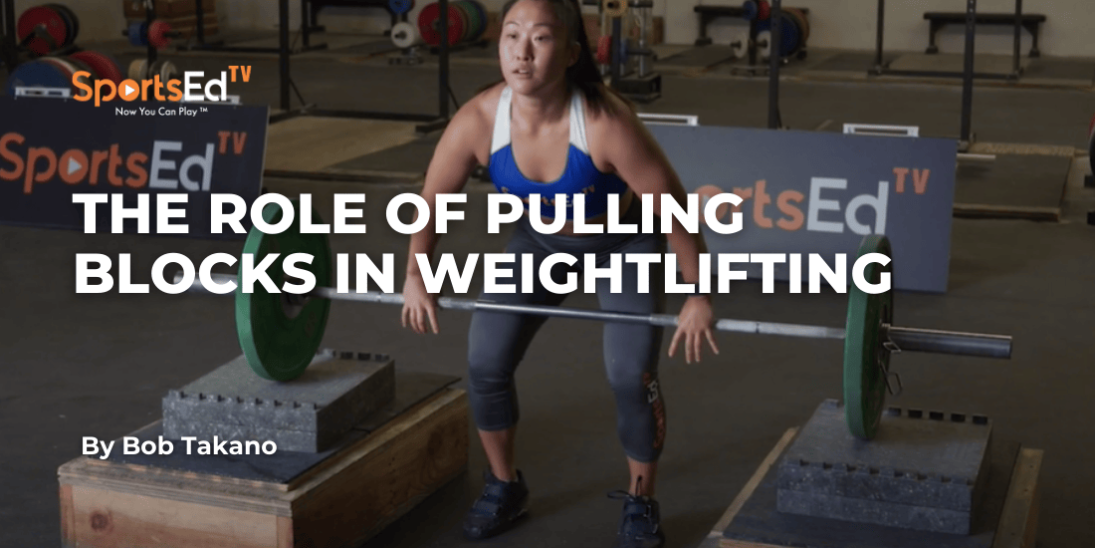
The loading will be the primary variant rather than the exercise choices. Some of these exercises will be employed only in the event of a need for remediation, and then will be discontinued once the weakness is brought into balance. Again, the variety of exercises will diminish as the competition draws near. On blocks means the lifter is standing on a block that places the instep very nearly touching the bar at the starting position. Off blocks means that the bar is resting on blocks that elevate it off the floor at varied heights prior to the start of each repetition.
- Snatch (from the hang, on blocks, off blocks)
- Clean & Jerk
- Cleans (from the hang, on blocks, off blocks)
- Jerk off Rack
- Power Snatch (from the hang, on blocks, off blocks)
- Power Clean (from the hang, on blocks, off blocks)
- Power Jerk (in combination with power cleans or off racks)
- Snatch Pull (or Extension, on blocks, off blocks)
- Clean Pull (or Extension, on blocks, off blocks)
- Snatch Deadlift (Halting, Slow and Eccentric, on blocks)
- Clean Deadlift (Halting, Slow and Eccentric, on blocks)
- Romanian Deadlift (May be on blocks)
- Back Squat (Halting, Slow and Eccentric)
- Front Squat (Halting, Slow and Eccentric)
- Push Press (off rack)
- Press (Standing, Seated or Supine on flat or incline bench)
- Good Mornings (Straight-legged or bent-legged)
- Overhead Squat

Yearly Loading Parameters
The goal of this training is to elevate the performance level of exceptional weightlifters to an international caliber. Almost all athletes who reach this class ranking have progressed through the previous ranks very rapidly due to their talent. At this point, all the physical factors should be in place to embark on the most strenuous training regimen.
The annual training volume for an International Master of Sport lies within the 20,000 to 25,000 range, with variation being determined by age and bodyweight factors. The number of repetitions in the 90% to 100% range for snatch and clean & jerk lifts is from 400 to 700 for the year. Again, the cleans and the jerks are counted as separate repetitions.
The relative intensity range for Snatch and Clean & Jerk exercises normally falls in the 73% to 77% range. This figure may be skewed by the practice of including power snatches, power cleans and power jerks. Typically, a well-balanced, thoroughly trained weightlifter will have 100% figures in these lifts that are approximately 80% of the maximum for the classic versions. This means that if an athlete has a maximum classic snatch of 160 kg, and the maximum power snatch is 80% of that or 128 kg, then a 64% of the classic snatch weight is 102.4 kg and is counted in terms of relative intensity as 80% of the power snatch figure. The manner in which relative intensity is determined will then affect this relative intensity range.
The average volume for a four-week preparation mesocycle for International Masters has been calculated at 2,360 repetitions. The volume for a pre-competition mesocycle drops down to 1,500 repetitions. The maximum number of hours spent in training should range from 34 to 36 hours.
Loading in Zones of Intensity
Loading in Zones of Intensity: Distribution of Year Volume. The percentages in Table 3 represent the percentage of the annual volume for the exercise group designated in the first column. Remember that these are empirically derived guideline numbers that have proven to be effective. They are most useful when they are considered representatives of trends and patterns. They can and should be modified by an experienced coach.
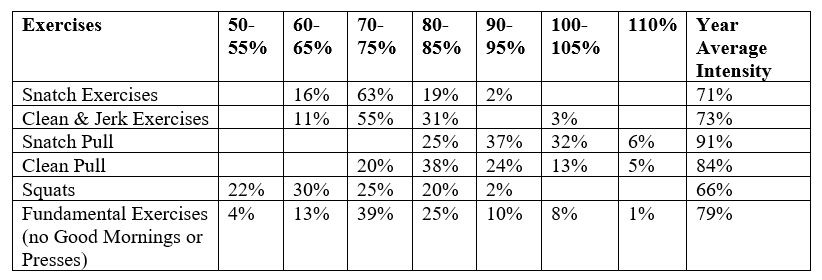
Table 3
The Snatch exercises include all snatches and power snatches. Clean & Jerk exercises include all cleans, power cleans, jerks and power jerks. The numbers for squat exercises have probably shifted toward the right. Higher intensity squats are valuable for generally strengthening the body, and only in extreme cases should the average intensities be reduced if they are affecting the development of speed characteristics. Again, the calculation of the figures for squats may be skewed by including overhead squats in this group and employing the absolute weights in the calculations. The Fundamental Exercises include all exercises in Groups 1—10 as listed in Chapter 8.
Calculations
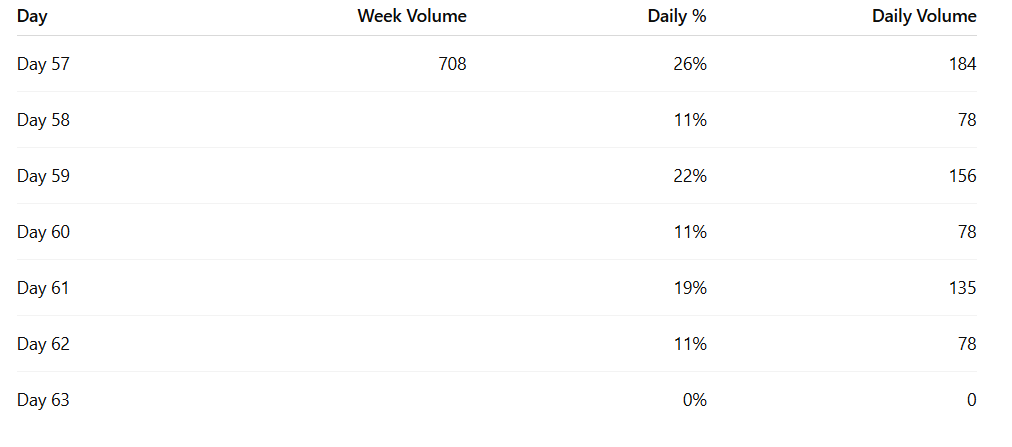
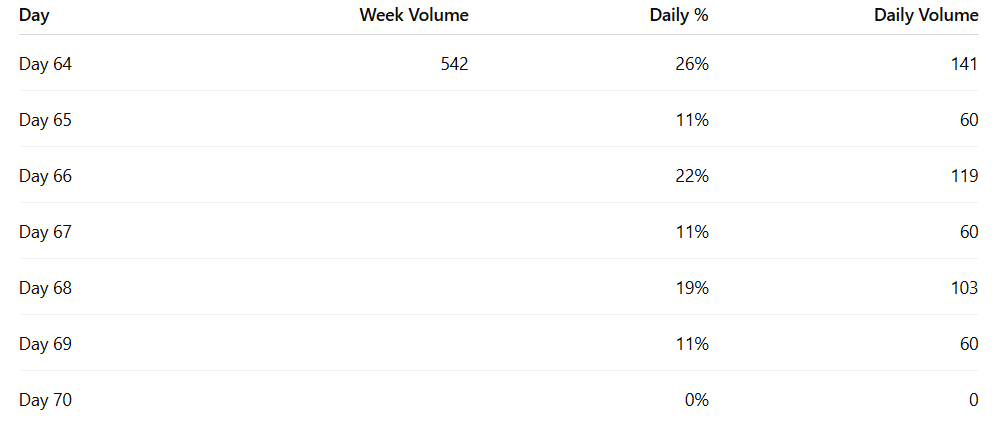
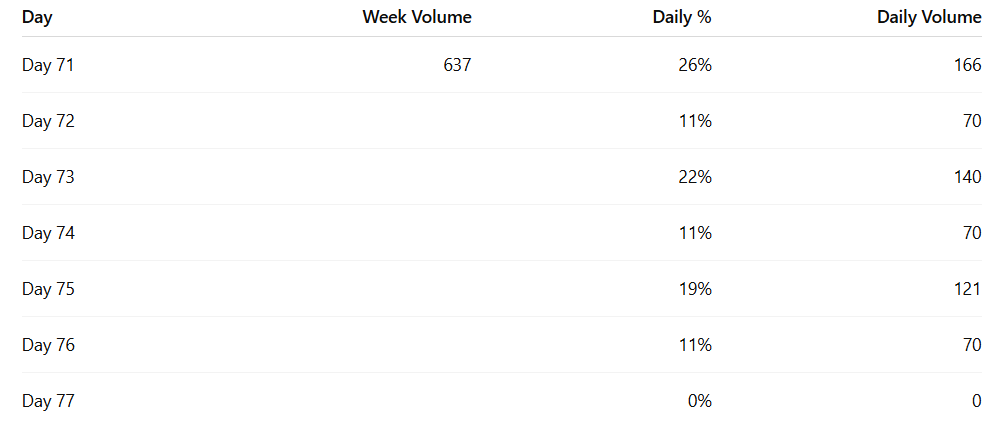
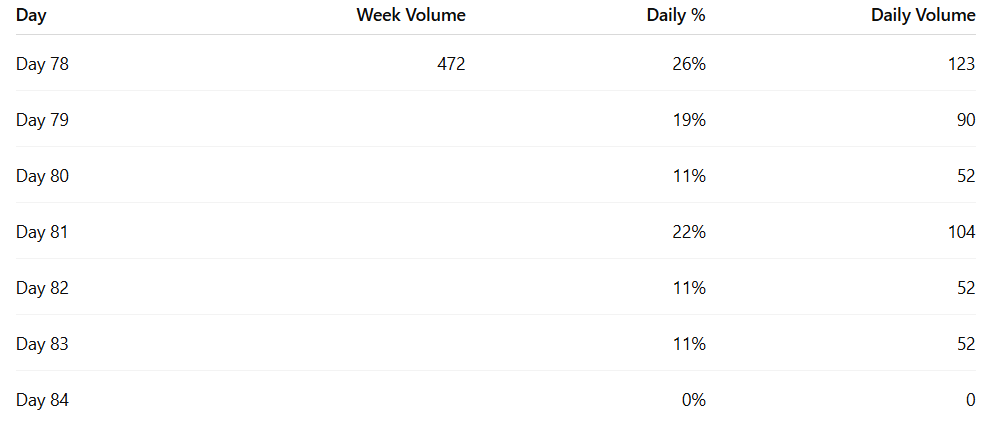
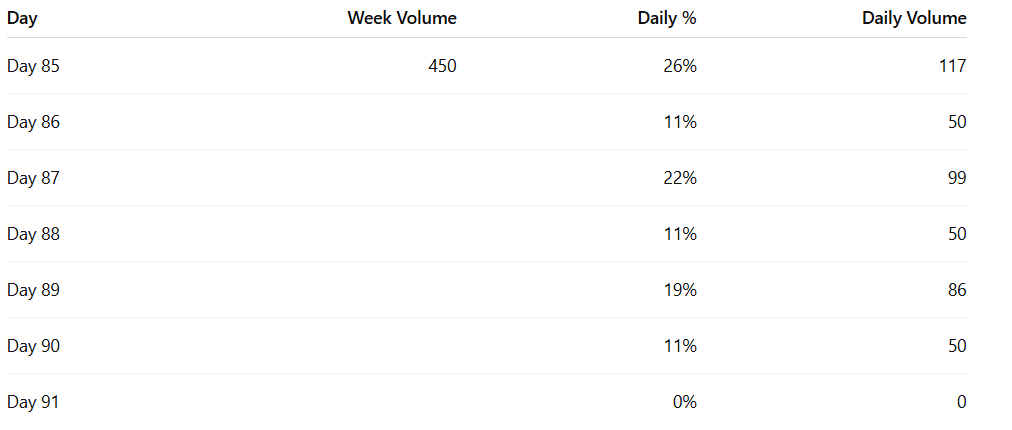
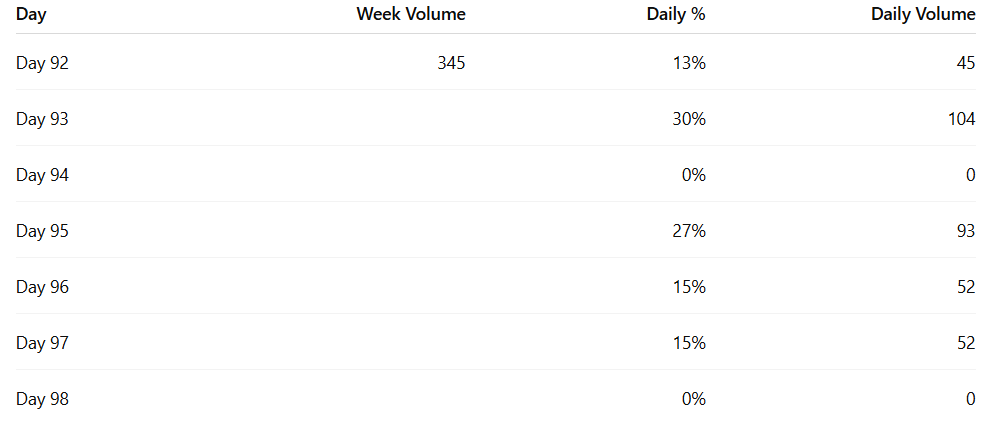
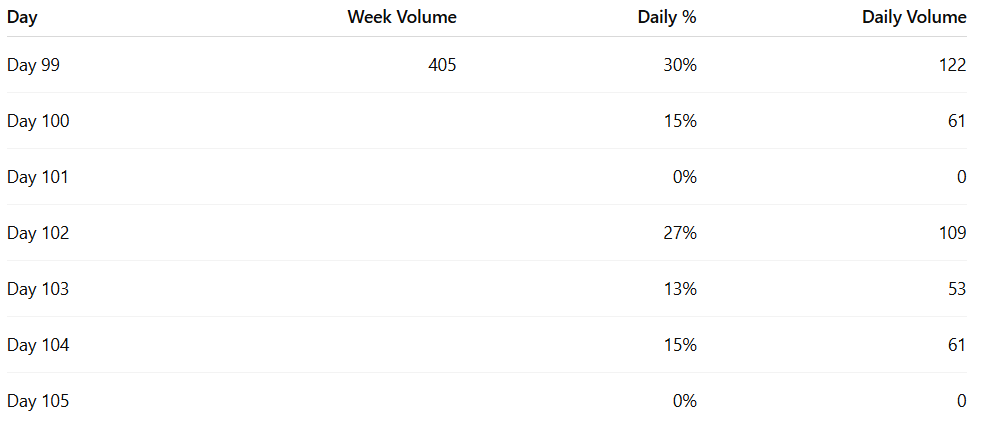
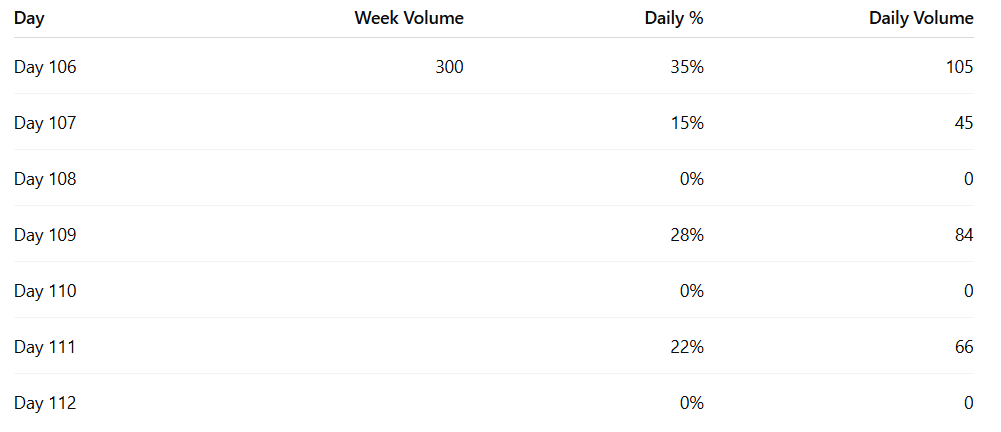
For International Master of Sport Athletes, it is advisable to schedule the major peak competition after three to four four-week preparation mesocycles followed by a five-week pre-competition mesocycle. This means that the weekly volumes must be varied during the preparation phase so that they do not fall into a regular pattern and can build up to a high volume point that sufficiently taxes the endocrines. The percentages of the 2,360 repetitions of the preparation mesocycle and the 1,500 repetitions of the pre-competition mesocycle allocated over the four weeks are 30%, 27%, 23%, and 20%, in any order.
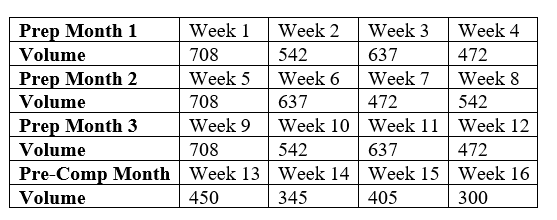
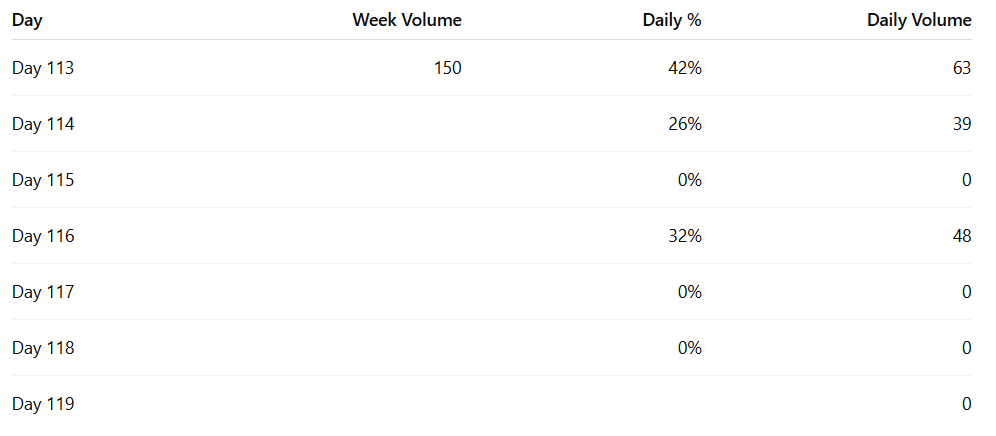
A 17th tapering week should precede the competition. The volume should be approximately 150 repetitions. This is therefore a 17-week cycle. The data in Table 4 are shown in Chart 1.
Chart 1: International Master of Sport Weekly Volumes
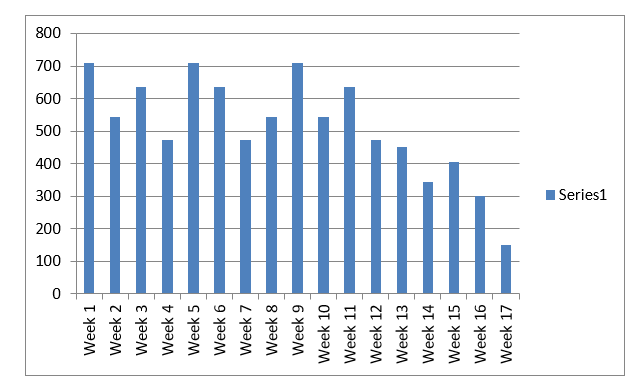
Chart 1: International Master of Sport Weekly Volumes
Training Days Per Week
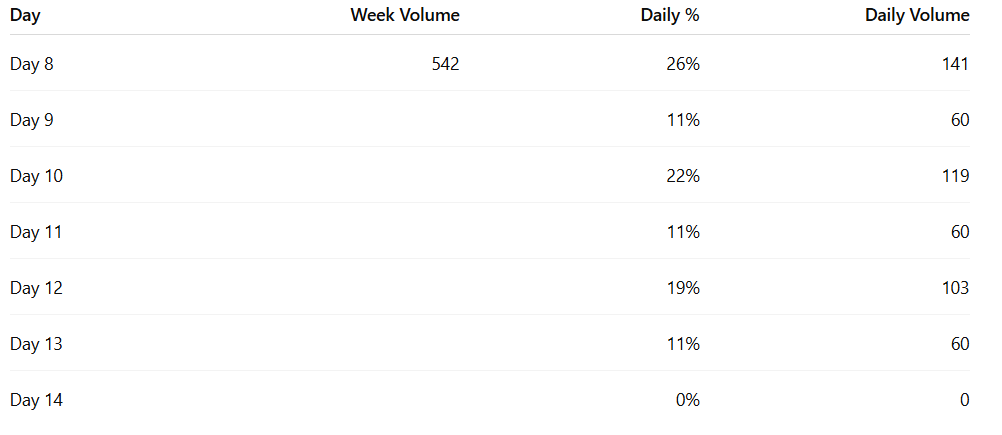
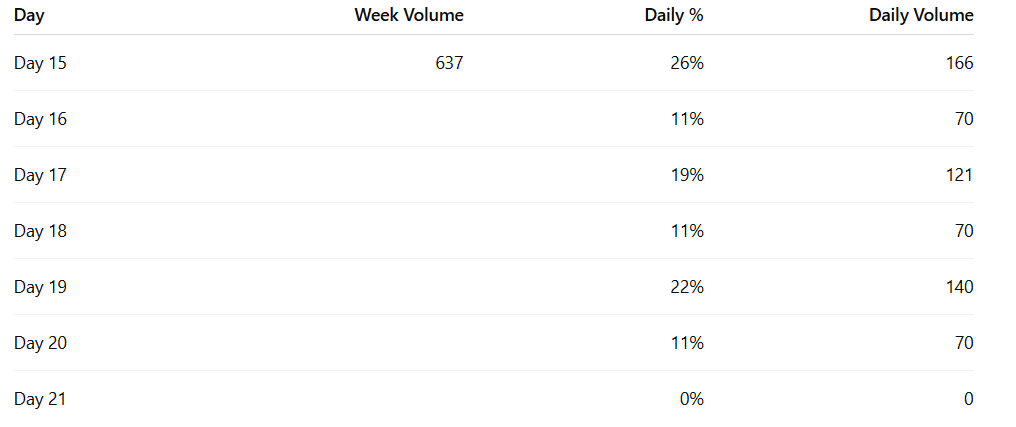
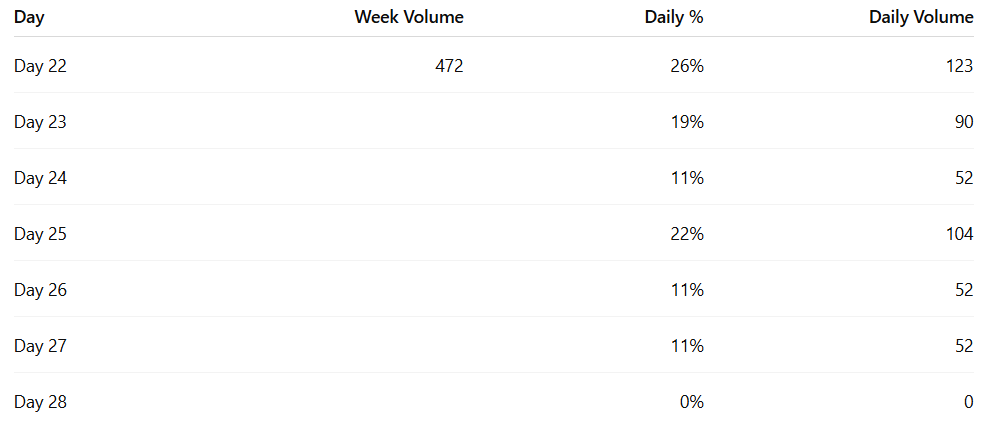
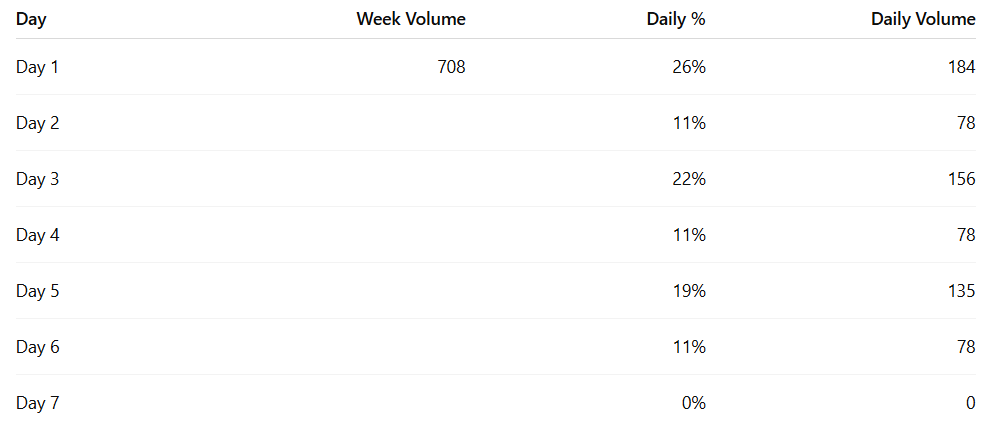
The Training Volume is then apportioned into the number of training days per week.

Table 4
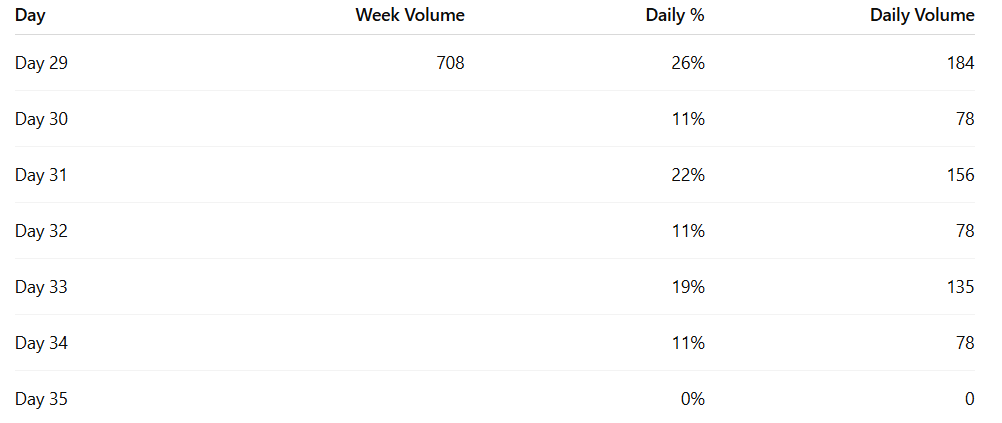
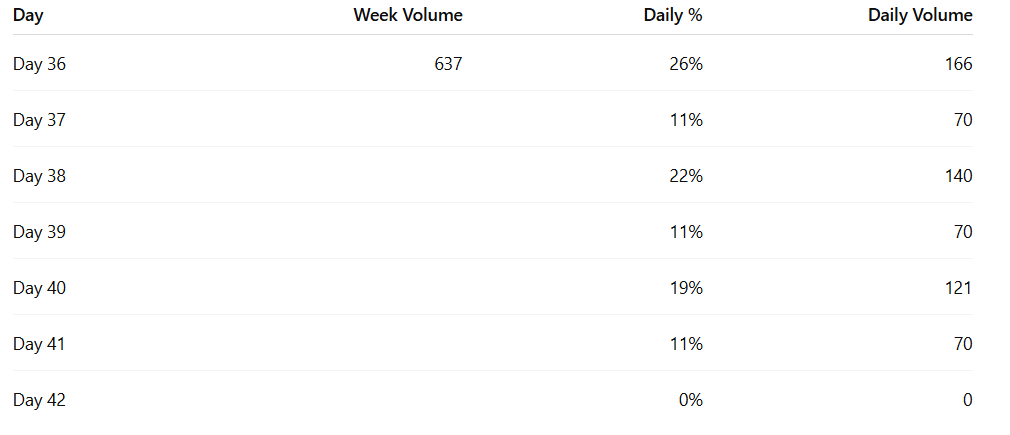
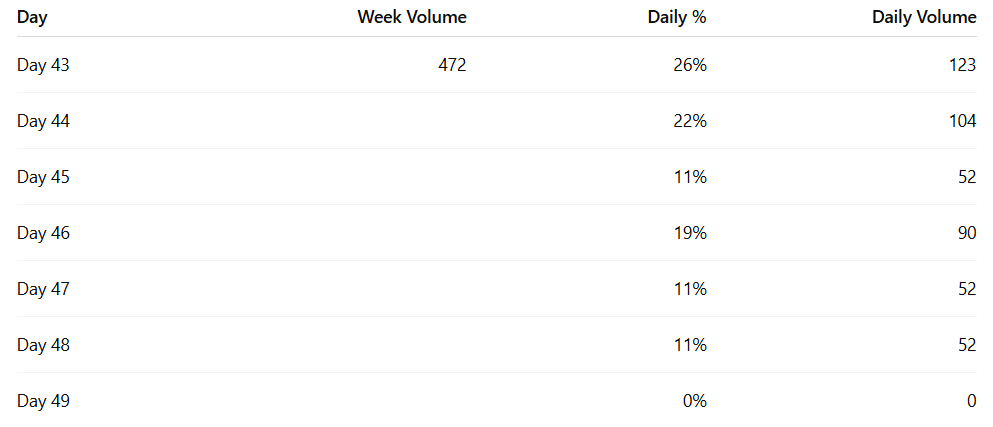
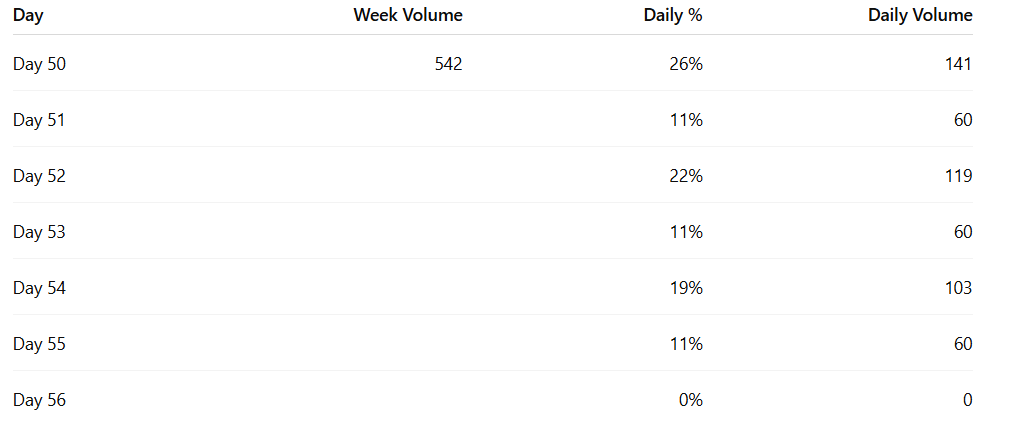
Daily Volumes for a 17-Week Macrocycle
Daily Volumes for a 17 Week macrocycle for an International Master of Sport Weightlifter. The preparation mesocycles are highlighted in yellow.
Preparation Mesocycle 1
Week 1
Week 2
Week 3
Week 4
Preparation Mesocycle 2
Week 5
Week 6
Week 7
Week 8
Preparation Mesocycle 3
Week 9
Week 10
Week 11
Week 12
Pre-Competition Phase
Week 13
Week 14
Week 15
Week 16
Taper Week
Week 17
Sample Training
This is a detailed program showing the specific exercises with accompanying appropriate percentages, repetitions, and sets. The numbers in the column to the right represent the exercise volume, the daily volume, and the weekly volume, respectively. The total weekly volume follows the boldfaced week designation, and the daily volume follows each day. On the days when the volume exceeds 100 repetitions, the training is divided into two sessions. The first one is after breakfast has been digested, and the second one is in the afternoon, after lunch and ideally a brief nap. CLICK LINK BELOW TO ACCESS THE FULL TRAINING