Basketball
100 Greatest NBA Players of All Time
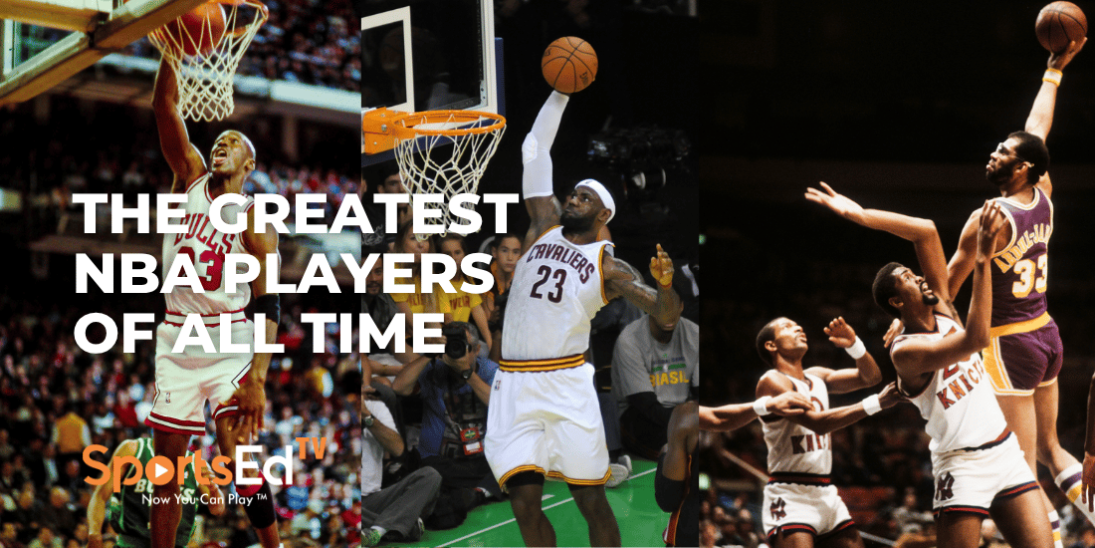
Who is the greatest NBA player of all time?
Few questions in sports create more debate. Fans who watched Michael Jordan dominate the 1990s may consider the answer obvious. Those who followed LeBron James's unprecedented longevity may see the argument differently. Earlier generations remember Bill Russell, Wilt Chamberlain, Kareem Abdul-Jabbar, Oscar Robertson, and Jerry West. Today’s fans are watching Stephen Curry, Nikola JokiÄ, Giannis Antetokounmpo, Shai Gilgeous-Alexander, and Luka DonÄiÄ build their own historical cases.
Most all-time rankings ultimately reflect the memories and preferences of the people creating them. That approach can favor recent, heavily televised eras while gradually pushing early NBA and ABA players out of the conversation.

SportsEdTV wanted to approach the question differently.
Rather than manually arranging famous names according to reputation, we evaluated 160 players under one fixed scoring framework. Every player received a score across five weighted criteria, and the formula generated the ranking.
The result is the Peak Supremacy Model, a ranking designed primarily to answer one question:
Who reached the highest level of basketball greatness at his absolute best?
This is not simply a ranking of career totals, years played, championships, or popularity. All of those factors matter, but peak performance carries the greatest weight.
Under this model, Michael Jordan ranks first, followed by LeBron James, Kareem Abdul-Jabbar, Wilt Chamberlain, and Magic Johnson.
SportsEdTV’s 10 Greatest NBA Players Ever
- Michael Jordan
- LeBron James
- Kareem Abdul-Jabbar
- Wilt Chamberlain
- Magic Johnson
- Bill Russell
- Hakeem Olajuwon
- Larry Bird
- Shaquille O’Neal
- Tim Duncan
Nikola JokiÄ is already No. 11, while Kobe Bryant, Kevin Durant, Oscar Robertson, Stephen Curry, and Giannis Antetokounmpo complete the top 16.
How the Peak Supremacy Model Works
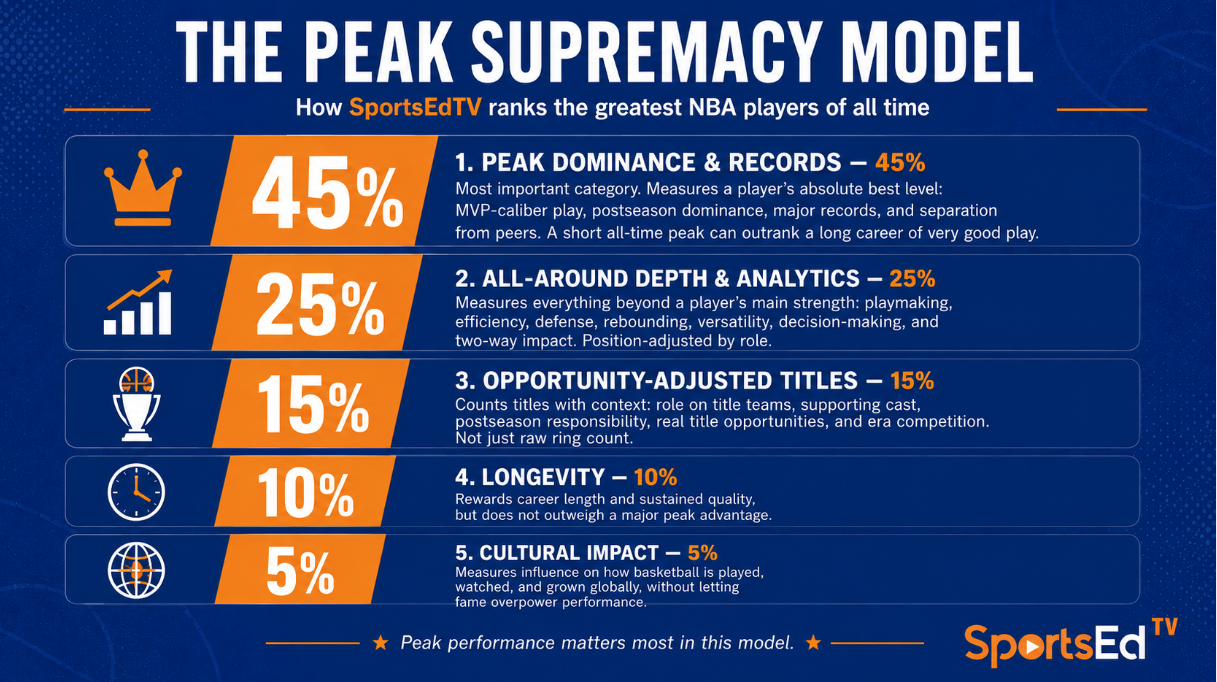
Every player receives a score from 0 to 10 in five categories.
Peak Dominance and Records: 45%
This is the most heavily weighted category.
It evaluates a player’s absolute highest level, including MVP-caliber performance, statistical separation from contemporaries, postseason dominance, major records, and the degree to which the player controlled games during his best seasons.
The model deliberately values true historical superiority more than simply remaining productive for a long time.
A player who becomes the best and most dominant force in basketball for five seasons can therefore rank ahead of someone who remains very good for 15 seasons but never reaches the same peak.
All-Around Depth and Analytics: 25%
This category measures everything a player contributed beyond his most obvious strength.
Depending on position and era, that can include:
- Playmaking
- Scoring efficiency
- Defensive impact
- Rebounding
- Off-ball value
- Positional versatility
- Decision-making
- Two-way influence
- Overall analytical profile
The category is position-adjusted. Centers and point guards are not compared against identical statistical benchmarks. Instead, each player is evaluated according to the responsibilities and possibilities of his position.
Opportunity-Adjusted Championships: 15%
Championships matter, but counting rings without context can be misleading.
A championship is influenced by teammates, coaching, organizational quality, competition, injuries, and the number of realistic title opportunities available to a player.
The model therefore evaluates:
- The player’s role on championship teams
- The quality of his supporting cast
- His postseason responsibility
- The number of legitimate title opportunities he received
- The competitive context of his era
A championship earned as the central force of a team is not treated identically to one earned in a smaller supporting role. A historically great player is also not automatically dismissed because his organization failed to build a championship roster around him.
Longevity: 10%
Longevity rewards career length and sustained quality.
It considers how long a player remained productive, how many seasons he performed at an elite level, and how successfully he adapted as his athletic abilities and role changed.
Longevity matters, but at 10%, it does not control the ranking. It can separate players with similar peaks, but it cannot completely overcome a major difference in absolute best-level performance.
Cultural Impact: 5%
Cultural impact measures influence on how basketball is played, watched, discussed, and developed globally.
It includes:
- Tactical influence
- Positional innovation
- Global reach
- Popularization of the sport
- Influence on future players
- Changes in how teams approached the game
The category is limited to 5% so that fame and popularity cannot overpower basketball performance.
How the Scores Are Interpreted
To improve consistency across 160 players, SportsEdTV uses the following general scoring anchors:
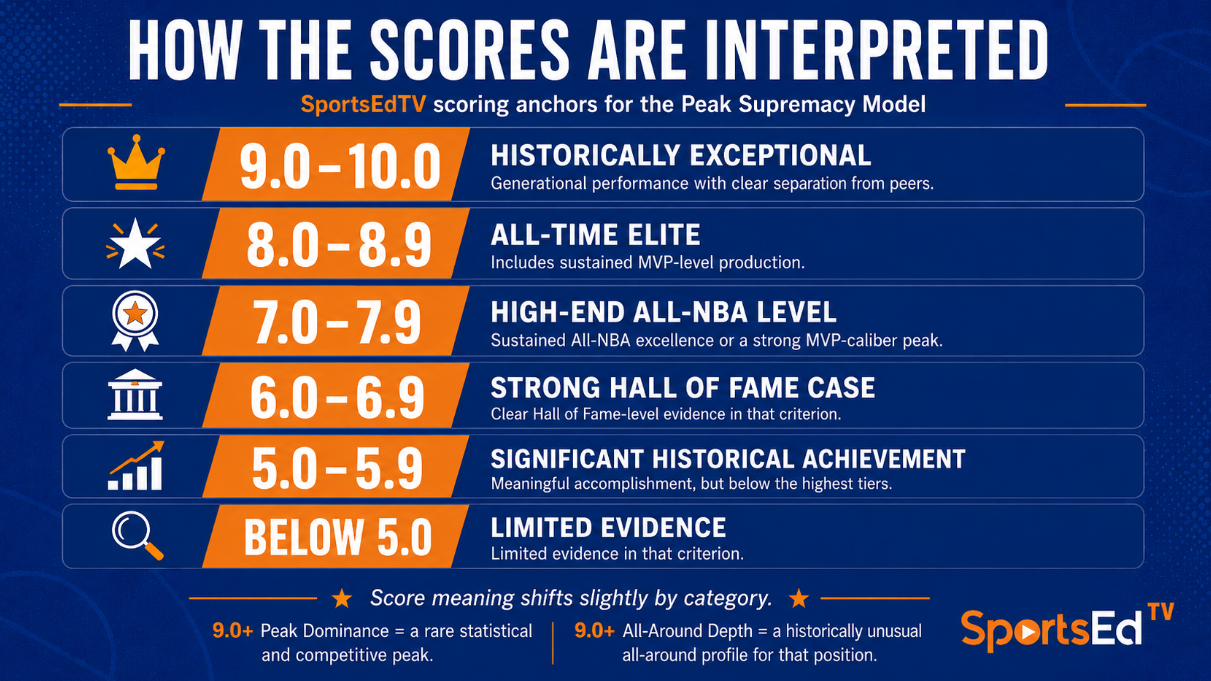
The meaning of a score changes slightly by category.
For example, a score above 9.0 in Peak Dominance indicates a statistical and competitive peak with few historical precedents. A score above 9.0 in All-Around Depth indicates a historically unusual combination of skills and responsibilities for the player’s position.
How Players From Different Eras Are Compared
Comparing players across eras is the most difficult part of any historical ranking.
Professional basketball in 1952 was not the same sport structurally or tactically as basketball in 1992 or 2026. Rules, pace, league size, travel, training, defensive systems, and the available talent pool all changed.
The NBA did not introduce the 24-second shot clock until the 1954–55 season. It did not adopt the three-point line until 1979–80. The ABA used the three-point line beginning in 1967, while the earlier American Basketball League had used one during the 1961–62 season.
For that reason, raw statistics from different eras are not treated as directly equivalent.
Players are evaluated according to:
- Dominance relative to their contemporaries
- Rules and tactical conditions
- League pace
- Positional responsibilities
- Postseason structure
- Available competition
- Championship opportunity
- The quality and completeness of the surviving evidence
The model does not attempt to determine exactly how George Mikan would perform in a modern defensive system or how Stephen Curry would have played without a three-point line.
Those questions cannot be answered objectively.
Instead, the model asks how completely each player mastered the version of professional basketball placed in front of him.
How the Candidate Pool Was Built
The ranking was not limited to players remembered by a modern editorial panel.
SportsEdTV systematically cross-checked its candidate pool against six prominent historical and contemporary sources:
- The NBA 75th Anniversary Team
- ESPN’s major all-time rankings
- Bleacher Report’s Top 100
- SLAM Magazine’s Top 100
- The Athletic’s Top 100
- The complete Naismith Memorial Basketball Hall of Fame induction record
This was a completeness check, not a validation of individual scores.
Appearing on one or more external lists guaranteed that a player would be considered. It did not determine where he would rank.
The Hall of Fame was used carefully. It recognizes achievement across college basketball, international basketball, coaching, and contributor categories, not only NBA playing performance. Hall of Fame induction therefore did not automatically improve a player’s score.
Its complete historical record was used as a discovery tool to ensure that deserving NBA and ABA players from the earliest decades were not forgotten.

The 100 Greatest NBA Players of All Time
Positions are listed as guard (G), forward (F), and center (C). Scores are shown on a 10-point scale and rounded to two decimal places.
Nos. 1–25
- Michael Jordan | G | 1984–2003 | 9.62
- LeBron James | F | 2003–2026 | 9.40
- Kareem Abdul-Jabbar | C | 1969–1989 | 9.32
- Wilt Chamberlain | C | 1959–1973 | 9.14
- Magic Johnson | G | 1979–1996 | 9.08
- Bill Russell | C | 1956–1969 | 9.06
- Hakeem Olajuwon | C | 1984–2002 | 9.02
- Larry Bird | F | 1979–1992 | 9.00
- Shaquille O’Neal | C | 1992–2011 | 8.93
- Tim Duncan | F/C | 1997–2016 | 8.86
- Nikola JokiÄ | C | 2015–2026 | 8.70
- Kobe Bryant | G | 1996–2016 | 8.64
- Kevin Durant | F | 2007–2026 | 8.57
- Oscar Robertson | G | 1960–1974 | 8.48
- Stephen Curry | G | 2009–2026 | 8.47
- Giannis Antetokounmpo | F | 2013–2026 | 8.43
- Moses Malone | C | 1974–1995 | 8.11
- Jerry West | G | 1960–1974 | 8.08
- Kawhi Leonard | F | 2011–2026 | 8.07
- Julius Erving | F | 1971–1987 | 8.01
- Scottie Pippen | F | 1987–2004 | 7.90
- George Mikan | C | 1946–1956 | 7.89
- David Robinson | C | 1989–2003 | 7.88
- Karl Malone | F | 1985–2004 | 7.75
- Shai Gilgeous-Alexander | G | 2018–2026 | 7.71
Nos. 26–50
- Kevin Garnett | F | 1995–2016 | 7.71
- Dirk Nowitzki | F | 1998–2019 | 7.70
- Dwyane Wade | G | 2003–2019 | 7.70
- Elgin Baylor | F | 1958–1971 | 7.67
- John Havlicek | F | 1962–1978 | 7.39
- Anthony Davis | F/C | 2012–2026 | 7.34
- Isiah Thomas | G | 1981–1994 | 7.27
- John Stockton | G | 1984–2003 | 7.27
- Bill Walton | C | 1974–1987 | 7.25
- Jason Kidd | G | 1994–2013 | 7.15
- Luka DonÄiÄ | G | 2018–2026 | 7.12
- Jimmy Butler | F | 2011–2026 | 7.12
- Charles Barkley | F | 1984–2000 | 7.11
- Draymond Green | F | 2012–2026 | 7.10
- Dennis Rodman | F | 1986–2000 | 7.06
- Kyrie Irving | G | 2011–2026 | 7.05
- Bob Cousy | G | 1950–1963 | 7.04
- Jayson Tatum | F | 2017–2026 | 6.96
- Nate Archibald | G | 1970–1984 | 6.89
- Manu Ginobili | G | 2002–2018 | 6.88
- Pau Gasol | F/C | 2001–2019 | 6.87
- Allen Iverson | G | 1996–2010 | 6.86
- Bob Pettit | F | 1954–1965 | 6.83
- Dwight Howard | C | 2004–2022 | 6.80
- Rick Barry | F | 1965–1980 | 6.79
Nos. 51–75
- Willis Reed | C | 1964–1974 | 6.74
- Elvin Hayes | F/C | 1968–1984 | 6.67
- Tony Parker | G | 2001–2019 | 6.65
- James Harden | G | 2009–2026 | 6.64
- Chris Paul | G | 2005–2026 | 6.64
- Paul Pierce | F | 1998–2017 | 6.62
- Kevin McHale | F | 1980–1993 | 6.61
- Russell Westbrook | G | 2008–2026 | 6.59
- Paul George | F | 2010–2026 | 6.58
- Joel Embiid | C | 2016–2026 | 6.55
- Steve Nash | G | 2004–2015 | 6.55
- Chris Bosh | F/C | 2003–2016 | 6.53
- Billy Cunningham | F | 1965–1976 | 6.52
- Wes Unseld | C | 1968–1981 | 6.52
- Joe Dumars | G | 1985–1999 | 6.51
- Clyde Drexler | G | 1983–1998 | 6.50
- Patrick Ewing | C | 1985–2002 | 6.49
- Ray Allen | G | 1996–2014 | 6.48
- James Worthy | F | 1982–1994 | 6.48
- Gary Payton | G | 1990–2007 | 6.47
- Earl Monroe | G | 1967–1980 | 6.47
- Dennis Johnson | G | 1976–1990 | 6.46
- Dave Cowens | C | 1970–1983 | 6.44
- Bob McAdoo | F/C | 1972–1986 | 6.40
- Chauncey Billups | G | 1997–2014 | 6.39
Nos. 76–100
- Artis Gilmore | C | 1971–1988 | 6.38
- Damian Lillard | G | 2012–2026 | 6.34
- Klay Thompson | G | 2011–2026 | 6.29
- Bob Lanier | C | 1970–1984 | 6.26
- Bernard King | F | 1977–1993 | 6.24
- Dave DeBusschere | F | 1962–1974 | 6.22
- Grant Hill | F | 1994–2013 | 6.20
- Jerry Lucas | F/C | 1963–1974 | 6.19
- Carmelo Anthony | F | 2003–2022 | 6.14
- Dolph Schayes | F | 1949–1964 | 6.12
- Tim Hardaway Sr. | G | 1989–2003 | 6.09
- Sam Jones | G | 1957–1969 | 6.08
- Alonzo Mourning | C | 1992–2008 | 6.07
- Dominique Wilkins | F | 1982–1999 | 6.01
- Tracy McGrady | G/F | 1997–2013 | 5.97
- Dikembe Mutombo | C | 1991–2009 | 5.96
- Bill Sharman | G | 1950–1961 | 5.93
- David Thompson | G/F | 1975–1984 | 5.92
- Paul Arizin | F | 1950–1962 | 5.91
- Hal Greer | G | 1958–1973 | 5.90
- George Gervin | G | 1972–1986 | 5.89
- Chris Webber | F | 1993–2008 | 5.84
- Robert Parish | C | 1976–1997 | 5.81
- Vince Carter | G/F | 1998–2020 | 5.80
- Dan Issel | F/C | 1970–1985 | 5.77
Why Michael Jordan Ranks First
Jordan earns the highest overall score in the model at 9.62.
His case is built around an extraordinary combination of categories rather than one isolated achievement. He receives a perfect 10.0 for Peak Dominance and Records, a 9.8 for Opportunity-Adjusted Titles, and a perfect 10.0 for Cultural Impact.
That combination gives Jordan the strongest concentration of peak superiority, championship responsibility, and influence in the ranking.
LeBron James comes closest, finishing second at 9.40. He has one of the most balanced profiles in the entire model, including a 9.4 Peak score, 9.6 in All-Around Depth, 9.3 in Longevity, and 9.8 in Cultural Impact.
The gap is narrow, but the peak-weighted structure gives Jordan the advantage.
A model centered more heavily on longevity and total career value could reasonably produce a different result.
Why Kareem Abdul-Jabbar Ranks Third
Kareem has perhaps the most complete combination of peak greatness and longevity in the ranking.
His 9.6 Peak score is supported by a perfect 10.0 for Longevity and a 9.6 Opportunity-Adjusted Titles score. He performs exceptionally well regardless of whether the discussion emphasizes dominance, career duration, or championship success.
Jordan and LeBron finish ahead because their overall combinations fit this specific weighting system slightly better. Kareem nevertheless remains one of only eight players to score at least 9.00 overall.
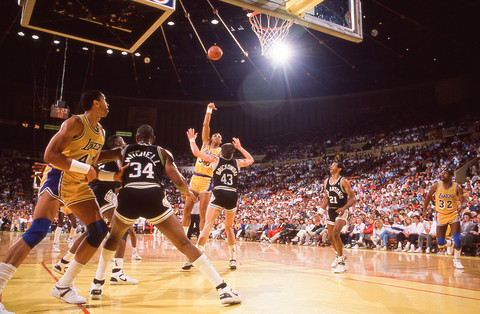
Wilt Chamberlain and Bill Russell Represent Two Forms of Dominance
Wilt Chamberlain receives a perfect 10.0 for Peak Dominance and Records, tying Jordan for the highest score in the category.
His overall score is reduced relative to Jordan by his Opportunity-Adjusted Titles score of 7.4.
Russell presents almost the reverse profile. His Peak score is 9.0, but he receives a perfect 10.0 for Opportunity-Adjusted Titles and a 9.0 for All-Around Depth.
The model therefore captures two different forms of historical greatness:
- Wilt as an unprecedented individual statistical force
- Russell as an extraordinary defensive, team, and championship force
Wilt finishes fourth and Russell sixth, with Magic Johnson separating them at No. 5.
Magic Johnson and Larry Bird Remain Among the Most Complete Players Ever
Magic receives the highest All-Around Depth score in the top 10 at 9.8. His 9.4 Opportunity-Adjusted Titles score also demonstrates how strongly the model evaluates his role in championship basketball.
Bird finishes eighth with one of the most balanced profiles on the list:
- 9.0 Peak Dominance
- 9.4 All-Around Depth
- 9.0 Opportunity-Adjusted Titles
- 9.4 Cultural Impact
Neither player relies on longevity to remain near the top. Their placement comes from the breadth and concentration of what they accomplished at their best.
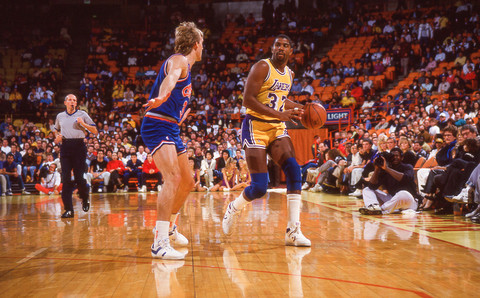
Hakeem Olajuwon Ranks Seventh
Hakeem’s placement is driven by an elite two-way profile.
He receives:
- 9.4 for Peak Dominance
- 9.2 for All-Around Depth
- 8.8 for Opportunity-Adjusted Titles
Only a small group of players combine scores above 9.0 in both Peak Dominance and All-Around Depth.
That balance places Hakeem ahead of Bird, Shaquille O’Neal, Tim Duncan, and every other center except Kareem, Wilt, and Russell.
Shaquille O’Neal Ranks Ninth
Shaq earns a 9.8 Peak Dominance score, the third-highest peak score in the entire top 10 behind Jordan and Wilt.
His overall ranking reflects the model’s strong preference for players who reached an almost unmatched best level, even when other candidates may have had more balanced or longer careers.
His 8.93 total places him immediately ahead of Tim Duncan.
Tim Duncan Completes the Top 10
Duncan’s profile differs from Shaq’s.
His Peak score of 8.6 is lower, but he receives:
- 9.4 for Longevity
- 9.3 for All-Around Depth
- 9.2 for Opportunity-Adjusted Titles
Duncan therefore reaches the top 10 through consistency across multiple dimensions rather than through one dominant category.
Nikola JokiÄ Is Already No. 11
JokiÄ receives an overall score of 8.70, placing him directly behind Duncan and ahead of Kobe Bryant.
His case is driven by two exceptional scores:
- 9.4 for Peak Dominance
- 9.2 for All-Around Depth
His current Longevity score of 7.8 and Opportunity-Adjusted Titles score of 7.0 leave room for further movement.
Because the model is updated after new seasons, JokiÄ has one of the clearest opportunities to enter the top 10.
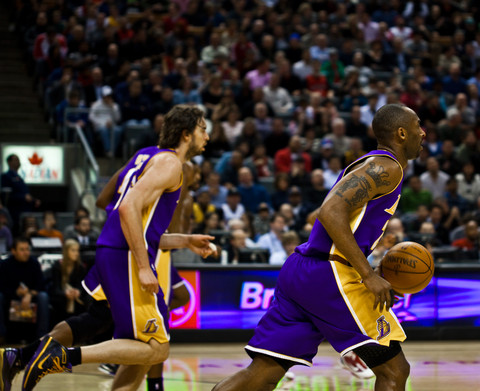
Kobe Bryant Ranks 12th
Kobe’s ranking is built on strength across several categories:
- 8.8 Peak Dominance
- 9.0 Longevity
- 8.4 Opportunity-Adjusted Titles
- 9.4 Cultural Impact
He does not match Jordan’s Peak or All-Around Depth scores, but his sustained excellence, championship profile, and global influence keep him firmly within the top 12.
Kevin Durant Ranks 13th
Durant receives a 9.4 Peak Dominance score, placing his best-level performance among the most highly rated in basketball history.
His 8.8 Longevity score also strengthens his case. His overall score of 8.57 places him ahead of Oscar Robertson, Stephen Curry, and Giannis Antetokounmpo.
Oscar Robertson and Stephen Curry Are Separated by 0.01
Robertson ranks 14th at 8.48. Curry ranks 15th at 8.47.
Robertson receives a remarkable 9.6 for All-Around Depth, while Curry receives a 9.8 for Cultural Impact and strong scores across Peak, Depth, and Opportunity-Adjusted Titles.
Their near tie shows how players with very different historical profiles can reach almost identical overall scores.
Giannis Antetokounmpo Ranks 16th
Giannis earns a 9.2 Peak score and an 8.4 All-Around Depth score.
His lower Longevity score of 6.8 reflects the fact that his career remains active and incomplete. Additional elite seasons and championship opportunities could move him substantially higher.
Kawhi Leonard’s Peak Keeps Him in the Top 20
Kawhi ranks 19th despite a Longevity score of only 5.4.
His position is sustained by:
- 8.8 Peak Dominance
- 8.4 All-Around Depth
- 8.0 Opportunity-Adjusted Titles
This is one of the clearest examples of how the Peak Supremacy Model differs from a career-accumulation ranking.
Why Shai Gilgeous-Alexander Is Already No. 25
Shai ranks 25th with an overall score of 7.71.
His 9.0 Peak Dominance score places him in historically exceptional territory. His lower Longevity score of 5.5 reflects the still-developing length of his career rather than a judgment against his current level.
He shares the same rounded overall score as Kevin Garnett, but Shai receives the higher rank because ties are broken first by Peak Dominance.
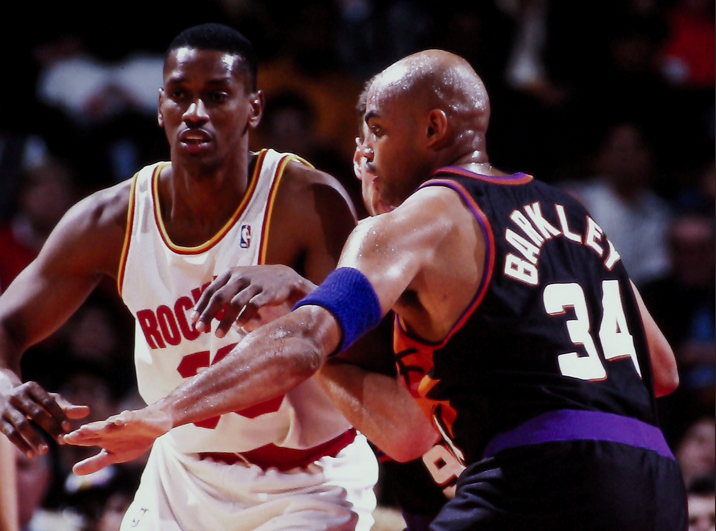
Why Charles Barkley Ranks 38th
Barkley receives an elite 8.6 Peak score and an 8.2 All-Around Depth score.
His Opportunity-Adjusted Titles score is only 1.0. Because championships represent 15% of the model, that limits his final ranking despite an exceptional individual profile.
The same dynamic affects several great players who never converted their best seasons into championships.
Why James Harden and Chris Paul Rank Outside the Top 50
Harden and Paul are tied at 6.64 before the tiebreak procedure.
Harden receives an 8.2 Peak score, while Paul receives a 9.2 for Longevity and an 8.8 for All-Around Depth.
Their Opportunity-Adjusted Titles scores are 1.0 and 0.8, respectively. Those scores significantly reduce their final totals.
Harden ranks 54th and Paul 55th because Harden has the higher Peak Dominance score.
Why Bill Walton Ranks 34th Despite a Shorter Career
Walton’s 8.4 Peak score keeps him high in a model centered on best-level performance.
His Longevity score is only 3.6, one of the lowest among players ranked in the top 50. A longevity-weighted system would place him much lower.
The Peak Supremacy Model instead recognizes the difference between limited career duration and limited ability.
What This Ranking Is Not
This ranking is not presented as a perfect scientific measurement of basketball greatness.
The weighted formula is transparent and reproducible, but the five category scores still require informed editorial judgment. Historical evidence is also uneven. Modern players benefit from complete video, advanced analytics, and tracking data. Earlier players often must be assessed through limited footage, incomplete statistics, and contemporary reporting.
The difference between a score of 7.71 and 7.70 should not be interpreted with the precision of an electronically timed race.
Players grouped closely together should be viewed as occupying a similar historical range.
The purpose of the formula is not to eliminate judgment. It is to structure that judgment, apply the same questions consistently, and make the reasoning visible.

Section: The Career Value Alternative
The Peak Supremacy Model is one legitimate way to define greatness — but it's not the only one, and we don't want to pretend otherwise. Before settling on this weighting, we built the same five-criteria model with a different balance: Peak Dominance & Records 32.5%, Longevity 22.5%, Depth & Analytics 17.5%, Opportunity-Adjusted Titles 17.5%, Cultural Impact 10%. Call it the Career Value Model — it asks who provided the most value across a complete career, rather than who was best at his absolute peak.
Run against the exact same 160 players and the same underlying scores, it produces a meaningfully different order:
- Michael Jordan — 9.49
- LeBron James — 9.38
- Kareem Abdul-Jabbar — 9.38
- Bill Russell — 8.98
- Wilt Chamberlain — 8.96
- Magic Johnson — 8.94
- Larry Bird — 8.84
- Tim Duncan — 8.83
- Shaquille O'Neal — 8.81
- Hakeem Olajuwon — 8.74
- Kobe Bryant — 8.73
- Stephen Curry — 8.49
- Kevin Durant — 8.47
- Nikola JokiÄ — 8.32
- Oscar Robertson — 8.14
- Moses Malone — 8.14
- Giannis Antetokounmpo — 8.09
- Julius Erving — 7.95
- Jerry West — 7.88
- Karl Malone — 7.80
Jordan and LeBron stay at the top either way, but Kareem jumps from 3rd to a near-tie for 2nd, Russell and Wilt swap order, and — most tellingly — several players move dramatically depending on which question you're asking:
Rewarded most by Career Value over Peak Supremacy:
- Earl Monroe: #71 → #51 (+20)
- Ray Allen: #68 → #50 (+18)
- Robert Parish: #98 → #82 (+16)
- Vince Carter: #99 → #84 (+15)
- Klay Thompson: #78 → #65 (+13)
Rewarded most by Peak Supremacy over Career Value:
- Joel Embiid: #60 → #86 under Career Value (−26)
- Bill Walton: #34 → #58 (−24)
- Luka DonÄiÄ: #36 → #56 (−20)
- Penny Hardaway: #114 → #131 (−17)
- Yao Ming: #111 → #128 (−17)
That contrast is the point. A player like Bill Walton — historically dominant for a short window, then injury-limited — is exactly who a peak-focused model should reward and a career-focused model should punish. A player like Ray Allen — never the best player in the league at any single moment, but sustained, efficient, and durable for two decades — is exactly the reverse case. Neither ranking is "wrong." They're answering different questions with the same honest data.
Frequently Asked Questions
Why is peak performance weighted at 45%?
Because the model is designed to answer who was the greatest player at his absolute best.
That is different from asking who accumulated the greatest number of career achievements or productive seasons.
A player who became the most dominant force in basketball for several years should not automatically rank below someone who played longer but never reached the same level.
Does that disadvantage durable players?
It can place them lower than a longevity-centered ranking would.
That is not a punishment for playing longer. Longevity is still included and can be decisive when players have similar peaks.
It simply does not outweigh a major difference in absolute best-level performance.
Why is Jordan ahead of LeBron?
Jordan has the stronger combination under this specific weighting system.
He receives perfect scores for Peak Dominance and Cultural Impact, along with a 9.8 for Opportunity-Adjusted Titles.
LeBron is more balanced in several areas and has the stronger Longevity and All-Around Depth scores. A model giving greater weight to career duration could place LeBron first.
Why is JokiÄ already ahead of Kobe Bryant?
JokiÄ receives higher scores in the two most heavily weighted categories: Peak Dominance and All-Around Depth.
Kobe has the advantage in Longevity, championships, and Cultural Impact. However, Peak and Depth combine for 70% of the model, which gives JokiÄ the higher overall score.
Why are players from the 1940s and 1950s included?
Because NBA history did not begin with modern television coverage.
The ranking extends to the founding of the Basketball Association of America in 1946. The BAA became the NBA following its 1949 merger with the National Basketball League.
Players from those decades competed under different rules and conditions, but their accomplishments remain part of professional basketball history.
How can a 1950s player be compared fairly with a modern player?
Players are judged against their own eras rather than through direct comparison of raw statistics.
The model considers pace, rules, league structure, competition, positional responsibilities, postseason opportunities, and historical evidence.
It evaluates how thoroughly each player dominated the basketball environment available to him.
Does the ranking include ABA performance?
Yes.
Meaningful ABA careers are included and era-adjusted. Ignoring ABA seasons would erase major portions of the legacies of Julius Erving, Artis Gilmore, Dan Issel, George Gervin, David Thompson, and other important players.
Are international accomplishments included?
International achievements may contribute to Cultural Impact and provide relevant context, but this is primarily an NBA and ABA ranking.
A player must have meaningful NBA or ABA participation to qualify. International-only careers are outside the scope of this project.
Is this a men’s basketball ranking?
Yes.
This ranking covers men’s NBA and ABA history. A women’s basketball ranking would require its own candidate pool, competitive context, and evaluation model.
Was the ranking created by a person or an algorithm?
Both elements are involved.
Editors evaluate players under the same five criteria. The weighted formula then calculates the overall score and ranking.
The final order is not manually rearranged after the calculation, but the underlying category scores still require basketball judgment.
How are ties broken?
Ties in the weighted score are broken first by the player’s Peak Dominance and Records score.
If the players remain tied, they are ordered alphabetically.
No two players share a numbered position in the published ranking.
Because displayed scores are rounded to two decimals, two players can show the same published score while remaining separated by the formal tiebreaking procedure.
Why does this ranking differ from the NBA 75 or major media rankings?
Each project asks a different question.
The NBA 75th Anniversary Team was an unranked group selected by a voting panel. Media rankings commonly combine individual ballots, editorial discussion, career totals, championships, and personal judgment.
SportsEdTV uses a published formula in which Peak Dominance and All-Around Depth account for 70% of the total score.
Different definitions of greatness will produce different results.
Will the ranking change?
Yes.
This is a living model. Active players can improve their Peak, Longevity, Championship, Depth, and Cultural Impact scores.
The ranking will be reviewed as new seasons are completed and as additional historical evidence is considered.
Where can I see the complete ranking and individual category scores?
The article presents the top 100 players. The complete SportsEdTV model contains 160 evaluated players.
[View the complete 160-player ranking and score breakdown →]
For the full methodology, scoring anchors, historical scope, and source-selection process:
[Read the Peak Supremacy Model methodology →]
Sources & Further Reading
(Suggested placement: end of article, before "Final Perspective," or as a dedicated footer section)
This ranking's candidate pool was checked against six sources, each linked below for readers who want to compare directly:
- NBA 75th Anniversary Team — the league's own official honoree list
- ESPN's NBA all-time rankings — expert-panel voting on historical greatness
- Bleacher Report's Top 100 NBA Players of All Time — staff-panel ranking
- SLAM Magazine's Top 100 — one of the longest-running dedicated basketball GOAT lists
- The Basketball 100 — (David Aldridge & John Hollinger, eds., HarperCollins, 2024)
- Naismith Memorial Basketball Hall of Fame induction records — the sport's complete enshrinement history
We also reviewed the academic literature on statistical approaches to ranking NBA greatness. The most directly relevant is a peer-reviewed study — Mertz, Hoover, Burke, Bellar, Jones, Leitzelar & Judge (2016), "Ranking the greatest NBA players: A sport metrics analysis," International Journal of Performance Analysis in Sport, 16(3) — which built a regression model on points, rebounds, and assists per game plus championships, explaining 53% of the variation in a human-voted all-time ranking. Notably, that study found win shares per 48 minutes — a stat many "advanced" GOAT arguments lean on — was not a statistically significant predictor once the other variables were accounted for. It's a useful independent data point: even a pure statistical regression finds that raw production and team success outweigh advanced efficiency metrics in explaining who fans and voters consider great, which lines up with why this model weights Peak Dominance and Titles as heavily as it does.
Final Perspective
No formula will permanently settle the greatest-player debate.
Basketball has changed too much across its history, and the word “greatest” will always involve questions of values and interpretation.
The purpose of this ranking is not to eliminate disagreement.
It is to improve the quality of the disagreement.
The Peak Supremacy Model makes the criteria visible, gives every era serious consideration, separates peak greatness from career accumulation, adjusts championships for opportunity, and evaluates every player through the same five-part framework.
Fans will disagree with individual placements. That is inevitable and welcome.
But a productive debate should begin with more than memory, reputation, or ring counting. It should begin with a clear definition of greatness, a transparent method, and a willingness to apply that method consistently across the complete history of the game.