Tennis, Pickleball, Basketball, Soccer, Volleyball, Mental Toughness
How to Build Self-Trust in Sports

You know the feeling. In practice, your movement is fluid, your decisions are clear, and your shots land where you want them. Then the match begins. The score matters. Your opponent applies pressure. Suddenly, the game that felt so natural becomes a struggle.
In my work with athletes across different levels, nearly 99% report the same frustration: they perform brilliantly in practice but struggle to reproduce that level in competition.
They often blame nerves, bad luck, or a loss of focus. But in my experience, beneath those explanations lies a recurring issue: a lack of self-trust.
How do you build the trust that allows you to use your skills when the pressure rises? It starts long before match day—with the commitments you make to yourself and whether you keep them.

The three foundations of self-trust
Self-trust goes deeper than feeling confident after a good training session. It means believing you can rely on yourself when things get uncomfortable.
I see three essential foundations:
· Trust in your technique: Believing that the mechanics and physical skills you have developed will hold up under pressure.
· Trust in your emotional resilience: Knowing you can regain your composure when you make mistakes or momentum shifts against you.
· Trust in your problem-solving: Having faith in your ability to adjust your tactics and find solutions when your original plan is not working.
When one of these foundations is weak, doubt has room to grow. You question a shot you have practiced thousands of times. You hesitate over a decision. You become preoccupied with what might go wrong instead of committing to what you need to do.
Would you trust a coach who never follows through
Imagine hiring a new coach. You are excited about the relationship and ready to put in the work.
The coach promises to deliver your personalized fitness program in three days. It arrives a week late. Next, he agrees to attend an important match, then cancels at the last minute. Finally, he promises to arrange a practice session with a stronger opponent. It never happens.
Each broken commitment changes how you see him. Eventually, you stop expecting him to deliver. When an important moment arrives, would you feel comfortable relying on him?
Now ask yourself a more difficult question: How often do you treat yourself the same way?
The small promises that shape your self-belief
Athletes make promises to themselves all the time:
· “I will start my morning workouts tomorrow.”
· “I will improve my nutrition this week.”
· “I will push 10% harder in my gym sessions.”
· “I will serve one extra basket twice a week.”
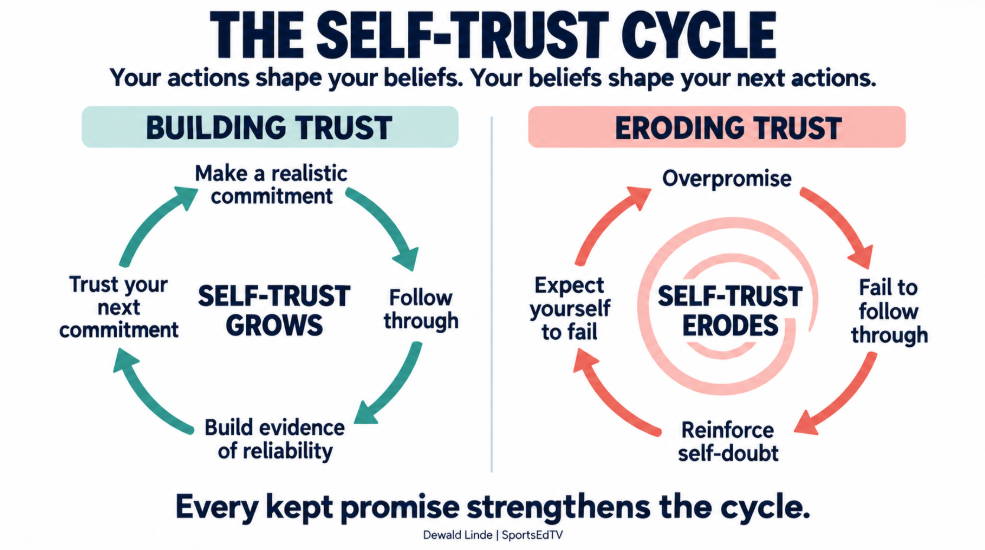
These intentions may sound small, but they matter. Every time you make a commitment and fail to follow through, you give yourself another reason to question your own reliability.
I think of this as becoming your own unreliable coach. You want to believe in yourself, but your daily actions keep sending a different message.
That history does not simply disappear when you step onto the court. In a tight match, it can become part of the doubt you carry into a crucial point. You want to commit fully, yet something inside you hesitates.
The opposite is equally powerful. Every promise you keep gives you evidence that you can depend on yourself.
The more you do what you say you will do, the more you will learn to trust yourself.

How to build self-trust every day
Building self-trust requires consistency. Treat your commitments seriously, and make them specific enough that you know whether you have followed through.
Make promises you intend to keep
Be deliberate about what you tell yourself you will do. If you are not committed to serving an extra basket on Friday, do not make that promise casually.
Choose a realistic action, decide when you will complete it, and follow through. “I will work on my serve more” is an intention. “I will serve one extra basket after practice on Tuesday and Friday” is a commitment you can act on.
Follow your standards when motivation drops
It is easy to keep a commitment when you feel enthusiastic. The harder moments come when you are tired of the routine or simply don't feel like doing the work.
Following through on your planned training when motivation is low reinforces an important belief: you can rely on yourself even when conditions aren't ideal.
This means honoring a sensible training plan, including its recovery days. Pushing harder is not always the same as preparing better.
Turn emotional control into a routine
“I will stay in control of my emotions” sounds good, but what will you actually do after a double fault or a missed opportunity?
Give yourself a specific response: turn away from the last point, take a controlled breath, relax your grip, and choose your intention for the next point.
Commit to performing that reset when you need it. You may still feel frustrated or nervous. Self-trust grows when you know you can respond constructively to those feelings.
Be consistent beyond practice
Your preparation includes the choices you make away from the court: sleep, nutrition, recovery, and how you organize your time.
When your actions consistently support your goals, you reinforce the message that your preparation matters—and that you follow through.
You do not need to make ten new commitments today. Start with one that matters and keep it.
Bring that trust into competition
Picture yourself preparing for an important point. You have a tactical plan. You know your target. You recognize what the situation requires.
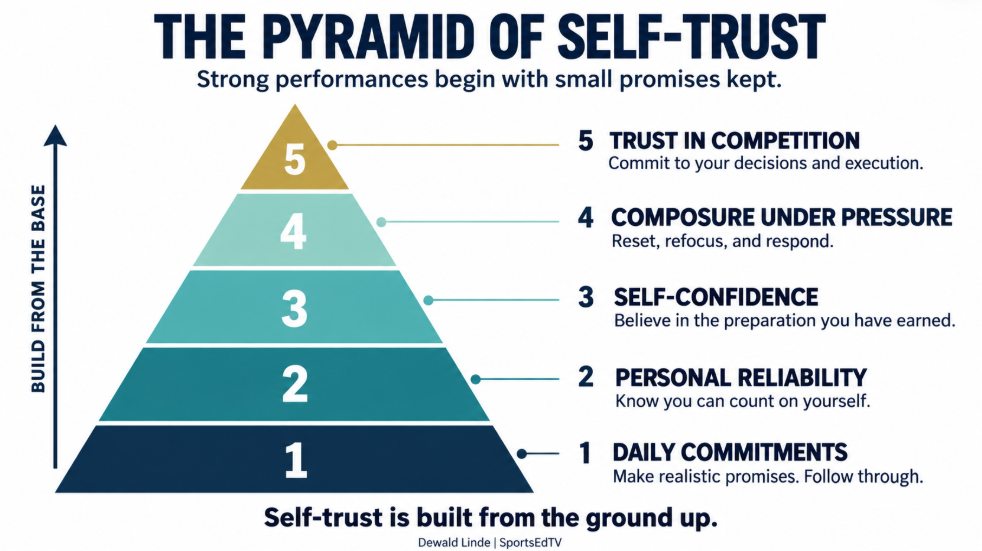
With trust in your preparation, you give yourself permission to commit to the decision and execute the skills you have trained. You need less to negotiate with yourself or second-guess every movement.
Self-trust does not mean expecting to win every point. It means trusting your technique, your response to adversity, and your ability to find the next solution.
The work begins in ordinary moments: completing the session you planned, practicing your reset routine, or following through on the extra basket of serves you promised yourself.
Before your next practice, choose one promise you can keep. Then keep it.
The bridge between practice and performance is built through those daily actions. Every commitment you honor gives you another reason to trust yourself when it matters.