Understanding Why Olympic Lifts Stress the Joints
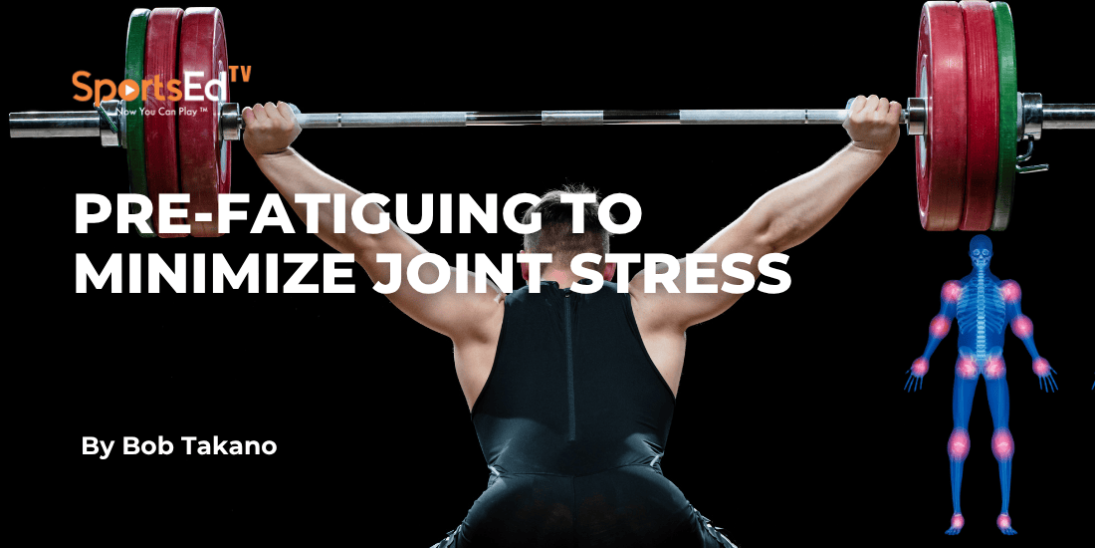
Let’s face it—snatches, cleans and jerks place an undue amount of stress on the joints. Even though the champions are mutant types with iron joints, the rest of us may not prove to be as durable. As we progress along the developmental pathway, we know that training loads must increase to develop strength, but injuries from increased loading can derail that journey—indeed, a dilemma.
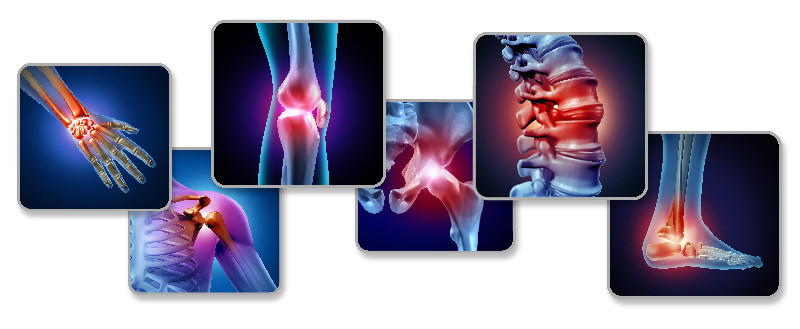
Most lifters know that sore knees, irritated wrists, and achy shoulders often appear long before true overtraining does. Research backs up what experience tells us: Olympic weightlifters most often report issues at the shoulder (about 36%), low back (31%), and knee (17%), with smaller problems at the wrist and elbow. These are micro-stresses from repetitive heavy catching and locking out. The shoulder complex—glenohumeral, acromioclavicular, and sternoclavicular joints—bears the brunt, while the hips and knees absorb repetitive deceleration on every deep catch. Understanding this anatomy helps us train hard while keeping the structures that stabilize those joints intact.
Understanding Why Olympic Lifts Stress the Joints
Let’s face it—snatches, cleans and jerks place an undue amount of stress on the joints. Even though the champions are mutant types with iron joints, the rest of us may not prove to be as durable. As we progress along the developmental pathway, we know that training loads must increase to develop strength, but injuries from increased loading can derail that journey—indeed, a dilemma.
Most lifters know that sore knees, irritated wrists, and achy shoulders often appear long before true overtraining does. Research backs up what experience tells us: Olympic weightlifters most often report issues at the shoulder (about 36%), low back (31%), and knee (17%), with smaller problems at the wrist and elbow. These are micro-stresses from repetitive heavy catching and locking out. The shoulder complex—glenohumeral, acromioclavicular, and sternoclavicular joints—bears the brunt, while the hips and knees absorb repetitive deceleration on every deep catch. Understanding this anatomy helps us train hard while keeping the structures that stabilize those joints intact.
Why Full Lifts Are Harder on the Body Than Pulls
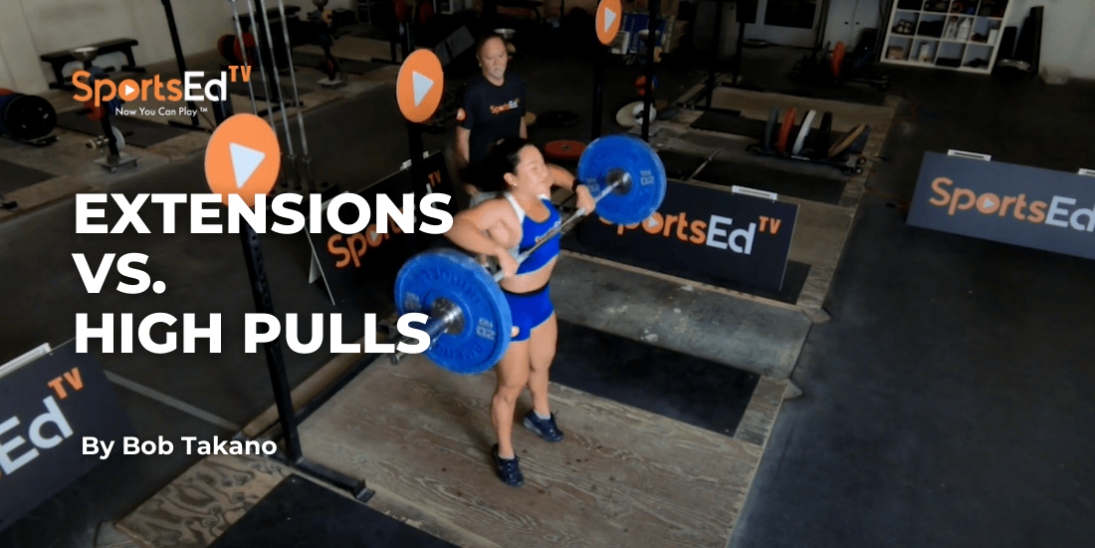
The culprit in most cases is the full lifts: snatches, cleans, jerks. High pulls, on the other hand, provide stresses on the organism, but not nearly so much on the joints as do the full lifts. So here is a possible solution that can be used periodically. It shouldn’t be used as a full-time substitute for multiple-rep sets of full movements, but it can help provide stimulation while reducing the risk of joint injuries.
Biomechanical studies comparing full lifts with pulls confirm what we see on the platform. Pulls produce similar power output from the hips and knees but eliminate the violent deceleration and overhead stabilization that overload the shoulders, elbows, and wrists. In other words, the propulsion muscles still work near maximum capacity, but the joint stabilizers are spared. EMG data show nearly identical quadriceps and gluteal activation during pulls, while deltoid and triceps stress is significantly reduced. This makes pulls a sound tool for maintaining force production without punishing connective tissues.
How Pre-Fatiguing Helps You Lift Smarter
The solution is to perform two or three repetitions of high pulls followed by a full lift. So a set might consist of three repetitions of snatch high pulls, for example, followed by a single rep of a complete snatch. The pulls will cause a state of global exhaustion, making the final full lift challenging, but the impact on the joints normally loaded during the catch is thus minimized. The fatigue, therefore, requires greater concentration on the technique of the final rep because the body is fatigued.
This approach uses pre-fatigue, a principle long studied in resistance training. When larger prime movers are taxed first, subsequent work demands more precise coordination and motor control—excellent practice for lifters who tend to rush their pulls or lose tightness in the catch. Studies on pre-exhaustion sequencing show that similar strength gains can be achieved with fewer high-risk repetitions, making this structure a smart way to train hard yet safely. The single catch after fatigue forces lifters to maintain focus and body control when tired, closer to real-competition fatigue, without the joint wear of multiple full catches.

Muscle Chains and Joint Stabilizers in Olympic Lifting
Weightlifters and their coaches need to keep in mind that full lifts are performed by a chain of muscular contractions, some concentric and some isometric. A full lift fatigues the muscles that stabilize the joints and maintain the rigidity of the torso. A pull largely fatigues a somewhat different chain. Thus, a set composed of pulls and a complete lift spares the fatigue of the joint stabilizers while still requiring technical proficiency of the full movement.
This distinction between prime movers and stabilizers is supported by EMG and kinematic data. Pulls emphasize concentric drive through the hips and knees, while full lifts demand additional isometric strength from the spinal erectors, rotator cuff, and elbow extensors. Alternating both within a single set keeps the stabilizers fresher—exactly the tissues most vulnerable to overuse. Coaches working with masters or athletes in heavy training phases will find this approach particularly valuable.

Sample Pre-Fatigue Training Scheme
A rep/set scheme that I’ve employed looks like this:
60%/3+1, 70%/3+1, (80%/3+1)², (85%/2+1)³
Programming in this range sustains high volume and bar velocity while reducing the total number of full catches. It also keeps the athlete in a moderate-to-heavy loading zone, where force development remains strong but mechanical strain is manageable. Data from power-output research shows that pulls between 80–90 percent of one-rep max clean produce near-peak power values—so these loads line up well with this scheme.
When to Use This Method in Your Training Cycle
I usually program this during the third or fourth weeks of a preparation mesocycle and perhaps during the first week of a pre-competition mesocycle. This scheme is often programmed toward the end of the week, replacing sets of multiple reps of the complete lifts. This programming can be used for both snatches and cleans. The rep count maintains both the volume and the load while minimizing the stress on the joints. For those individuals who have trouble performing the top pull, both the snatch and clean sets can be performed from blocks with the bar set at the power position.
The timing makes physiological sense. Mid-mesocycle, connective tissues accumulate micro-fatigue, and tapering the number of deep catches while preserving total tonnage helps them recover. Block work adds another joint-friendly element: a shorter range, reduced starting tension on the knees and hips, and a more vertical force path. Several biomechanical analyses show that lifts from blocks minimize shear stress at the lumbar spine by improving trunk angles at take-off.

Applying Pre-Fatigue to Improve the Jerk Drive
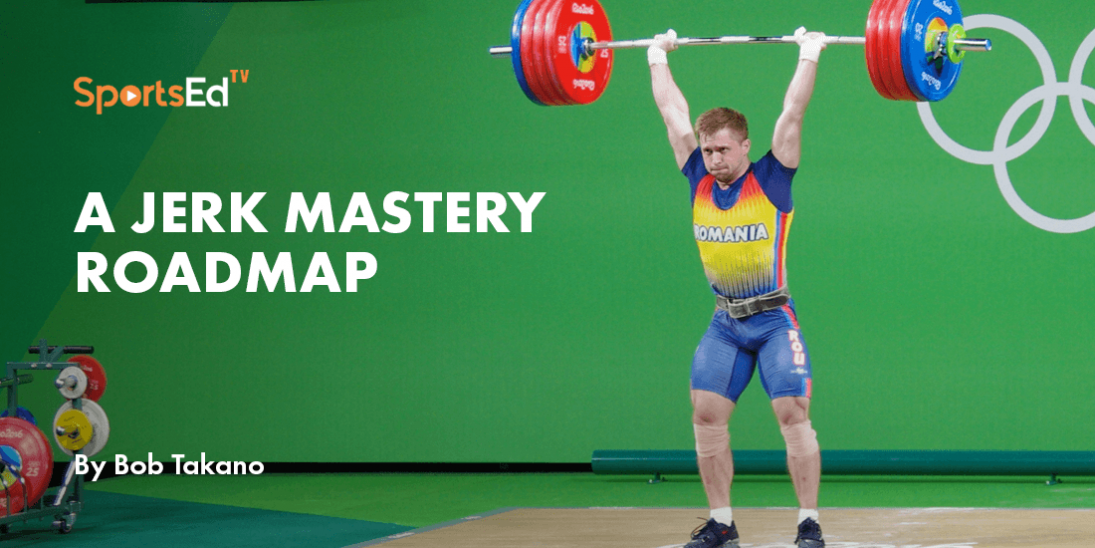
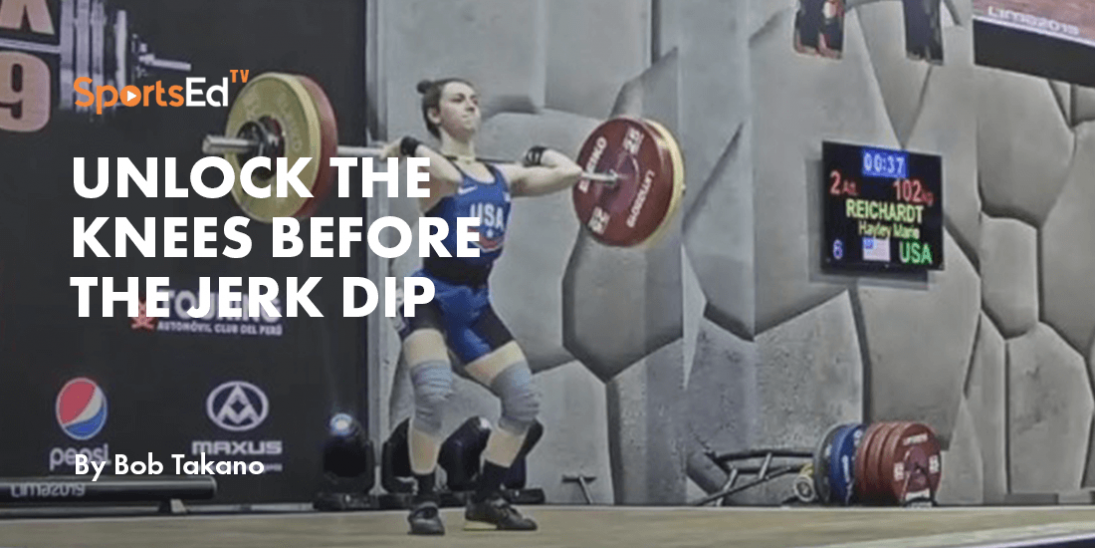
For individuals having difficulty developing the jerk drive, the same rep/set scheme can be employed, using jerk drives followed by a classic jerk in the same set. A word of caution to those who are new to jerk drives—be sure to lower the bar by catching it on the deltoids with the knees unlocked.
The jerk drive–jerk pairing applies the same logic to the overhead lift. The drive phase develops vertical impulse and coordination between legs and torso. Studies analyzing barbell trajectory in elite lifters show that most missed jerks come from inconsistencies in the dip-drive rhythm, not the lockout. Practicing two to three heavy drives before a single full jerk helps build rhythm and protects the shoulders from excessive repeated lockouts. And the advice about lowering the bar is more than tradition—it’s biomechanics: catching on the delts with soft knees spreads the deceleration load through the legs instead of the elbow and wrist joints.
Tracking Volume and Load for Joint Health
When calculating the volume and loading, count the pulls in the pull category and the complete movements in their respective categories.
This keeps your training data honest. Coaches and sports scientists emphasize that injury risk rises sharply when total session tonnage increases faster than tissue tolerance. By logging pulls and lifts separately, you maintain visibility over true workload—especially useful if you’re tracking readiness, soreness, or joint irritation over time. Most lifters can maintain long-term progress when the ratio of pulls to full lifts is about two to one during higher-volume phases.
Key Takeaways for Long-Term Performance
Joint stress in Olympic lifting is inevitable, but it’s also manageable. By pairing pulls with a single full lift, we maintain a high neuromuscular stimulus, teach the body to move efficiently under fatigue, and give overworked joints a break from repeated hard catches. The science supports what lifters have known intuitively for decades: smart programming can extend careers and sustain progress without constant pain.
References
Calhoon G., & Fry A.C. (1999). Injury rates and profiles of elite weightlifters. Journal of Athletic Training, 34(3), 232–238.
Geisler S. et al. (2023). Muscle activation in pull vs. hang power variants of the snatch and clean. European Journal of Sport Science.
Cejudo A. et al. (2022). Joint range of motion and load distribution in the snatch and clean. Journal of Strength and Conditioning Research.
Trindade T. et al. (2019). Pre-exhaustion training and its effects on strength and hypertrophy. Sports Medicine Open.
Khuyagbaatar B. et al. (2024). Kinematics of the clean and snatch: implications for joint load. Frontiers in Sports Science.
Liu Y. et al. (2024). Biomechanical determinants of the jerk in elite weightlifters. Journal of Biomechanics.
Tung K. et al. (2024). Epidemiology of injuries in competitive weightlifting: a systematic review. Sports Health.