Juan Manuel Cerúndolo played the infinite game.
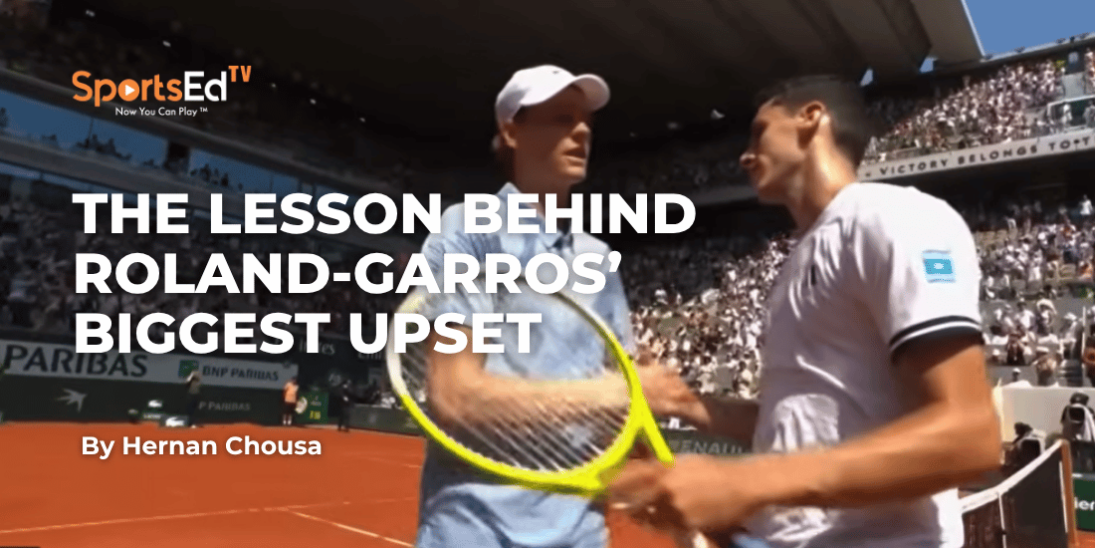
World No. 56 Juan Manuel Cerúndolo stunned top seed Jannik Sinner in one of the biggest upsets of the 2026 season, but the story behind it took years to write. The scoreline was dramatic, 3-6, 2-6, 7-5, 6-1, 6-1, yet for athletes, coaches, and parents, the deeper lesson goes far beyond five sets on Court Philippe-Chatrier.

The Match: How Cerúndolo Turned the Momentum Against Sinner
Down 1-5 in the third set, Cerúndolo was still playing. No panic. No surrender.
Jannik Sinner appeared to have everything under control. Two sets up, cruising at 5-1 in the third, playing on one of the sport’s grandest stages with the world watching. Most players, consciously or unconsciously, would already begin preparing themselves for the handshake.
Juan Manuel Cerúndolo played the infinite game.
World No. 56 Juan Manuel Cerúndolo stunned top seed Jannik Sinner in one of the biggest upsets of the 2026 season, but the story behind it took years to write. The scoreline was dramatic, 3-6, 2-6, 7-5, 6-1, 6-1, yet for athletes, coaches, and parents, the deeper lesson goes far beyond five sets on Court Philippe-Chatrier.
The Match: How Cerúndolo Turned the Momentum Against Sinner
Down 1-5 in the third set, Cerúndolo was still playing. No panic. No surrender.
Jannik Sinner appeared to have everything under control. Two sets up, cruising at 5-1 in the third, playing on one of the sport’s grandest stages with the world watching. Most players, consciously or unconsciously, would already begin preparing themselves for the handshake.
Nobody told Juan Manuel Cerúndolo the match was over.
As Sinner began struggling physically with cramps, eventually taking a medical timeout at 5-4, 0-40, Cerúndolo did not simply wait for the momentum to change. He helped create the change. He took tactical control, moving the Italian relentlessly side to side, mixing in drop shots, varying patterns, and refusing to give him a comfortable ball. The comeback was not only about Sinner's physical suffering. Cerúndolo engineered much of what followed.
The numbers were astonishing. Eighteen of the final twenty games went to the Argentine. The result instantly became one of the defining shocks of the season. Cerúndolo became the first player to eliminate the top seed at Roland-Garros before the third round since Karol Kucera in 2000, and it was also his first career victory over a Top 10 player.
The Journey: Five Years of Building, Breaking, and Rebuilding
Yet this victory did not come from nowhere.
It came from five years of building, breaking, rebuilding, and continuing to believe when external evidence offered very little encouragement.
Born in Buenos Aires in 2001, Juan Manuel Cerúndolo grew up in a family where tennis was not merely an activity but part of the household DNA. His father, Alejandro “Toto” Cerúndolo, a former ATP professional, had a racquet in his son’s hands by the age of three. Older brother Francisco grew up on the same path, sharing the same courts, the same environment, and many of the same dreams.
The world first took notice in 2021 when Juanma won the Córdoba Open in his very first ATP tour appearance. At only 19 years old, he became the youngest Argentine champion since Guillermo Coria in 2001. It looked like the beginning of a rapid ascent.
Then came the years that rarely make headlines.
Between 2022 and 2024, injuries disrupted his progress. Coaching changes added instability. Rankings dropped. Long stretches outside the Top 100 followed. Meanwhile, his brother Francisco rose through the rankings, won ATP titles, entered the Top 30, and became the better-known Cerúndolo in world tennis.
Juanma watched.
And kept working.

The Infinite Game: Why Long-Term Athletes Think Differently
That distinction matters because sports culture often loves the clean narrative, the prodigy who breaks through and never looks back. Real athletic development is usually far messier. There are setbacks, physical interruptions, confidence challenges, and long periods where progress is invisible to everyone except the athlete and those closest to them.
This is where Simon Sinek’s concept of the infinite game becomes relevant.
Finite players compete primarily to win. They measure themselves against opponents, rankings, trophies, and external markers of success. Infinite players compete to keep playing. They measure themselves against who they were yesterday and remain committed long enough for their opportunity to arrive.
By conventional metrics, the years between 2022 and 2025 could easily have been labeled disappointing for Cerúndolo. The rankings moved in the wrong direction. Injuries accumulated. His brother surpassed him. Public attention shifted elsewhere.
But perhaps Juan Manuel Cerúndolo was playing a different game.
On Philippe-Chatrier, down two sets and trailing 1-5 in the third, he made what may have been the most infinite decision possible: he simply kept playing. No scoreboard panic. No emotional collapse. Point by point, game by game, until the match turned, and then until it ended.
The Cerúndolo System: Family, Environment, and Shared Success
The Cerúndolo story also highlights something central to long-term athletic development: environment matters.
The family dynamic was never built around rivalry. It was built around belief.
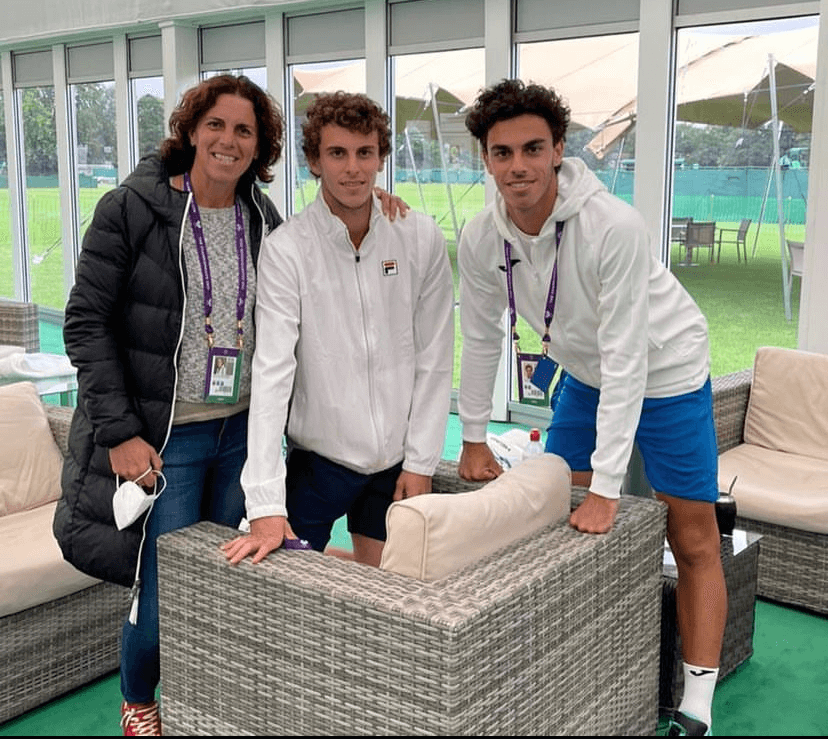
Father Toto provided the tennis foundation. Mother María Luz, a sports psychologist, reinforced the mental framework. Sister Constanza reached Olympic gold in field hockey. High performance was part of the family culture, but so was mutual support.
When the brothers faced each other in Buenos Aires in 2025, Francisco won, but he was also among the first to publicly acknowledge his brother’s progress. “He’s getting there,” he said.
That same dynamic appeared earlier when Francisco captured his first ATP title in 2022. Juanma was training in Finland at the time. Rather than distancing himself from his brother’s success, he reportedly had his coach stream the match between sessions so he could watch every point. There was no resentment. There was motivation. “His achievement inspired me to keep going,” Juanma explained.
That fuel eventually carried all the way to match point against the world’s No. 1 player.

The Lesson for Athletes, Coaches, and Parents
What athletes, coaches, and parents can take from this story is powerful. The difficult years are not always a detour from development. Sometimes they are the development.
The rehab sessions, the ranking drops, the periods without recognition, and the moments when progress seems invisible often build capacities that uninterrupted success simply cannot teach.
Sports culture celebrates the breakthrough moment. But the breakthrough is usually built during the years when almost nobody is paying attention.
The score on May 28, 2026, was 3-6, 2-6, 7-5, 6-1, 6-1.
But perhaps the real match started years earlier, when almost nobody was watching.
About the Author
Hernan Chousa is an Argentinian author, businessman, and public speaker.
He is a former professional tennis player who is willing to share his parenting experiences through books, talks, and online courses. He published My Son the Tennis Player: How to Help Your Kid Succeed in Sports and has just released ParentShift: The Skills You Need to Become a Super Parent.