5 Tips to Cover the ENTIRE Court in Pickleball (Without Getting Any Better at Pickleball!)
Published: 2025-07-14
5/5 Average rating
Please sign in to rate this blog.
Unlock this content...
Create your free SportsEdTV account to continue reading or viewing.
Free forever. No credit card required.
As a member, you'll also get:
• 4,000+ expert videos and articles
• Coaching tips from world-class experts
• Coverage of 40+ sports
• Favorite content lists
Become a member today!
To use this function, you must be a full member. Membership options:
Free - newsletter, all video & blog access
Yearly - full access & member features
US$179 - may be lower outside US
Lifetime - same as yearly, but forever
US$350 - may be lower outside US
You may also use a promo code for payment
MYSportsEdTV is a community where athletes, coaches and parents connect and share their sport passion. We don’t sell our member data or send spam. Members will receive our FREE email newsletter to alert you about new video and blog content for the sports you follow.
To use this function, you must be a paid member. Membership options:
Free - newsletter, all video & blog access
Yearly - full access & member features
US$179 - may be lower outside US
Lifetime - same as yearly, but forever
US$350 - may be lower outside US
You may also use a promo code for payment
MYSportsEdTV is a community where athletes, coaches and parents connect and share their sport passion. We don’t sell our member data or send spam. Members will receive our FREE email newsletter to alert you about new video and blog content for the sports you follow.
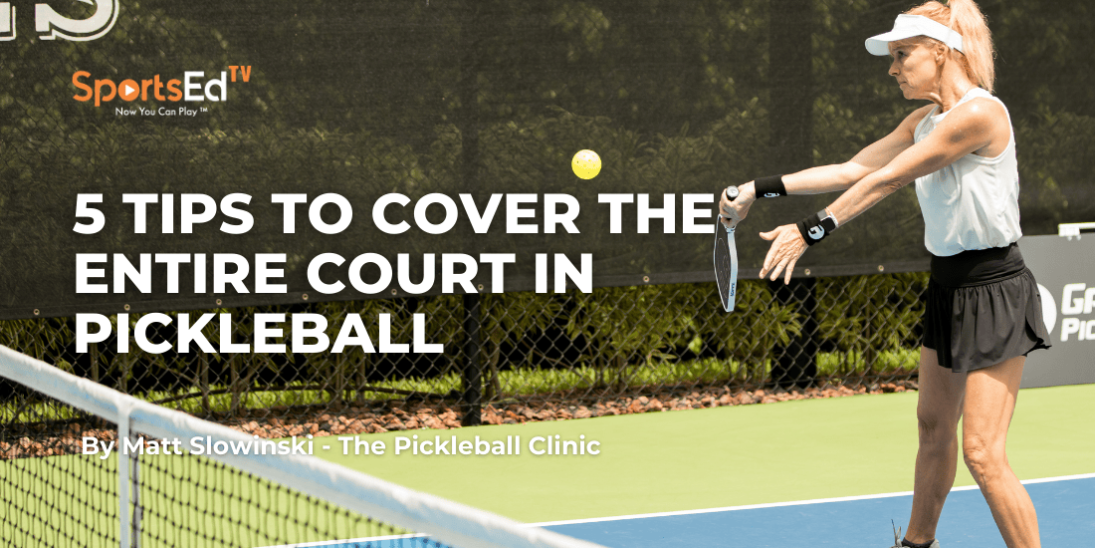
Want to raise your game by around one DUPR point without even improving your pickleball skills? It all comes down to how you cover the court and where you stand. Court coverage and court positioning are game changers. Here are five essential tips straight from top teaching insights that can transform how you move and defend, even if you never hit the ball any better.
1. Don’t Stand Flat Footed. Shift at the Kitchen Line
One of the most common mistakes players make at the kitchen line is not shifting or following the ball. When you’re up there, you always need to be moving side to side just a bit. Remember, the pickleball court is only 20 feet wide in doubles. That’s enough width that two players can’t cover everything without leaving something open.
So, how do you decide what to leave open? You use a concept called shifting. A lot of players, especially around the three out of four level, get stuck standing flat-footed. They hit from a static position, which leaves them vulnerable to speed-ups.
Every time you hit a dink cross-court, shift over slightly toward that side. If you’re on the left and you walk to the right, take a couple of steps that way. Don’t cross over to your partner’s side, but make sure you’re closing toward the middle so you’re ready for a middle speed up.
Keep doing this little side-to-side dance. It ensures that when your opponent decides to speed it up through the middle, you’re right there because you moved with the ball instead of standing like a statue.
2. Let Your Partner Guard the Sideline
So who covers the down the line speed up? That’s your partner’s job. Whoever’s right in front of the ball stays on the line. If your partner leaves that line and shifts toward the middle when the ball is in front of them, they’re leaving a wide open lane for an easy speed up.
Want to raise your game by around one DUPR point without even improving your pickleball skills? It all comes down to how you cover the court and where you stand. Court coverage and court positioning are game changers. Here are five essential tips straight from top teaching insights that can transform how you move and defend, even if you never hit the ball any better.
1. Don’t Stand Flat Footed. Shift at the Kitchen Line
One of the most common mistakes players make at the kitchen line is not shifting or following the ball. When you’re up there, you always need to be moving side to side just a bit. Remember, the pickleball court is only 20 feet wide in doubles. That’s enough width that two players can’t cover everything without leaving something open.
So, how do you decide what to leave open? You use a concept called shifting. A lot of players, especially around the three out of four level, get stuck standing flat-footed. They hit from a static position, which leaves them vulnerable to speed-ups.
Every time you hit a dink cross-court, shift over slightly toward that side. If you’re on the left and you walk to the right, take a couple of steps that way. Don’t cross over to your partner’s side, but make sure you’re closing toward the middle so you’re ready for a middle speed up.
Keep doing this little side-to-side dance. It ensures that when your opponent decides to speed it up through the middle, you’re right there because you moved with the ball instead of standing like a statue.
2. Let Your Partner Guard the Sideline
So who covers the down the line speed up? That’s your partner’s job. Whoever’s right in front of the ball stays on the line. If your partner leaves that line and shifts toward the middle when the ball is in front of them, they’re leaving a wide open lane for an easy speed up.
You don’t want both players jumping to cover the same spot or guessing who takes what. One person covers the line, the other covers the middle. That way, your opponent has no easy targets. They’ll either have to beat you with their hands or miss trying.
3. Serve and Step Back, Not Just Stay
You’ve probably heard of serve and stay, but here’s a better secret. Serve and step back. When you hit your serve, your momentum often carries you a foot or even three feet inside the baseline, especially on a good, hard serve.
If you stand there, you’re stuck right in the transition zone, which means you’ll have to hit awkward shots with little time to react. Or worse, if the return lands deep near the baseline, you’ll have to hit it out of the air or scramble backward, usually popping it up.
Instead, after you serve, immediately step back behind the baseline. This gives you tons of space to step into your third shot, whether it’s a drop or a drive. It’s always easier to move forward into a shot than it is to backpedal. By serving and stepping back, you set yourself up to strike in your ideal strike zone.
4. Always Let the Forehand Take the Middle on Third Shots
Nothing causes more chaos than partners not knowing who’s taking the third shot. It’s simple. Whoever has the forehand in the middle takes it. Unless you’ve discussed something else because of a monster backhand or a particular weakness, let the forehand rule.
Even if it means stepping a couple of feet onto your partner’s side, call it clearly by saying mine and take it with your forehand. This avoids those awkward lunges or last-minute decisions where neither of you hits it, or both of you do. The forehand gives you more options to drive, topspin drop, or hit a confident neutral drop.
5. Never Hang Out in the Transition Zone
That space between the kitchen line and baseline is called the transition zone, and it’s the worst place to get stuck. You’ll end up taking balls at your feet, which is the hardest shot in pickleball.
But playing through it is unavoidable. You’ll hit shots from there all the time. The key is, don’t stop there. If you hit a good drop, follow it up to the kitchen line. If you pop it up or your opponent looks ready to attack, retreat back and defend. Always be moving forward or back, never just standing still in the transition zone, waiting to get slammed.
The Bottom Line
If you apply these five court positioning tips at the kitchen line, let your partner guard the line, serve and step back, prioritize the forehand on thirds, and avoid standing still in the transition zone, you’ll cover the entire court like never before.
This isn’t about getting technically better at pickleball overnight. It’s about smarter movement and more innovative strategy. And that’s the easier part of the game to improve. Try these out and watch your game jump by a full DUPR point or more without even improving your strokes.