Soccer
The 104 Greatest Men’s Football (Soccer) Players of All Time
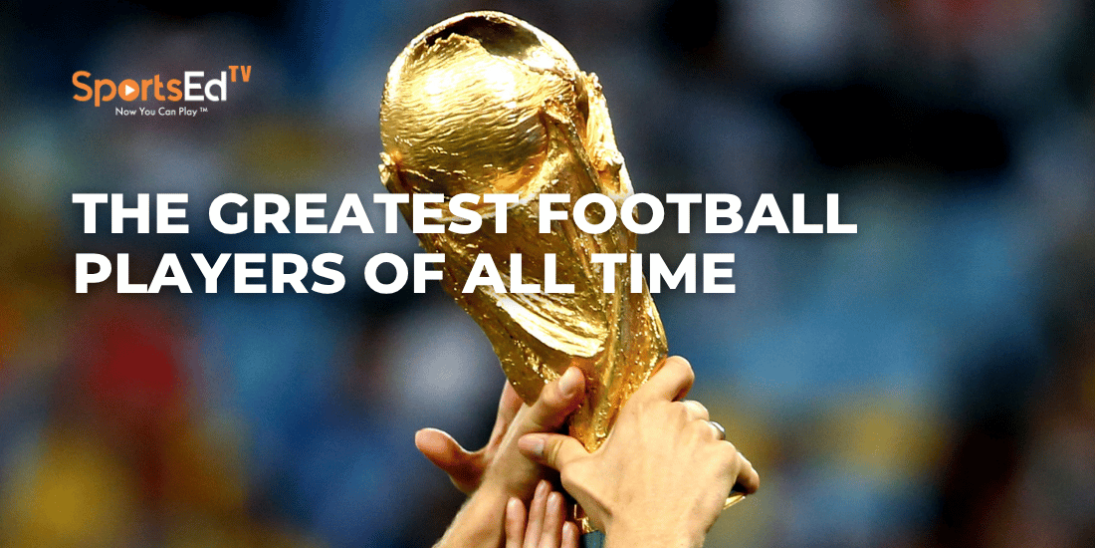
SportsEdTV developed a transparent, position-adjusted model to compare forwards, midfielders, defenders, and goalkeepers across different eras, leagues, and football cultures.
Who are the greatest football players of all time?
It may be the most debated question in the sport, but it is also one of the most difficult to answer fairly. Football has more than a century of history spread across six confederations, and its greatest players competed in dramatically different eras, tactical systems, leagues, and competitive environments. Comparing Lionel Messi with Pelé is difficult enough. Comparing either of them with Franz Beckenbauer, Paolo Maldini, or Lev Yashin requires a much broader understanding of what greatness looks like.
Traditional rankings tend to reward the achievements that are easiest to see and count: goals, assists, famous moments, individual awards, and major trophies. Those measures matter, but they naturally favor forwards and attacking midfielders. They do not fully capture the value of a defender who controlled an entire back line, a midfielder who dictated every phase of a match, or a goalkeeper whose excellence was reflected in the goals that were never scored.
SportsEdTV therefore created a five-criterion model designed specifically for football. Its central purpose was to address two recurring weaknesses in all-time rankings: the systematic preference for goalscorers and the underrepresentation of players who received less exposure in Western media.

The Top 10 at a Glance
| Rank | Player | Position | Country | Score |
|---|---|---|---|---|
| 1 | Lionel Messi | Forward | Argentina | 95.8 |
| 2 | Cristiano Ronaldo | Forward | Portugal | 94.3 |
| 3 | Pelé | Forward | Brazil | 92.4 |
| 4 | Diego Maradona | Forward / Midfielder | Argentina | 88.4 |
| 5 | Alfredo Di Stéfano | Forward / Midfielder | Argentina / Spain | 87.8 |
| 6 | Franz Beckenbauer | Defender | West Germany | 87.5 |
| 7 | Paolo Maldini | Defender | Italy | 87.0 |
| 8 | Johan Cruyff | Forward / Midfielder | Netherlands | 85.4 |
| 9 | Zinedine Zidane | Midfielder | France | 85.3 |
| 10 | Ronaldo Nazário | Forward | Brazil | 84.5 |
The complete ranking of all 104 players appears below. First, it is important to explain how the model was constructed and why its results differ from many conventional all-time lists.
Why 104 Players Instead of 100?
There is no magical reason for the number 104, and that is precisely the point.
SportsEdTV did not remove four qualified players simply to create a cleaner or more marketable “Top 100.” After the original candidate pool was assembled, it was compared with six respected historical rankings and all-time selections. That final review identified four additional players who met the published inclusion standards and clearly deserved evaluation: Lothar Matthäus, George Best, Bobby Charlton, and Stanley Matthews.
Their inclusion brought the final pool to 104 players. Cutting any four of them merely to reach a round number would have contradicted the transparency the project was designed to provide.
One hundred was the expected format. One hundred and four was the honest result.
The Problem With Traditional Greatest-Player Rankings
Ask ten knowledgeable supporters to produce an all-time ranking, and the exact order will vary, but the overall composition will usually look familiar. There will be a concentration of Brazilian and Argentine attackers, several Western European stars from recent decades, very few defenders, and perhaps one goalkeeper.
Players from Africa, Asia, Eastern Europe, and less-documented historical periods are frequently missing. Their absence does not necessarily mean they were less accomplished. It often means the ranking began with a measurement system that favored visibility, available statistics, and modern media exposure.
A forward’s responsibility is to score and create goals. A goalkeeper’s responsibility is to prevent them. If both are evaluated primarily through goals and attacking production, the goalkeeper loses before the comparison begins, not because the goalkeeper performed less effectively, but because the wrong question was asked.
The same problem affects defenders. Positioning, organization, duels, interceptions, distribution, aerial dominance, and the ability to neutralize elite opponents are fundamental to winning. Historically, however, those contributions have been more difficult to document than goals.
SportsEdTV wanted to evaluate every player according to the demands of the role they actually performed.
The Five Criteria Used to Rank Every Player
Every player received a score from zero to 10 across five categories. Those scores were weighted and combined into a final result out of 100.
| Criterion | Weight | What It Measures |
|---|---|---|
| Dominance and Records | 32.5% | Performance and statistical dominance relative to positional peers |
| Longevity | 22.5% | Years sustained at an elite level, rather than simply years played |
| Depth | 17.5% | Versatility, completeness, two-footedness, aerial ability, and adaptability |
| Opportunity-Adjusted Titles | 17.5% | Club and international success adjusted for team strength and individual contribution |
| Cultural Impact | 10% | Historical significance and influence on how football is played or perceived |
Dominance and Longevity account for 55% of the total score because the model gives the greatest importance to two fundamental questions: how exceptional was the player at their best, and how long did they sustain that excellence?
Cultural Impact is included because some players changed the meaning, identity, or global reach of the sport. It remains the smallest category, however, because a ranking driven primarily by fame would eventually become a measure of popularity and marketing rather than footballing performance.
The SportsEdTV Ranking Model
Every player was evaluated across five weighted criteria.
1. Dominance and Records: 32.5%
How dominant was the player relative to the best players of their era and position?
This includes statistical production, individual honors, records, positional excellence, and sustained superiority over direct competitors.
2. Longevity: 22.5%
How long did the player remain at an elite level?
A brilliant peak matters, but an all-time ranking must also reward players who maintained exceptional performance across many seasons, competitions, tactical changes, and stages of their careers.
3. Depth: 17.5%
How complete was the player?
Could the player contribute in multiple phases of the game, adapt to different responsibilities, and influence matches in more than one way? Or was the player primarily exceptional in one specialized area?
4. Opportunity-Adjusted Titles: 17.5%
How successful was the player at club and international level, after accounting for the quality of the opportunities and teams available?
Winning matters, but trophies are not treated as purely individual accomplishments.
5. Cultural Impact: 10%
How significantly did the player influence the sport’s history, popularity, tactics, identity, or global culture?
Pelé and Diego Maradona did more than win matches. They changed what soccer represented to countries and generations of supporters.
Cultural impact is included, but it receives the smallest weighting. A ranking based mainly on fame would eventually become a measurement of marketing and visibility rather than a ranking of player performance.
Why Dominance and Longevity Matter Most
Dominance and Longevity account for 55% of the total score.
That reflects the two central questions behind the model:
How exceptional was the player at their best?
How long were they able to sustain that level?
A player with a spectacular but brief peak can still rank highly. However, maintaining world-class performance over 15, 20, or even 25 years must carry substantial value in an all-time comparison.
Longevity is not simply about appearing in matches. It is about remaining influential, competitive, and relevant at the highest level.
The Most Important Adjustment: Dominance Is Defined by Position
The most important feature of the model is that Dominance and Records, the largest category, is not measured identically for every player.
Instead, it is defined according to the responsibilities of each position.
Forwards
Forwards are evaluated using measures such as:
- Goals
- Goals per match
- Scoring efficiency
- Top-scorer awards
- Match-winning production
- Performance in major competitions
These are traditional attacking measures because they accurately reflect the primary responsibilities of a forward.
Midfielders
Midfielders are evaluated through a combination of creative output and match control, including:
- Assists
- Chances created
- Passing and distribution
- Ability to dictate tempo
- Performance under pressure
- Tactical influence
- Two-way contribution
A midfielder’s value often appears in what they create, organize, or prevent rather than solely in what they score.
Defenders
Defenders are assessed using measures such as:
- Duels won
- Interceptions
- Aerial dominance
- Positioning
- Distribution
- Defensive leadership
- Team defensive performance
- Ability to neutralize elite opponents
Goalkeepers
Goalkeepers are evaluated through:
- Save percentage
- Penalty-saving performance
- Clean sheets
- Shot-stopping ability
- Command of the penalty area
- Distribution
- Performance in decisive matches
This position-adjusted structure is why the SportsEdTV ranking looks meaningfully different from many traditional lists.
Franz Beckenbauer, Paolo Maldini, Franco Baresi, Gianluigi Buffon, and Lev Yashin are not included near the top as sentimental selections.
They rank highly because, when measured according to the actual responsibilities of their positions, they were extraordinarily dominant.
A goalkeeper who rarely conceded and a forward who scored constantly are being evaluated through the same underlying principle: dominance relative to their positional peers.
The statistics used to identify that dominance are simply different.
Why World Cups Cannot Be Treated as Individual Trophies
International tournaments play an enormous role in how players are remembered, but they can also create misleading comparisons.
Winning a World Cup depends on the surrounding squad, coaching, tactical system, qualification process, tournament draw, injuries, refereeing decisions, and the outcomes of a small number of knockout matches. Even the greatest individual player controls only part of that environment.
SportsEdTV therefore evaluates international performance through individual contribution within team context. Goals, assists, chance creation, defensive actions, leadership, tournament influence, and performances against elite opposition all matter.
A player who delivered an outstanding tournament without winning the trophy still receives substantial credit. Conversely, a player who belonged to a championship team does not automatically receive the maximum score if teammates were primarily responsible for the success.
Trophies matter, but they do not erase the distinction between individual performance and team circumstances.
Building a Genuinely Global Candidate Pool
The candidate-selection process deliberately extended beyond the most familiar European leagues and modern televised eras.
The research considered pre-1960 South American stars, African players who built legendary careers without moving to Europe, leading Asian and CONCACAF players, and footballers from the Soviet Union and Eastern Bloc whose careers received comparatively limited coverage in Western media.
The initial pool was then examined against an explicit inclusion standard. A player qualified by meeting at least one of the following conditions:
- A top-three Ballon d’Or finish
- A recognized continental Player of the Century award
- A top-20 placement in one of six respected historical rankings or all-time selections
This process was designed to identify deserving players who might otherwise be excluded because of geography, era, language, or limited surviving footage.

Stress-Testing the Ranking
Every weighted ranking model must answer an important question: are the results being driven by the quality of the player evaluations, or by the specific weights selected?
SportsEdTV tested this by recalculating the complete ranking 500 times. In each simulation, all five category weights were randomly adjusted by up to 30%.
The results remained highly stable. The recalculated rankings correlated with the original ranking at better than 0.98 on a scale where 1.00 would represent an identical order. On average, more than 19 of the original top 20 players remained in the top 20 after each weight adjustment.
The results were also compared with six independently published historical rankings and selections. The model maintained a meaningful relationship with the broader consensus while still producing the differences it was designed to identify, particularly stronger placements for defenders, goalkeepers, players from earlier eras, and players from outside the traditional Western European spotlight.
The white paper also reports separate consistency checks in which the scoring exercise was repeated independently without access to the original results. Those reviews showed statistically significant agreement with the original ranking.
What the Results Reveal
Messi, Cristiano Ronaldo, and Pelé occupy the first three positions, but the ranking becomes less conventional immediately below them.
Beckenbauer ranks sixth and Maldini seventh. Their placements demonstrate what happens when defenders are evaluated according to defensive dominance, leadership, distribution, tactical influence, and longevity rather than being forced into an attacking-statistics comparison.
Franco Baresi ranks joint 15th, while Gianluigi Buffon and Lev Yashin both appear inside the top 20. They were not elevated to create artificial positional diversity. They earned their places because their dominance within their respective roles was comparable to the dominance of the leading attacking players.
The model also gives significant weight to midfield control. Zidane, Xavi, Matthäus, and Iniesta all rank inside the top 14, reflecting the importance of creativity, tactical intelligence, passing, match control, and two-way influence.
Throughout the complete ranking, the pool extends beyond the most familiar names to recognize players such as Mohamed Aboutrika, Ali Daei, Essam El-Hadary, Roger Milla, Park Ji-sung, Cha Bum-kun, Salif Keïta, Laurent Pokou, Arsenio Erico, and Arthur Friedenreich.
A Transparent Ranking, Not a Claim of Perfect Precision
No ranking covering more than a century of football can be entirely objective.
Detailed tracking statistics do not exist for many early-era players, particularly defenders and goalkeepers. Their evaluations must rely more heavily on available historical records, honors, team performance, contemporary accounts, and assessments from experts and peers.
The scores also contain informed editorial judgment. This is a structured, transparent, and stress-tested ranking, but it is not presented as a scientifically proven measurement of footballing greatness. Exact point differences between closely ranked players, particularly those from less-documented eras, should therefore be interpreted with appropriate caution.
SportsEdTV believes acknowledging those limitations is more credible than implying a level of mathematical certainty the historical data cannot support.

The Complete Ranking of the 104 Greatest Men’s Football (Soccer) Players
Players with identical final scores share the same ranking.
1. Lionel Messi — Forward — Argentina — 95.8
2. Cristiano Ronaldo — Forward — Portugal — 94.3
3. Pelé — Forward — Brazil — 92.4
4. Diego Maradona — Forward / Midfielder — Argentina — 88.4
5. Alfredo Di Stéfano — Forward / Midfielder — Argentina / Spain — 87.8
6. Franz Beckenbauer — Defender — West Germany — 87.5
7. Paolo Maldini — Defender — Italy — 87.0
8. Johan Cruyff — Forward / Midfielder — Netherlands — 85.4
9. Zinedine Zidane — Midfielder — France — 85.3
10. Ronaldo Nazário — Forward — Brazil — 84.5
11. Xavi Hernández — Midfielder — Spain — 84.4
12. Garrincha — Forward — Brazil — 84.3
13. Lothar Matthäus — Midfielder / Defender — Germany — 84.1
14. Andrés Iniesta — Midfielder — Spain — 83.8
15. Ferenc Puskás — Forward — Hungary / Spain — 83.4
15. Franco Baresi — Defender — Italy — 83.4
17. Gianluigi Buffon — Goalkeeper — Italy — 83.1
18. Bobby Charlton — Midfielder / Forward — England — 81.6
19. Gerd Müller — Forward — West Germany — 81.5
20. Lev Yashin — Goalkeeper — USSR — 81.4
21. Roberto Carlos — Defender — Brazil — 81.0
22. Manuel Neuer — Goalkeeper — Germany — 80.5
23. Iker Casillas — Goalkeeper — Spain — 80.4
24. Eusébio — Forward — Portugal — 80.3
25. Michel Platini — Midfielder — France — 80.1
25. Josef Bican — Forward — Austria / Czechoslovakia — 80.1
27. Andrea Pirlo — Midfielder — Italy — 79.6
28. Sergio Ramos — Defender — Spain — 78.9
29. Fabio Cannavaro — Defender — Italy — 78.6
30. Luka Modrić — Midfielder — Croatia — 76.5
31. Dino Zoff — Goalkeeper — Italy — 76.0
32. Thierry Henry — Forward — France — 75.9
33. Bobby Moore — Defender — England — 75.8
34. Stanley Matthews — Forward — England — 75.6
34. Gordon Banks — Goalkeeper — England — 75.6
36. Carles Puyol — Defender — Spain — 74.6
36. Karim Benzema — Forward — France — 74.6
38. Ronaldinho — Forward / Midfielder — Brazil — 74.5
39. Kevin De Bruyne — Midfielder — Belgium — 74.1
40. Marco van Basten — Forward — Netherlands — 73.9
41. Kylian Mbappé — Forward — France — 73.5
41. Rivaldo — Forward / Midfielder — Brazil — 73.5
43. Cafu — Defender — Brazil — 72.8
43. Philipp Lahm — Defender / Midfielder — Germany — 72.8
43. Peter Schmeichel — Goalkeeper — Denmark — 72.8
46. Roberto Baggio — Forward / Midfielder — Italy — 72.6
47. Raúl González — Forward — Spain — 72.5
48. George Weah — Forward — Liberia — 72.4
49. Alessandro Nesta — Defender — Italy — 71.8
50. Luis Suárez — Forward — Uruguay — 71.6
51. Zico — Forward — Brazil — 71.5
52. Neymar — Forward — Brazil — 71.3
53. Hristo Stoichkov — Forward — Bulgaria — 71.1
54. Gheorghe Hagi — Midfielder / Forward — Romania — 70.9
54. Oliver Kahn — Goalkeeper — Germany — 70.9
56. Oleg Blokhin — Forward — USSR — 70.8
57. Ruud Gullit — Midfielder / Forward — Netherlands — 70.5
58. Zizinho — Midfielder / Forward — Brazil — 70.3
59. Samuel Eto’o — Forward — Cameroon — 69.9
59. Gabriel Batistuta — Forward — Argentina — 69.9
61. Xabi Alonso — Midfielder — Spain — 69.5
61. Bastian Schweinsteiger — Midfielder — Germany — 69.5
61. Juan Alberto Schiaffino — Forward / Midfielder — Uruguay / Italy — 69.5
64. Luís Figo — Forward / Midfielder — Portugal — 69.4
65. Didier Drogba — Forward — Ivory Coast — 69.3
66. Mohamed Aboutrika — Midfielder / Forward — Egypt — 69.1
66. George Best — Forward — Northern Ireland — 69.1
68. Dani Alves — Defender — Brazil — 68.8
68. Daniel Passarella — Defender — Argentina — 68.8
70. Josef Masopust — Midfielder — Czechoslovakia — 68.1
70. Zlatan Ibrahimović — Forward — Sweden — 68.1
72. Essam El-Hadary — Goalkeeper — Egypt — 67.6
73. Ali Daei — Forward — Iran — 67.5
74. Sándor Kocsis — Forward — Hungary — 67.1
74. Steven Gerrard — Midfielder — England — 67.1
76. Patrick Vieira — Midfielder — France — 66.9
77. Leônidas da Silva — Forward — Brazil — 66.8
78. Hugo Sánchez — Forward — Mexico — 66.1
79. José Manuel Moreno — Forward / Midfielder — Argentina — 66.0
79. Robert Lewandowski — Forward — Poland — 66.0
81. Roger Milla — Forward — Cameroon — 65.9
81. Rafael Márquez — Defender — Mexico — 65.9
83. Obdulio Varela — Defender — Uruguay — 65.6
83. José Nasazzi — Defender — Uruguay — 65.6
85. Frank Rijkaard — Midfielder / Defender — Netherlands — 65.4
86. Frank Lampard — Midfielder — England — 65.3
87. Keylor Navas — Goalkeeper — Costa Rica — 64.6
87. Adolfo Pedernera — Forward — Argentina / Colombia — 64.6
87. Clarence Seedorf — Midfielder — Netherlands — 64.6
90. Filippo Inzaghi — Forward — Italy — 64.3
91. Giacinto Facchetti — Defender — Italy — 63.9
92. José Leandro Andrade — Midfielder — Uruguay — 63.1
93. Arthur Friedenreich — Forward — Brazil — 62.4
94. Abedi Pele — Midfielder / Forward — Ghana — 62.3
95. Rashidi Yekini — Forward — Nigeria — 62.0
95. Enzo Francescoli — Forward — Uruguay — 62.0
97. Rio Ferdinand — Defender — England — 61.4
98. Arsenio Erico — Forward — Paraguay — 60.6
99. Igor Belanov — Forward — USSR — 59.9
100. Park Ji-sung — Midfielder — South Korea — 59.0
101. Cha Bum-kun — Forward / Midfielder — South Korea — 58.4
102. Son Heung-min — Forward — South Korea — 57.8
103. Salif Keïta — Forward — Mali — 56.8
104. Laurent Pokou — Forward — Ivory Coast — 54.4
Explore the Complete Research
The companion spreadsheet provides every player’s individual scores for Dominance and Records, Longevity, Depth, Opportunity-Adjusted Titles, and Cultural Impact, together with the weighted calculations and supporting notes.
The accompanying white paper presents the complete methodology, candidate-selection process, validation tests, position-specific scoring definitions, data limitations, and independent consistency checks.
Explore the complete scoring spreadsheet
Read the full methodology and validation white paper