What Is Kettlebell Training?
Athletes looking to improve performance and those seeking to enhance personal fitness can choose from a wide variety of training tools and techniques to reach their goals. While barbells, dumbbells, and strength training machines remain the primary tools for these populations, kettlebell training has grown in popularity and has become a legitimate option for conditioning and strength training.
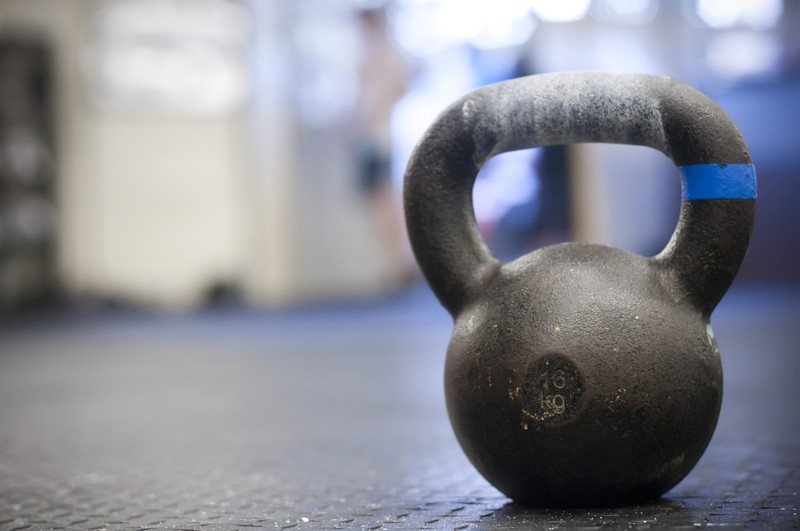
While some authors describe kettlebell training as a relatively new training method in the United States (1, 4, 24, 25), the kettlebell has a much longer history as a training implement. Kettlebells have traditionally been associated with Russian and Eastern European strength and conditioning practices and have more recently become increasingly popular in Western countries (1, 4, 24). The kettlebell is generally described as a cannonball-shaped implement with a handle that allows it to be used for a wide variety of exercises (4, 8, 11, 12, 29).
The reemergence of kettlebell training has contributed to its increasing use in strength and conditioning programs, group fitness programs, and high-intensity interval training (1, 4, 24). Kettlebells come in a wide range of weights, allowing individuals with different strength and training experience to use them.
As Beardsley and Contreras (1), Eckert and Snarr (4), Govindasamy et al. (8), and Lake and Lauder (17) explain, the multifunctional nature of kettlebells allows a variety of strength, power, and conditioning exercises with a relatively simple training implement.
Another factor that may contribute to kettlebell popularity is their practicality. Kettlebells require relatively little space and equipment compared with some traditional resistance-training systems. They can therefore be incorporated into a variety of training environments and programs and can be used with recreational exercisers as well as athletes (4, 27). However, as with all resistance-training exercises, appropriate instruction and exercise technique are important considerations (11, 14, 27).

Kettlebell Swings: Techniques, Power, and Sports Performance
Kettlebells offer a wide variety of exercises, making them a versatile training tool. You can select exercises to target different training goals and adaptations, including strength, power, muscular endurance, and cardiovascular conditioning. Among the many exercises you can do with a kettlebell, the swing is one of the most commonly used.

Lake and Lauder examined the mechanical demands of the kettlebell swing and found that the exercise produces substantial mechanical power and impulse (18). The swing can be viewed as a foundation movement for many kettlebell exercises because it requires coordinated movement of the hips, trunk, and upper extremities while maintaining control of the kettlebell. Eckert and Snarr (4) also describe kettlebell training as involving multiple muscle groups and requiring coordination and stabilization.
Kettlebell swings can be performed using different techniques. The Russian swing generally involves swinging the kettlebell to approximately chest or shoulder height, while the American swing involves bringing the kettlebell overhead. The weight used and the technique selected can influence the exercise's mechanical and physiological demands (4, 18).
Lake and Lauder (18) examined the mechanical demands of the kettlebell swing and compared them with the back squat and jump squat. Peak and mean force tended to be greater during the back squat and jump squat, while swing peak and mean power were greater than back squat power and largely comparable with jump squat power. The findings indicate that the swing places a substantial mechanical demand and may help develop the ability to rapidly apply force (18).
Lake and Lauder (18) also found that the greatest net impulse occurred during the 32-kg swing condition. These findings demonstrate the kettlebell swing's potential as a ballistic exercise that can produce substantial power.
The kettlebell swing is primarily a hip-dominant movement involving rapid hip extension and substantial horizontal force production (1, 18). Because sprinting also requires explosive hip extension and horizontal force production, the swing's movement characteristics may be relevant to sprint performance (1). However, similar movement characteristics do not necessarily mean kettlebell training will improve sprint performance.
Otto et al. (25) compared six weeks of weightlifting and kettlebell training and found that both training methods improved strength and power. However, the weightlifting group showed greater strength gains, while there were no between-group differences in vertical jump performance. These results suggest that kettlebell training can improve strength and power and highlight the importance of training specificity when selecting exercises for a particular performance goal (25).

What Are the Potential Benefits of Kettlebell Training?
The potential benefits of kettlebell training include improvements in muscular strength, explosive power, cardiovascular fitness, muscular endurance, balance, flexibility, and body composition (2, 4, 27). The extent of these adaptations likely depends on exercise selection, training volume, intensity, frequency, and the characteristics of the individual performing the training.
Can Kettlebell Training Improve Muscular Strength?
Kettlebell training is popular partly because its exercises are versatile and can combine strength and conditioning in the same session. Research has provided evidence that kettlebell training can improve several measures of muscular strength.
Otto et al. (25) found that six weeks of kettlebell training improved strength and power, although traditional weightlifting produced greater strength gains. Vancini et al. (27) also describe kettlebell exercise as a potential method for improving muscular strength and aerobic power.
Lake and Lauder (17) found that kettlebell swing training improved maximal and explosive strength. Govindasamy et al. (8) also found improvements in physical fitness following kettlebell training compared with bodyweight resistance training.
One consideration when examining strength improvements from kettlebell training is the difficulty of standardizing training loads. Unlike traditional resistance exercises, where intensity is often prescribed as a percentage of one-repetition maximum, kettlebell exercises are frequently prescribed using an absolute kettlebell weight. Ross et al. (15) showed that kettlebell swing one- and five-repetition maximum testing can reliably assess kettlebell swing performance. This may provide a useful way to standardize kettlebell training loads.
Evidence concerning the ability of kettlebell training to develop strength is not completely consistent. Some research has shown strength improvements, while other research suggests traditional resistance training may produce greater gains in specific strength measures (1, 4, 25). The results may therefore depend on the exercises selected, the training load, and the strength characteristic being evaluated.
Can Kettlebell Training Develop Explosive Power?
Power development may be one of the more important potential benefits of kettlebell training. Eckert and Snarr (4) identified power development as one of the primary potential benefits of kettlebell training. The ballistic nature of many kettlebell exercises allows rapid acceleration of resistance, a key characteristic of power training.
Lake and Lauder (17) found that kettlebell swing training improved maximal and explosive strength. Santos Junior et al. (26) also reported improvements in strength and power following six weeks of both periodized and non-periodized kettlebell swing training.
Otto et al. (25) found improvements in power measures following both kettlebell and weightlifting training, with no significant between-group difference in vertical jump performance. These findings suggest that kettlebells can develop power but should not necessarily be viewed as superior to more traditional power-training methods.

Can Kettlebell Training Improve Cardiovascular Fitness?
Kettlebell training can provide a substantial cardiovascular stimulus and may serve as an alternative or supplemental conditioning method. Fortner et al. (6) examined the cardiovascular and metabolic demands of kettlebell swings performed using both a Tabata interval protocol and a traditional resistance protocol. The results demonstrated substantial cardiovascular and metabolic demands from the exercise.
Hulsey et al. (9) compared kettlebell swings and treadmill running at equivalent ratings of perceived exertion. Heart rate and RPE were similar between the two conditions, while oxygen consumption, METs, pulmonary ventilation, and caloric expenditure were significantly higher during treadmill running. The authors concluded that the kettlebell protocol nevertheless provided sufficient exercise stress to potentially improve aerobic capacity according to American College of Sports Medicine standards.
Other research has also reported cardiovascular benefits from kettlebell training. Farrar et al. (5) reported that kettlebell swings produced a substantial cardiovascular response, while Vancini et al. (27) described kettlebell exercise as a potential way to improve aerobic power. Jay et al. (12) reported improvements in some measures of muscular strength following an eight-week kettlebell training program, although aerobic fitness did not significantly improve.
The cardiovascular response to kettlebell training likely depends on the exercises selected, training load, work-to-rest ratio, and total training volume. Compound kettlebell exercises involving large muscle groups can create substantial cardiovascular demand, making them potentially useful when strength and conditioning objectives are combined in the same training session (4, 6, 9).
Kettlebell Training Research: Limitations and Unanswered Questions
Despite the growing popularity of kettlebell training, the scientific literature examining its effectiveness remains relatively limited compared with the large body of research investigating more traditional resistance-training methods. Beardsley and Contreras (1), Girard and Hussain (7), Meigh et al. (21), and Mortara et al. (24) have all identified limitations in the available kettlebell research.
The number of studies investigating strength, power, and endurance adaptations remains relatively small, and findings are not always consistent (1, 4, 7, 19, 24, 25). Manocchia et al. (19) reported improvements in strength, power, and endurance following kettlebell training, but also noted that clinical data concerning kettlebell training were limited. Fortner et al. (6) provided useful information concerning the cardiovascular and metabolic demands of kettlebell swings, but the study involved a relatively small sample.
Girard and Hussain (7) noted that the popularity of kettlebell training appeared to be based partly on anecdotal reports rather than a large body of scientific evidence. Their review also identified limited evidence comparing kettlebell training with traditional resistance and plyometric training.
Specificity is another consideration. Beardsley and Contreras (1) discussed the potential application of kettlebell training to sprint running but also noted that whether kettlebell training transfers to sports performance remains uncertain. Because kettlebell swings involve rapid acceleration and deceleration of an external load, they may provide a useful stimulus for developing strength and power. However, the degree to which improvements transfer to specific athletic activities remains an important question.
Another area requiring additional study is determining appropriate training loads. Ross et al. (15) showed that one- and five-repetition maximum kettlebell swing testing can be reliable, but more research is needed to determine how best to use these assessments to prescribe training intensity.
Developing appropriate coaching education and programming guidelines is also important. Jonen and Netterville (14) discussed kettlebell safety and the importance of appropriate instruction and progression. As kettlebell training becomes more widely used, practitioners need reliable information concerning exercise technique, load selection, volume, progression, and exercise sequencing.
Overall, additional research is needed to determine the most effective methods for using kettlebells to develop strength, power, cardiovascular fitness, and sport-specific performance (1, 7, 14, 24).

How Kettlebells Fit Into a Strength and Conditioning Program
Kettlebell training has become increasingly popular because of its versatility, relatively simple equipment requirements, and ability to combine strength, power, and cardiovascular training within a single training session. The kettlebell swing is one of the most commonly used exercises and provides a ballistic movement requiring rapid hip extension and coordinated whole-body movement.
Although the research base remains limited, available evidence suggests that kettlebell training can improve certain measures of strength and power and can provide a substantial cardiovascular stimulus. Kettlebell swings may be particularly useful for developing explosive hip-extension power. However, traditional resistance and power-training methods may produce greater improvements in some specific measures, and cardiovascular exercise such as running may produce greater metabolic demands when exercise intensity is matched (1, 9, 25).
Kettlebells therefore represent a practical and versatile training tool, but current evidence does not establish them as superior to traditional resistance or power-training methods. Additional research is needed to determine optimal loading, programming, assessment procedures, and the degree to which kettlebell training transfers to specific athletic performance. At present, kettlebell training may best be viewed as a useful complement to, rather than a replacement for, traditional strength and conditioning methods.
Frequently Asked Questions About Kettlebell Training
Is kettlebell training strength training or cardio?
Kettlebell training can serve both purposes. Depending on the exercises, weight, training volume, and rest periods, a session can emphasize strength, power, cardiovascular conditioning, or a combination of these goals. A substantial cardiovascular response during a workout, however, does not guarantee long-term improvements in aerobic fitness (4, 6, 12).
What is the difference between Russian and American kettlebell swings?
The Russian kettlebell swing generally brings the kettlebell to approximately chest or shoulder height. The American swing brings it overhead. The technique selected and the weight used influence the exercise’s mechanical and physiological demands (4, 18).
Is kettlebell training better than traditional weightlifting?
Current evidence does not establish kettlebell training as superior to traditional weightlifting. In one six-week comparison, both methods improved strength and power, but weightlifting produced greater strength gains. Exercise selection should reflect the specific outcome being trained (25).
Can kettlebell swings improve sprint performance?
Kettlebell swings involve rapid hip extension and horizontal force production, which are also relevant to sprinting. However, these shared movement characteristics do not establish that kettlebell swing training improves sprint performance. Its transfer to specific athletic activities remains uncertain (1).
Do kettlebell swings burn more calories than running?
Not in the comparison discussed in this article. When kettlebell swings and treadmill running were performed at equivalent ratings of perceived exertion, treadmill running produced higher caloric expenditure and oxygen consumption. The result applies to the protocols studied and should not be treated as a universal comparison of every kettlebell workout with every running session (9).
References
-
Beardsley, C and Contreras, B. The role of kettlebells in strength and conditioning: A review of the literature. Strength and Conditioning Journal 36(3): 64-70, 2014.
-
Beltz, N, Erbes, D, Porcari, JP, Martinez, R, Doberstein, S, and Foster, C. Effects of kettlebell training on aerobic capacity, muscular strength, balance, flexibility, and body composition. Journal of Fitness Research 2(2): 4-13, 2013.
-
Brumitt, J, Gilpin, HE, Brunette, M, and Meira, EP. Incorporating kettlebells into a lower extremity sports rehabilitation program. North American Journal of Sports Physical Therapy 5(4): 257-265, 2010.
-
Eckert, R and Snarr, R. Kettlebell training: A brief review. Journal of Sport and Human Performance 4(3): 1-10, 2016.
-
Farrar, RE, Mayhew, JL, and Koch, AJ. Oxygen cost of kettlebell swings. Journal of Strength and Conditioning Research 24(4): 1034-1036, 2010.
-
Fortner, HA, Salgado, JM, Holmstrup, AM, and Holmstrup, ME. Cardiovascular and metabolic demands of the kettlebell swing using Tabata interval versus a traditional resistance protocol. International Journal of Exercise Science 7(3): 179-185, 2014.
-
Girard, J and Hussain, S. The effects of kettlebell training on strength, power, and endurance. Physical Therapy Reviews 20(1): 8-15, 2015.
-
Govindasamy, K, Gogoi, H, Jebabli, N, Bediri, SM, Aljahni, M, Parpa, K, Clark, CCT, Granacher, U, and Zouhal, H. The effects of kettlebell training versus resistance training using own body mass on physical fitness and physiological adaptations in obese adults: A randomized controlled trial. BMC Sports Science, Medicine and Rehabilitation 16: 106, 2024.
-
Hulsey, CR, Soto, DT, Koch, AJ, and Mayhew, JL. Comparison of kettlebell swings and treadmill running at equivalent rating of perceived exertion values. Journal of Strength and Conditioning Research 26(5): 1203-1207, 2012.
-
IÅıklar, C and Turgut, E. Kettlebell training for musculoskeletal rehabilitation and injury prevention: A mini review. European Journal of Public Health 35(Supplement 4): ckaf161.1511, 2025.
-
Jaiswal, PR, Ramteke, SU, and Shedge, S. Enhancing athletic performance: A comprehensive review on kettlebell training. Cureus 16(2): e53497, 2024.
-
Jay, K, Frisch, D, Hansen, K, Zebis, MK, Andersen, CH, Mortensen, OS, and Andersen, LL. Kettlebell training for musculoskeletal and cardiovascular health: A randomized controlled trial. Scandinavian Journal of Work, Environment & Health 37(3): 196-203, 2011.
-
Jay, K, Jakobsen, MD, Sundstrup, E, Skotte, JH, Jørgensen, MB, Andersen, CH, Pedersen, MT, and Andersen, LL. Effects of kettlebell training on postural coordination and jump performance: A randomized controlled trial. Journal of Strength and Conditioning Research 27(5): 1202-1209, 2013.
-
Jonen, W and Netterville, JT III. Kettlebell safety: A periodized program using the clean and jerk and the snatch. Strength and Conditioning Journal 36(2): 1-10, 2014.
-
Ross, JA, Keogh, JWL, and Lorenzen, C. Reliability of kettlebell swing one and five repetition maximum. PeerJ 10: e14370, 2022.
-
Kumar, P, Sehgal, N, Singh, D, Kaur, D, Elayaraja, M, Palanivel, S, Astuti, Y, Orhan, BE, Valappil, INK, and Govindasamy, K. Investigating the effectiveness of 12 weeks of kettlebell training compared to bodyweight resistance training on body composition in young adult males. Sport Mont 22(3): 127-135, 2024.
-
Lake, JP and Lauder, MA. Kettlebell swing training improves maximal and explosive strength. Journal of Strength and Conditioning Research 26(8): 2228-2233, 2012.
-
Lake, JP and Lauder, MA. Mechanical demands of kettlebell swing exercise. Journal of Strength and Conditioning Research 26(12): 3209-3216, 2012.
-
Manocchia, P, Spierer, DK, Lufkin, AKS, Minichiello, J, and Castro, J. Transference of kettlebell training to strength, power, and endurance. Journal of Strength and Conditioning Research 27(2): 477-484, 2013.
-
McGill, SM and Marshall, LW. Kettlebell swing, snatch, and bottoms-up carry: Back and hip muscle activation, motion, and low back loads. Journal of Strength and Conditioning Research 26(1): 16-27, 2012.
-
Meigh, N, Keogh, JWL, Schram, B, Hing, W, and Rathbone, EN. Kettlebell training in clinical practice: A scoping review. BMC Sports Science, Medicine and Rehabilitation 11: 19, 2019.
-
Meigh, NJ, Keogh, JWL, Schram, B, Hing, W, and Rathbone, EN. Effects of supervised high-intensity hardstyle kettlebell training on grip strength and health-related physical fitness in insufficiently active older adults: The BELL pragmatic controlled trial. BMC Geriatrics 22: 354, 2022.
-
Melo, X, Arrais, I, Marôco, JL, Ribeiro, PN, Nabais, S, Coelho, R, Reis, J, Angarten, V, Fernhall, B, and Santa-Clara, H. Effects of kettlebell swing training on cardiorespiratory and metabolic demand to a simulated competition in young female artistic gymnasts. PLOS ONE 18(4): e0283228, 2023.
-
Mortara, AJ, Dalessio, MA, and Rothwell, KE. A review of kettlebell research and its implications for exercise programming. Research and Investigations in Sports Medicine 1(2), 2017.
-
Otto, WH III, Coburn, JW, Brown, LE, and Spiering, BA. Effects of weightlifting vs. kettlebell training on vertical jump, strength, and body composition. Journal of Strength and Conditioning Research 26(5): 1199-1202, 2012.
-
Santos Junior, ERT, de Salles, BF, Dias, I, Simão, R, and Willardson, JM. Effects of six-week periodized versus non-periodized kettlebell swing training on strength, power and muscular endurance. International Journal of Exercise Science 15(4): 526-540, 2022.
-
Vancini, RL, Andrade, MS, Rufo-Tavares, W, Zimerer, C, Nikolaidis, PT, and de Lira, CAB. Kettlebell exercise as an alternative to improve aerobic power and muscle strength. Journal of Human Kinetics 66: 5-6, 2019.
-
Wong, A, Nordvall, M, Walters-Edwards, M, Lastova, K, Francavillo, G, Tripken, J, Summerfield, L, and Sanchez-Gonzalez, M. Cardiac autonomic and blood pressure responses to an acute bout of kettlebell exercise. Journal of Strength and Conditioning Research 35(Supplement 1): S173-S179, 2021.
-
Zimerer, C, Pereira Alves, S, Rufo-Tavares, W, Carletti, L, de Lira, CAB, Andrade, MS, Viana, RB, and Gentil, P. Home-based kettlebell exercise and coronavirus outbreak: Practical suggestions. Strength and Conditioning Journal 43(4): 115-120, 2021.
-
Zimerer, C, Pereira Alves, S, Khéde, RC, Rufo-Tavares, W, Carletti, L, Vancini, RL, Perez, AJ, and Leite, RD. Implementation and evaluation of a 10-week kettlebell training load distribution on strength and aerobic capacity in recreationally trained women. Journal of Chiropractic Medicine 23(4): 186-196, 2024.