 membership.
Continue the signup process, and we'll do the rest.
Weightlifting
How 25-Meter Sprints Can Help Olympic Weightlifters Get Under the Bar Faster
By Bob Takano
Weightlifters spend a great deal of time learning to contract their muscles quickly. We pay less attention to the other half of that skill. Once a muscle has done its job, how quickly can the lifter relax it and move into the next position?
Think about throwing a punch or jerking a barbell overhead. To straighten the elbow quickly, the triceps have to contract rapidly. At the same time, the biceps and the other muscles that bend the elbow have to relax enough to let that happen.

From full extension to getting under the bar
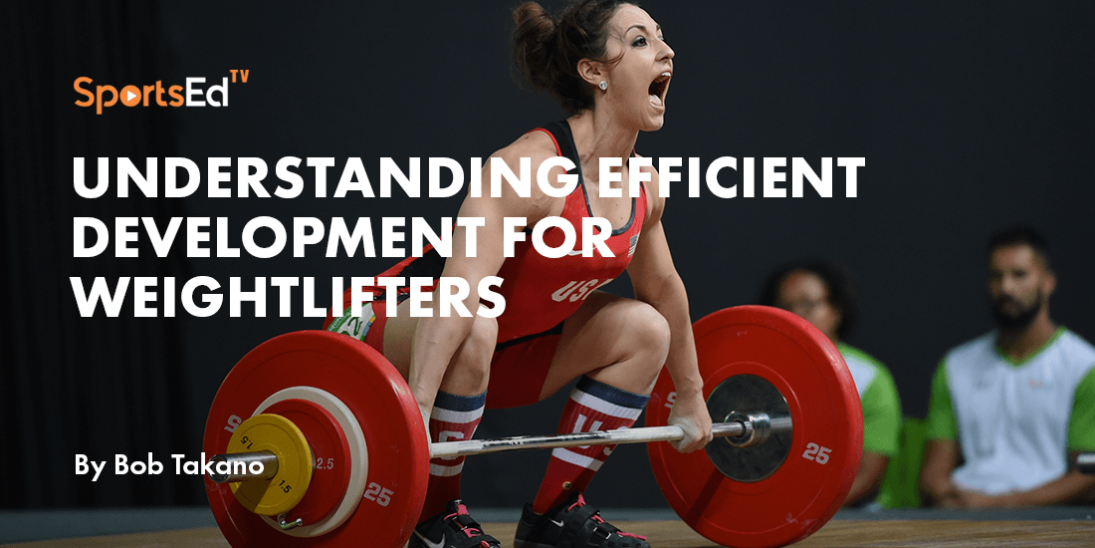
The snatch and the clean present a slightly different challenge. During the pull, the muscles that extend the knees and hips contract rapidly. A moment later, those same muscles have to relax enough for the lifter to reverse direction and descend into a full squat.
Practicing the snatch and the clean develops that transition, but an athlete can only perform so many meaningful lifts in a session. One supplemental exercise I’ve found particularly helpful is the short sprint.
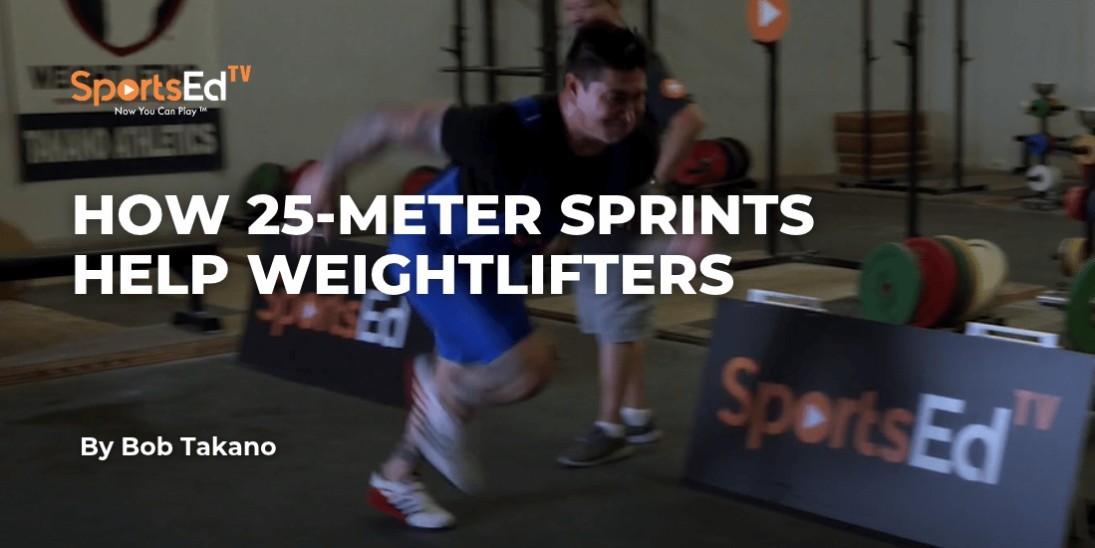
Sprinting shifts the emphasis from how fast the bar moves to how fast the athlete moves. Each stride requires the lifter to extend the hips and knees, then relax the muscles involved quickly enough to take the next stride.
Editor’s note: Researchers who measured thigh-muscle activity during sprinting found that sprinters who took more steps per second showed less overlap between quadriceps and hamstring activity late in the swing phase. That finding illustrates Takano’s point about timing. Moving quickly depends in part on when a muscle eases off so another can take over. The study examined sprinting, and the link to a quicker pull-under in the snatch and clean comes from Takano’s experience with his lifters. pmc.ncbi.nlm.nih.gov

How I use 25-meter sprints in weightlifting training
I mark a start line and a finish line 25 meters apart. That’s all the setup I need. I like to line my lifters up together because a group brings out their competitive nature. I give them a “Ready, set, go,” and ask them to get up to speed as quickly as they can.
We usually do five or six sprints per session, about twice a week, either after the main weightlifting workout or in a separate session.
Watch a video on a sprint exercise I make them perform
Four sprint cues I give my lifters
I keep the instructions simple. Here’s what I ask my lifters to focus on when they line up.
- Relax your face. When I see a lifter grimace, I look at the neck and arms. Tension in the face can carry into the neck and slow the arm swing.
- Keep your hands open. Relaxing the hands helps the arms move freely.
- Move your arms quickly. I cue the arms when I want the legs to turn over faster.
- Feel the pressure on the balls of your feet. That’s the foot contact I ask my lifters to focus on as they accelerate.
Finish the pull before you drop into the squat
Some lifters try to get under the bar faster by cutting the pull short. Starting the descent earlier can feel quick, but it costs the lifter full extension. The distinction is easy to miss when you’re the one lifting. How soon you start down and how fast you move once you start are two different things.
What I’ve seen in my lifters is that short sprints help them make that change of direction quickly. Back on the platform, I want them to practice both parts of the lift. Finish the pull. Then get under the bar as quickly as you can.
Meta description
Weightlifting coach Bill Takano explains how he uses 25-meter sprints to help lifters finish the pull and get under the bar faster in the snatch and clean.