Sports Medicine, Sports Parenting, Volleyball
Volleyball ACL Tears: The Small Problems That Can Come First

By David Lipetz, MSPT, OCS, Cert. MDT
ACL injuries in volleyball can occur during landings and sudden changes of direction. Persistent heel or ankle pain deserves attention because it may change how a young athlete moves. This article explains the relationship between ankle mobility and landing mechanics, what parents can watch for, and why pain relief alone does not establish readiness to return to play. Heel pain does not mean an ACL tear is coming.
The season a family might live through
Consider the following illustrative scenario. It explores why persistent symptoms deserve attention; it does not establish a causal pathway from heel pain to an ACL tear.
November. Club tryouts are done, and practices begin. Your 13-year-old daughter mentions that the back of her heel hurts. Not a lot. A low, nagging ache, maybe a two or three out of ten. But it is there every day: at practice, afterward, walking around the house. She is growing fast and jumping more than she ever has. Everyone figures it is growing pain.
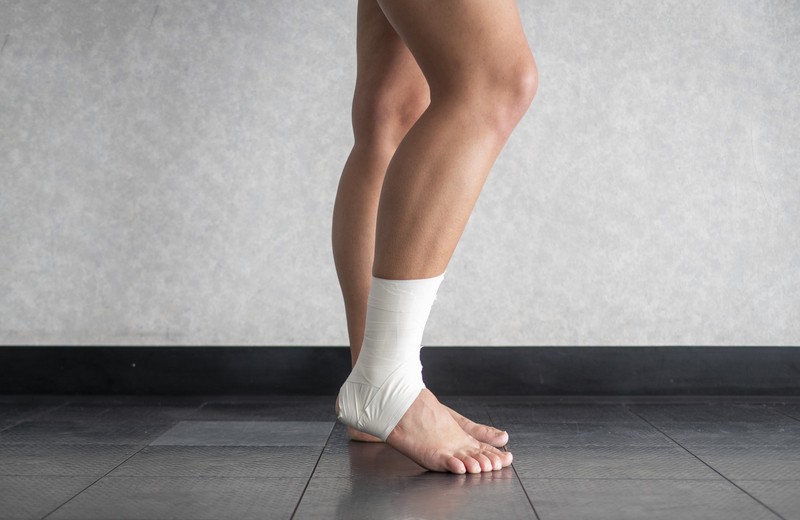
December. The ache is still there, every day, at about the same level. The trainer tapes her heel before practice, and with the tape on, she can play through it. On the surface, everything looks fine.
To keep that heel quiet, she begins working around it. She changes her landing, guards the sore area, and moves her ankle less. The relief from tape makes the persistent problem easier to overlook.
January. Tournaments start, and with them long days of match after match. The ache is no longer low. The tape stops working. She limps after tournament weekends and winces as she walks up stairs.
February. She finally gets it looked at. By now, the symptoms require a longer break from jumping, with treatment and a plan for returning to the court.
Time off may be necessary for recovery. But the return also needs attention: after reduced activity, strength and mobility may need rebuilding before full jumping resumes.
April. She comes back. The heel feels fine. But her ankle is still stiff and weak, and her landing has changed. When she is tired, her knee drifts inward as she lands. Nobody connects any of this to the heel, because the heel is "better."
May. Third match of a Saturday tournament, tired legs. She goes up for a block, lands, and her knee gives way. A torn ACL. Treatment and rehabilitation now mean a prolonged absence from the court.
Everyone says it came out of nowhere. No one can say for certain what caused it. ACL tears have many contributing factors, and some happen to athletes who do everything right. But looking back, one question remains: how much did five months of changed mechanics, starting with a low, constant ache in her heel, add to the stress on that knee?

Why persistent heel pain deserves attention
A small ache that is there every single day is different from soreness that comes and goes. Muscle soreness after a hard practice can be normal when it settles with recovery. Pain that never fully goes away, even when it is mild, deserves assessment, especially if it changes how an athlete walks, runs, or jumps.
Why pain relief from taping is not enough
Tape let her play. But pain relief alone did not establish that she was ready for the same workload.
Taping may have a role in an appropriate treatment plan. In this scenario, the problem is relying on it while symptoms persist and movement changes go unassessed. The story does not establish that the tape itself caused damage.
How ankle mobility relates to volleyball landing mechanics
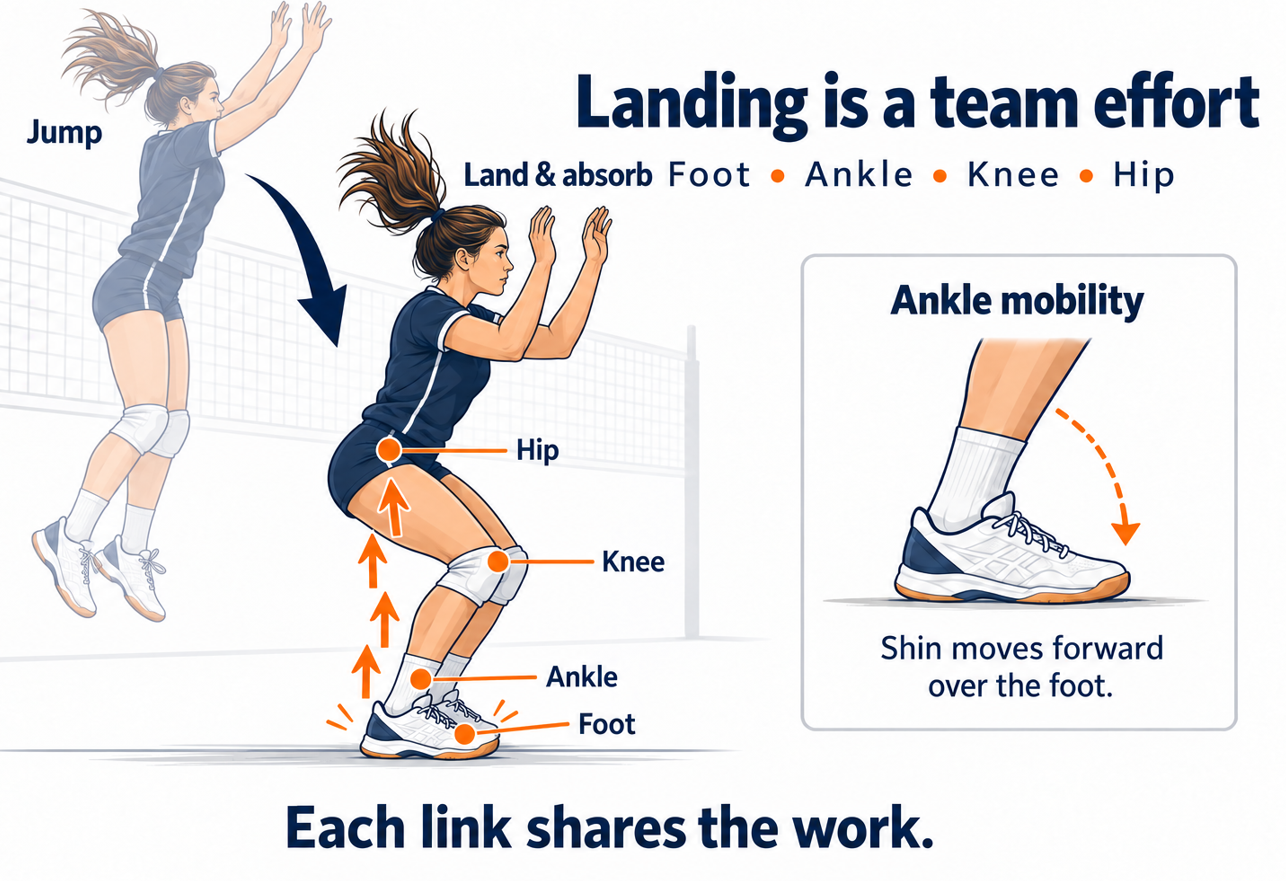
When a volleyball player lands, force travels up through the foot, ankle, knee, and hip. Each link should share the work.
Researchers studying jump landings have linked greater ankle dorsiflexion, the ability to bend the ankle so the shin moves toward the foot, with greater knee bend and lower ground reaction forces. This helps explain why ankle mobility matters when assessing how an athlete absorbs a landing. The study measured landing mechanics; it did not show that heel pain causes future ACL tears. [1]
The heel did not tear the ACL, and no one can draw a straight line between the two. In this scenario, persistent symptoms and incomplete recovery left movement problems that deserved attention. ACL injuries have many contributing factors, and a landing pattern alone cannot tell us whether an individual athlete will tear an ACL.
This story starts with a heel. Similar questions can arise after an ankle sprain that has not fully recovered, or when hip strength or mobility is limited. The useful question is whether a problem has changed how the athlete moves, and what needs addressing before full play resumes.
The same season with earlier assessment
Now, play the same season again, same heel ache in November. One difference: her family has what a professional athlete has, a way to report what she is feeling right away and get a clear next step, from someone with her full history in front of them.
November, the first week of constant heel pain. Her parent reports it. It is only a two or three out of ten, but it is there every day, and that pattern matters. The answer comes back that same day: pause the jumping, and get an in-person assessment before she keeps playing.
Her parent still decides, but now with good information, at the moment it matters most.
The assessment. A professional examines her to identify the cause of the heel pain. One possibility in a growing athlete is Sever’s disease, an irritation of the heel growth plate associated with repetitive loading. Her jumping, practice volume, and treatment are adjusted to match the findings. Some athletes can continue modified activity; others need a longer break. [2]
What may change. An earlier assessment gives her family a chance to address symptoms and movement changes before they persist for months. It may help limit compensations and guide rehabilitation, although it cannot guarantee a short recovery or prevent every movement problem.
The history does the rest. The November heel goes into her record. If anything comes up later, the first question is "how is that heel doing, and is she moving the way she did before?"
The goal. An appropriate adjustment in November, a plan for recovery, and a return to play that considers strength and movement as well as pain.
No one can promise an ACL tear will never happen. Earlier assessment can help identify problems worth treating, but symptom reporting alone has not been established as an ACL prevention program.
This scenario illustrates the difference: timely guidance and someone who remembers what came before.

Why volleyball players are especially exposed
Volleyball involves repeated jumping in matches and practices, and club tournaments can involve multiple matches in a day. Growing athletes may develop heel pain related to repetitive running and jumping, including Sever’s disease. [2]
Female athletes have higher ACL injury rates than male athletes in several comparable sports, including soccer and basketball. Those findings should not be treated as a volleyball-specific risk estimate. Noncontact ACL injuries can occur during landings or sudden changes of direction. [3]
Why most families end up with the first version
Without the right direction, nobody did anything obviously wrong. The pain was mild, and the tape worked. Any family could have made the same calls.
The problem is that a low, constant ache never feels serious enough for an appointment until it suddenly is. And no one in the athlete's world is holding the whole story from November to May.
What can help reduce ACL injury risk?
Exercise-based neuromuscular training programs can help reduce ACL injury risk. These programs combine elements such as strength, balance, jumping and landing practice, and feedback on movement technique. Clinical practice guidelines recommend incorporating prevention programs before training or games for female athletes, particularly those younger than 18. [4]
For a volleyball team, a qualified coach, athletic trainer, or physical therapist can help select an appropriate program and teach its exercises. Consistent participation matters. Symptom assessment and rehabilitation complement this work; tracking pain alone does not replace it.
What you can do right now
Pay attention to constant pain, even if it is mild. Pain that is there every day, even at a low level, is worth acting on.
Be careful when tape is the only thing keeping her on the court. If she can only play because the pain is masked, that is a reason to get it looked at, not a solution.
Watch how she moves. If she begins favoring one side or changes how she lands, especially when tired, mention it to someone who can assess her. These observations warrant attention; they do not predict an ACL
tear.
Why pain relief does not establish readiness to play
Do not mistake no pain for being fully back. After any time off, ask whether she is moving and landing the way she did before, not just whether it hurts.
When a volleyball player should get medical care
A knee injury with a pop, giving way, significant swelling, or inability to bear weight warrants prompt medical assessment. Stop play rather than testing the knee by continuing.

Questions parents can ask before returning to volleyball
- Is pain recurring or changing how my child moves?
- What activity modifications are appropriate?
- What strength, mobility, and sport-specific abilities need reassessment?
- What should guide the progression back to jumping and matches?
Frequently asked questions
Can heel pain cause an ACL tear?
Heel pain is not an established direct cause of ACL tears and does not mean a tear is coming. Persistent symptoms may affect movement and deserve assessment, but the ankle-mobility study discussed here examined landing mechanics, not whether heel pain predicts ACL injury. [1]
Can limited ankle mobility affect landing mechanics?
Yes. Research has found an association between ankle dorsiflexion and knee bend and ground reaction forces during landing. That relationship supports assessing ankle mobility, but it does not establish a single cause of ACL injury. [1]
Does being pain-free mean a player is ready to return?
Not necessarily. Pain relief is one part of recovery. Following an injury or time away, the treating professional may also assess strength, mobility, balance, and tolerance for sport-specific tasks before progressing to full participation.
What can help reduce ACL injury risk in volleyball?
A structured neuromuscular training program can address strength, balance, and jumping and landing control. Exercise-based prevention programs have evidence of benefit, particularly in young female athletes. The program should suit the athlete and sport; no program eliminates all ACL injuries. [4]
Sources
[2] American Academy of Orthopaedic Surgeons. Sever’s Disease. OrthoInfo.
[3] The ACL Female Athlete Crisis. AOSSM Sports Medicine Update. Summer 2026.
Further reading
Yu B, Garrett WE. Mechanisms of non-contact ACL injuries. British Journal of Sports Medicine, 2007.
Hewett TE, et al. Valgus loading of the knee predicts ACL injury risk in female athletes. American Journal of Sports Medicine, 2005.
Powers CM. The influence of abnormal hip mechanics on knee injury. Journal of Orthopedic & Sports Physical Therapy, 2010.
Boden BP, et al. Mechanisms of anterior cruciate ligament injury. Orthopedics, 2000.
Grindem H, et al. Simple decision rules can reduce reinjury risk after ACL reconstruction. British Journal of Sports Medicine, 2016.
Sever Disease (Calcaneal Apophysitis). StatPearls, NCBI Bookshelf.