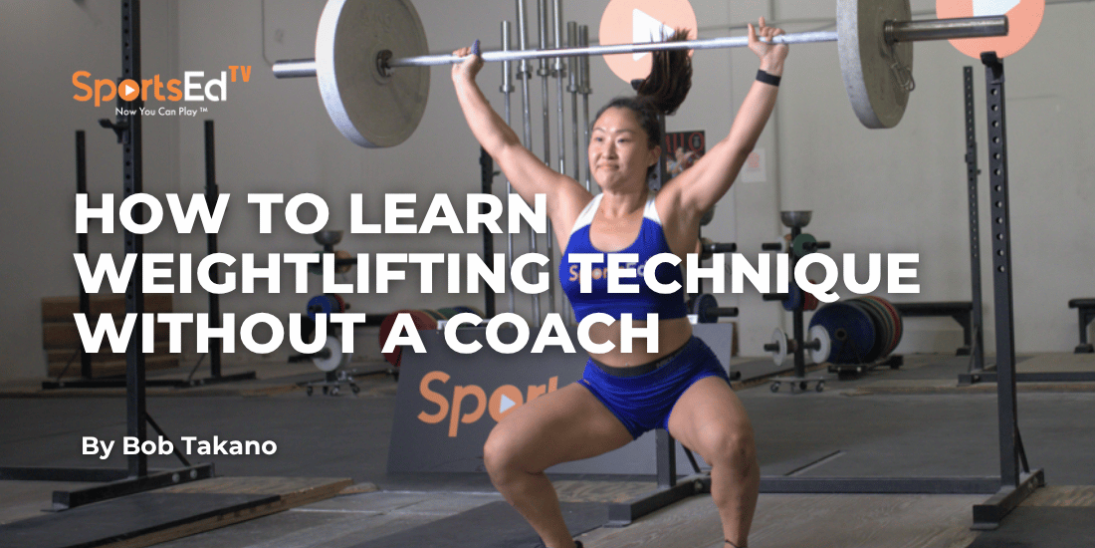
Learning proper weightlifting technique without access to a coach can be difficult. The snatch and clean and jerk are highly technical lifts, and small mistakes in positioning, timing, balance, and bar path can make a major difference.
Today's post is for those of you who are trying to learn weightlifting technique, but you don't have access to a coach. This first part is going to be autobiographical, just to let you know about the struggles that I went through trying to learn weightlifting without a coach.
How I Started Learning Weightlifting Without a Coach
I was a relatively weak kid who got bullied. The one thing I noticed about the guys who bullied me was that they were stronger than I was. At a certain point, I decided that the only way that I could fend them off was to become stronger.
At the time, very little was known about using weights to develop physical strength, so there really wasn't much available to help me on my journey to getting stronger.
When I was thirteen, my parents bought me a 100 lb. weight set for Christmas, and I started to do the bodybuilding exercises that came in the booklet with the barbell.
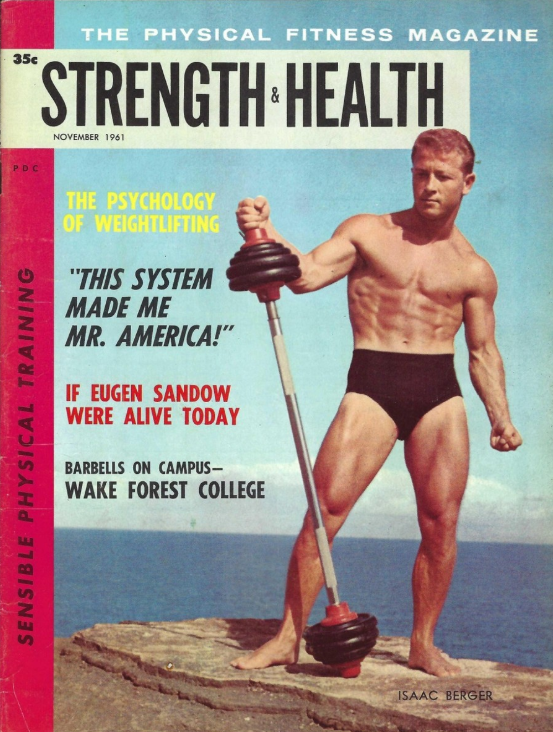
Very soon after that, I discovered that there was actually a magazine with information about weight training, bodybuilding, and weightlifting. It was a monthly magazine sold at the corner drugstore called Strength and Health.
Learning proper weightlifting technique without access to a coach can be difficult. The snatch and clean and jerk are highly technical lifts, and small mistakes in positioning, timing, balance, and bar path can make a major difference.
Today's post is for those of you who are trying to learn weightlifting technique, but you don't have access to a coach. This first part is going to be autobiographical, just to let you know about the struggles that I went through trying to learn weightlifting without a coach.
How I Started Learning Weightlifting Without a Coach
I was a relatively weak kid who got bullied. The one thing I noticed about the guys who bullied me was that they were stronger than I was. At a certain point, I decided that the only way that I could fend them off was to become stronger.
At the time, very little was known about using weights to develop physical strength, so there really wasn't much available to help me on my journey to getting stronger.
When I was thirteen, my parents bought me a 100 lb. weight set for Christmas, and I started to do the bodybuilding exercises that came in the booklet with the barbell.
Very soon after that, I discovered that there was actually a magazine with information about weight training, bodybuilding, and weightlifting. It was a monthly magazine sold at the corner drugstore called Strength and Health.
I soon figured out, after going through several issues of Strength and Health, that the strongest athletes in the world were weightlifters. I concluded that to develop more physical strength, I needed to train like weightlifting champions.
Learning Weightlifting Technique by Watching Better Lifters
I started attending local weightlifting meets just to watch the sport. I realized that the athletes in these competitions were very strong.
I was completely fascinated by the thought of getting stronger, and I was absolutely voracious in my attempts to learn more about the sport of weightlifting.
I took photos of the best lifters at the meets, and I studied them to try and learn what their technique was like.
Fortunately, I was able to go to some very high-level local and national meets, and I was able to watch some of the members of the Olympic team perform. I even got to see a world record being set. That was inspiring.

Why Training Around Experienced Weightlifters Matters
I began to notice that most of the winners at the local meets came from the Los Angeles downtown YMCA.
After several years of trying to train on my own and learn how to do the lifts, I decided that I needed to go join the LA YMCA weightlifting team if I was really going to get much better.
Training at the YMCA was a real eye-opener.
About half the team qualified for nationals, some of them made international teams, and a fair percentage of them were on the medal stand at national events.
I also found that being in the gym environment, where the only topic of conversation was weightlifting, was tremendously educational.
Plus, we had a real weightlifting coach who had coached at both national and international events. His name was Bob Hise, and he provided a great deal of leadership for that program.
Consequently, a great deal was learned and assimilated in a relatively short period of time.
The Problem With Asking for Weightlifting Advice on Social Media
What I'm seeing now from coachless weightlifters is that too many of them are on social media asking very generalized questions.
They'll post a video of themselves performing a snatch or a clean and jerk and then ask a general question like:
“Any suggestions? Any pointers?”
What then happens is they get a multitude of answers from people who are not necessarily coaches.
A lot of those people are trying to spew out everything they know about an error that they see in the technique of the lifter in question.
This tends to provide too much information, and the lifter asking for advice doesn't have the filters to properly assimilate the large amount of information coming back at him or her.
How Coachless Weightlifters Can Improve Their Technique
I would suggest that coachless weightlifters attend weightlifting meets and try to determine which lifters have the best technique.
Then take videos of those lifters performing fairly heavy snatches or clean and jerks.
After that, take the video footage and upload it to a program such as Kinovea, which allows you to analyze video and examine a lift frame by frame.
This will allow you to study the form of lifters who are better than you are.
You can also shoot video of yourself and analyze your own lifting technique.
Study the Key Positions of the Snatch and Clean and Jerk
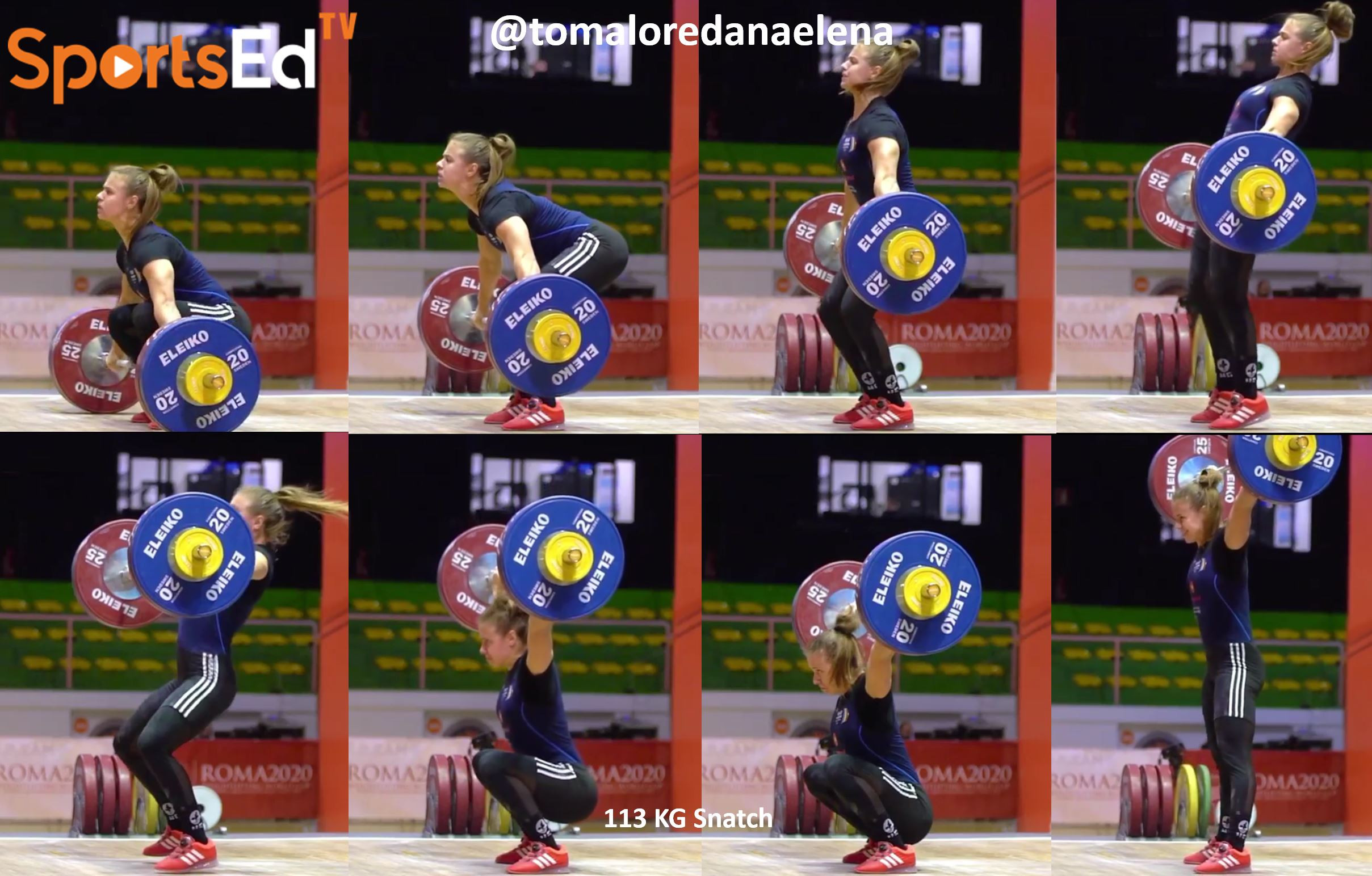
The reason that I propose sequence shots is that they allow you to study the various positions that the body goes through while performing the lifts.
To the untrained eye, snatches and clean and jerks take place too rapidly to see all of the technical details occurring during the execution of a lift.
Breaking a lift into individual positions makes those details easier to study.

Learn What Proper Weightlifting Technique Looks Like
It's probably best to do some homework and find out what optimal weightlifting technique looks like before trying to diagnose your own lifting.
Once you understand the basic positions and principles, you can compare your own technique with that of accomplished lifters.
You can then take your videos, post them on social media, and ask specific questions such as:
“Are my hips too high?”
“Is the center of pressure on my feet at the proper position?”
These questions are much more useful than simply asking:
“What's wrong with my lifts?”
or:
“What can I do to improve?”
Ask Specific Questions About Your Weightlifting Technique
The more specific your question, the more useful the answer is likely to be.
Instead of inviting everyone on social media to critique your entire lift, identify a particular technical issue you are trying to understand.
It might involve your starting position, hip height, balance, bar path, foot pressure, receiving position, or another specific component of the lift.
This also forces you to become a student of weightlifting technique rather than simply depending on other people to tell you what is wrong.
Build Relationships With Experienced Weightlifters
I would also suggest developing relationships with other lifters so that you can get an idea of what their mindset is during training and competition.
Weightlifting is not simply about learning where the bar and body should be positioned.
Understanding how experienced lifters approach training, technical corrections, heavy attempts, and competition can also be extremely helpful to your development.
Why Weightlifters Should Learn Proper Technique as Early as Possible
The primary point of this piece is that none of us has time to waste.
You must learn the technique and training method for weightlifting as soon as you can.
The only people who have time to waste are 14-year-olds or 15-year-olds. The rest of us have got to make the most of the time we have when our body is most responsive to training.
No weightlifter has time to waste.

Being Self-Taught Doesn't Mean Learning Everything Alone
I know some people think it's very noble to be self-taught, to be an autodidact, but weightlifting doesn't allow you the luxury of wasted time.
If you don't have access to a weightlifting coach, you can still improve by studying accomplished lifters, analyzing video, learning the key technical positions, asking specific questions, and surrounding yourself with experienced people whenever possible.
The goal isn't simply to teach yourself. The goal is to learn correctly and efficiently.
Coachless weightlifters can also take advantage of the SportsEdTV weightlifting library, where athletes can study technique, training methods, drills, and instruction from experienced coaches and accomplished weightlifters. Having access to a trusted educational resource can help you understand what proper technique should look like before evaluating your own lifts or asking others for feedback.
Explore the SportsEdTV Weightlifting Library to continue developing your technique and understanding of the sport.
If you'd like to see more of my weightlifting instruction, you can also visit my YouTube page at:
https://www.youtube.com/@bobtakanoweightlifting