Batting cages are more than a training tool. They provide controlled environments where athletes can improve their accuracy, timing, and decision-making. For coaches and players, cages replicate challenges of live games while offering the safety and structure needed for growth. By combining mechanics, vision, and structured drills, they support development at every level.

Why Batting Cages Are Becoming More Popular Than Ever
The global batting cage market reached USD 421.7 million in 2024. Experts project it to grow at a CAGR of 6.4%, reaching USD 736.2 million by 2033. Rising investments in sports infrastructure, improved materials, and increasing youth participation in baseball, softball, and cricket drive this growth.
Schools, colleges, and sports academies are expanding their athletic programs, encouraging investments from both the government and the private sector in state-of-the-art training facilities. Durable designs incorporating high-tensile steel and weather-resistant netting have made batting cages safer and more resilient, leading to their wider adoption in training and recreational environments.
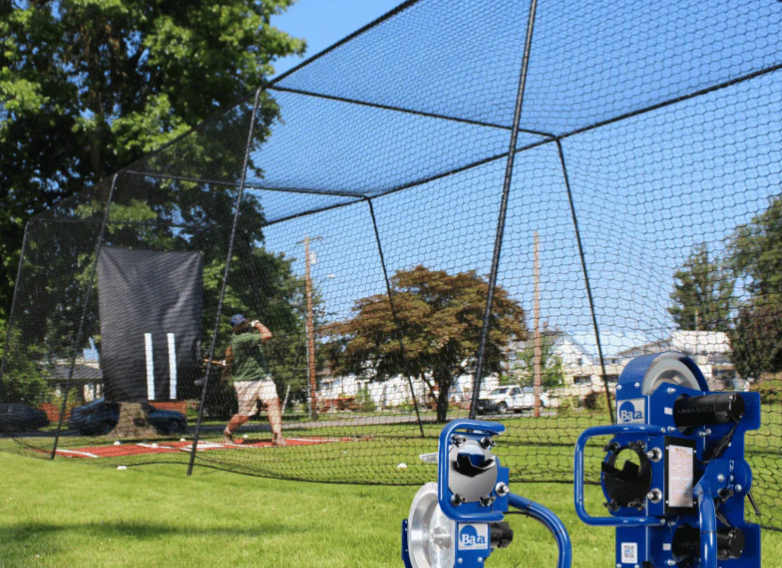
Batting cages are more than a training tool. They provide controlled environments where athletes can improve their accuracy, timing, and decision-making. For coaches and players, cages replicate challenges of live games while offering the safety and structure needed for growth. By combining mechanics, vision, and structured drills, they support development at every level.
Why Batting Cages Are Becoming More Popular Than Ever
The global batting cage market reached USD 421.7 million in 2024. Experts project it to grow at a CAGR of 6.4%, reaching USD 736.2 million by 2033. Rising investments in sports infrastructure, improved materials, and increasing youth participation in baseball, softball, and cricket drive this growth.
Schools, colleges, and sports academies are expanding their athletic programs, encouraging investments from both the government and the private sector in state-of-the-art training facilities. Durable designs incorporating high-tensile steel and weather-resistant netting have made batting cages safer and more resilient, leading to their wider adoption in training and recreational environments.
Technological advancements are transforming the market landscape. Features like retractable netting systems, automated feeders, and weatherproof materials enhance performance and user convenience. Manufacturers build modern cages to endure repeated high-impact forces. They use fasteners and materials similar to those in cement and fiber cement board screws, ensuring long-lasting safety and reliability for players. Additionally, e-commerce platforms offer a wider range of options and streamline the purchasing process for institutions and individuals.
The increasing demand for high-performance baseball gear aligns with this trend. Modern baseball equipment, such as bats and pitching machines, now features smart sensors and analytics. This fosters data-driven training to enhance player skill and safety. Regarding regional dynamics, North America dominates the market, bolstered by its rich baseball culture and well-established infrastructure.
How to Improve Your Batting Technique
Improving your batting technique in the cage involves more than just regular practice. It demands concentrated focus on your form and timing. Begin by ensuring your stance provides both mobility and stability, with your feet set shoulder-width apart. As you practice your swings, keep your eyes fixed on the imaginary spot where you anticipate the ball will be. Think about utilizing a batting aid to enhance your bat speed, power, and control.
Slow-motion drills can refine your swing phase by conducting thorough analysis, which helps identify and correct any imperfections in your technique. Strength training is essential for developing muscles that contribute to a powerful swing and fast running. Incorporate exercises such as squats and deadlifts to build leg strength, which is crucial for sprinting and maintaining a steady batting stance. Additionally, bench and overhead presses will enhance your upper-body strength, which is crucial for executing powerful bat swings.
Body weight exercises improve flexibility, balance, and strength without requiring any equipment. Incorporate push-ups to develop upper-body strength, which is vital for swinging a bat powerfully. Planks are excellent for strengthening the core, which is essential when hitting in the batting cage or sprinting between bases.
Leg lunges focus on lower body muscles, which are crucial for swift movements during games. Include these exercises in your routine three times a week to enhance muscle balance and reduce the risk of injuries.
With guidance from an instructor, you can utilize batting cage drills and subject each bat to different pitches. It's essential to observe how each bat reacts to the various situations that may arise during an actual game. Aim to add these exercises to your routine twice a week, focusing on moderate weights that allow eight to 12 repetitions per set to optimize muscle growth.

Maximizing Batting Potential Through Torso, Lower Body, and Visual Coordination
Preventing injury is essential in batting. Torso movement during the follow-through is key, as increased bat head speed after impact often results from improved torso rotation, enhancing both speed and accuracy.
The mechanics of the lower body are essential for generating power and control. The ground reaction forces from the lead foot directly impact bat speed, underscoring the significance of stance and balance in achieving consistent contact.
Maintaining strong kinematic chains, from knee extension to pelvis rotation, ensures effective energy transfer throughout the swing. This foundation is essential for achieving both precision and power.
Visual-motor coordination adds another layer of complexity. A player's ability to track visual cues greatly enhances accuracy and home run potential. By aligning eye movements with body actions, players can better read pitches and adjust their swings accordingly.
Adequate Warmup and Cool-Down Exercises
Before heading to the batting cages or the track, do dynamic stretches like leg swings, arm circles, and torso twists to get your muscles ready. Include movements that simulate batting actions, such as shadow swinging a bat, to engage the necessary muscle groups. A light jog for about five minutes can also boost your heart rate and enhance blood flow to your muscles, laying a solid groundwork for a vigorous workout.
Once you've finished your running sprints or batting practice, ease into a cool-down by slowly decreasing your activity pace instead of stopping suddenly. Stretch the major muscle groups, especially those heavily used during your workout, like hamstrings, quads, shoulders, and back.
Practices such as deep breathing while you stretch can help bring your heart rate back to normal and may alleviate post-workout soreness.
Benefits of Batting Cage Workouts
Integrating batting cage workouts into your exercise regimen boosts both strength and skill. Concentrating on strength training within the batting cage means executing exercises that replicate the explosive actions of swinging a bat. Incorporate movements like squats and lunges with dumbbells to activate major muscle groups, enhancing overall power and strength.
Utilizing medicine balls for rotational throws can enhance the core strength needed for powerful swings. This focused strategy guarantees that every session develops the muscles vital for batting.
Evaluating your swing and accuracy extends beyond the fundamentals. Batting precision is acknowledged as one of the essential baseball skills, yet conventional assessments often overlook its intricacies. Numerous evaluations fail to account for swing mechanics, pitch variations, and cognitive challenges, resulting in incomplete evaluations. Developing more effective techniques that accurately reflect real game situations and provide more dependable outcomes is essential.

The Lasting Impact of Batting Cages
Batting cages play a key role in developing strong, confident players. They provide a safe and controlled environment where athletes can refine essential skills through repetition and focused practice. Beyond physical improvement, cages also build mental discipline and strategic thinking. Whether used for training or recreation, they help players connect with the fundamentals of the sport. As technology and training methods evolve, batting cages will remain a cornerstone of player development for years to come.