Whether you're training for your first 5K, preparing for a marathon, or simply running to improve your health, choosing the right running shoes is one of the most important decisions you'll make. The right pair can make every run feel smoother, more comfortable, and more enjoyable. The wrong pair can leave you dealing with blisters, sore feet, aching knees, or injuries that interrupt your training.
Walk into any running store or browse online, and you'll find hundreds of models promising more cushioning, better support, greater stability, or increased speed. Terms like heel drop, carbon plate, stack height, and energy return can make the process seem overwhelming, especially if you're buying your first serious pair of running shoes.
The good news is that finding the right shoe doesn't have to be complicated.
Rather than chasing the newest technology or buying the same shoe your favorite elite runner wears, focus on what matters most: your feet, your running style, your goals, and the surfaces where you'll spend most of your miles.
This guide explains everything you need to know before making your next purchase. Whether you're a beginner or an experienced runner, you'll learn how to evaluate running shoes with confidence and choose the pair that's right for you.

Why Does Choosing the Right Running Shoe Matter?
Running places repetitive stress on your body. With every stride, your feet absorb forces that can reach two to three times your body weight. Multiply that by hundreds or even thousands of steps during a typical run, and it's easy to understand why footwear matters.
Running shoes serve several important functions. They provide cushioning to help manage impact, offer traction on different surfaces, stabilize the foot during movement, and protect your feet from uneven terrain and repetitive stress.
However, it's important to understand that no running shoe can completely prevent injuries. Research shows that injuries are influenced by many factors, including training volume, recovery, running technique, strength, flexibility, sleep, nutrition, and previous injuries.
A properly fitted shoe won't eliminate those risks, but it can improve comfort, reduce excessive stress on certain structures, and help your body move more naturally. Simply put, the right shoe removes one potential obstacle from your running journey.
Comfort should always be your first priority. Studies consistently show that runners naturally select shoes that feel comfortable because those shoes often allow the body to move with less muscular effort. If a shoe feels uncomfortable in the store, it's unlikely to become your favorite after 100 miles.
Understanding Your Feet
Before comparing brands or looking at the latest shoe technology, it's important to understand your own feet.
Every runner is different. Feet vary in length, width, arch height, flexibility, and movement patterns. That's why two runners with similar experience levels may find completely different shoes equally comfortable.
Knowing your foot type gives you a useful starting point, although it should never be the only factor influencing your decision.
What Is Your Arch Type?
One of the simplest ways to begin evaluating your feet is by identifying your arch height.
Although arch type doesn't tell the whole story, it provides helpful information about how your foot may distribute pressure while running.
Generally, runners fall into one of three categories.
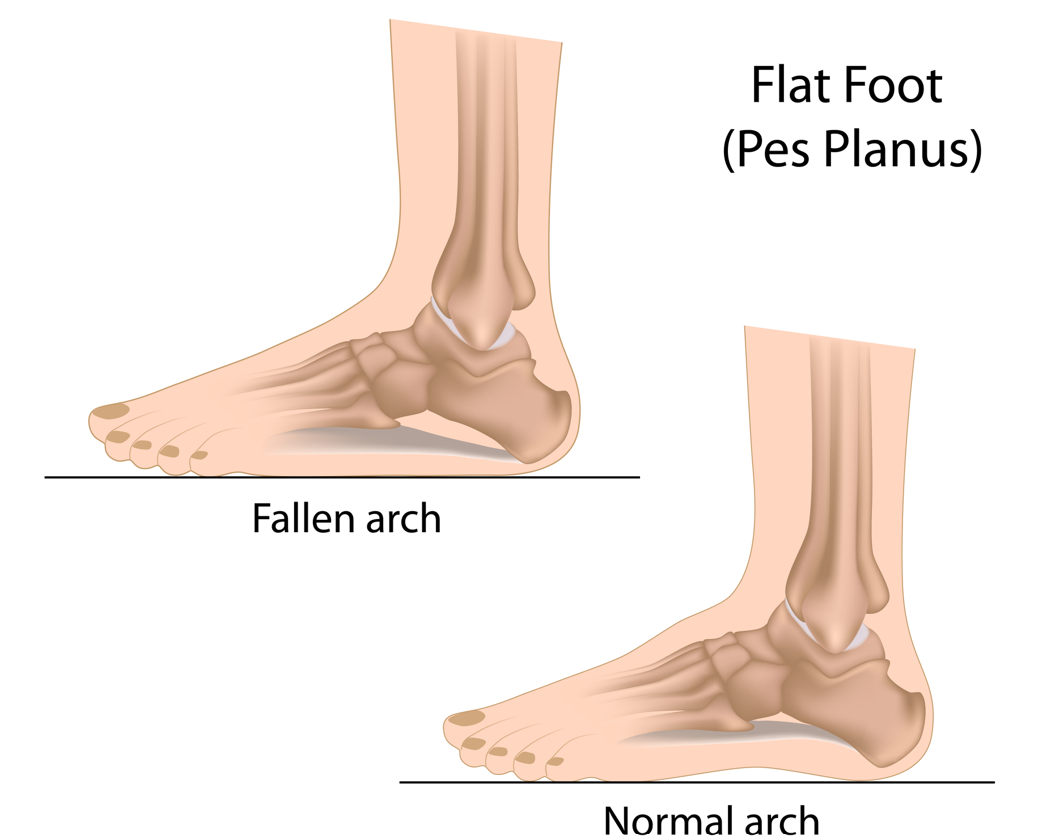
Flat Feet (Low Arches)
If your footprint shows almost the entire sole of your foot with very little curve along the inside, you likely have low arches or flat feet.
Many runners with flat feet naturally roll inward more after landing, a movement called overpronation. While this isn't automatically a problem, some runners with low arches feel more comfortable in shoes that provide additional stability.
Flat feet don't mean you can't become a successful runner. Many elite athletes have low arches and compete at the highest levels without limitations.
Normal Arches
Most runners have medium arches.
A normal arch leaves a noticeable curve along the inside of the footprint while maintaining good contact between the heel and forefoot.
Runners with normal arches often have the widest range of shoe options and can comfortably wear many neutral running shoes.
High Arches
High arches leave only a narrow strip connecting the heel and forefoot in a footprint.
These feet are often less flexible and absorb shock differently than flatter feet. As a result, many runners with high arches prefer shoes that provide generous cushioning to help reduce repetitive impact forces.
Again, this is a general guideline rather than a rule. Plenty of runners with high arches successfully wear moderately cushioned shoes, while others prefer maximum cushioning.
How Do You Perform the Wet Test?
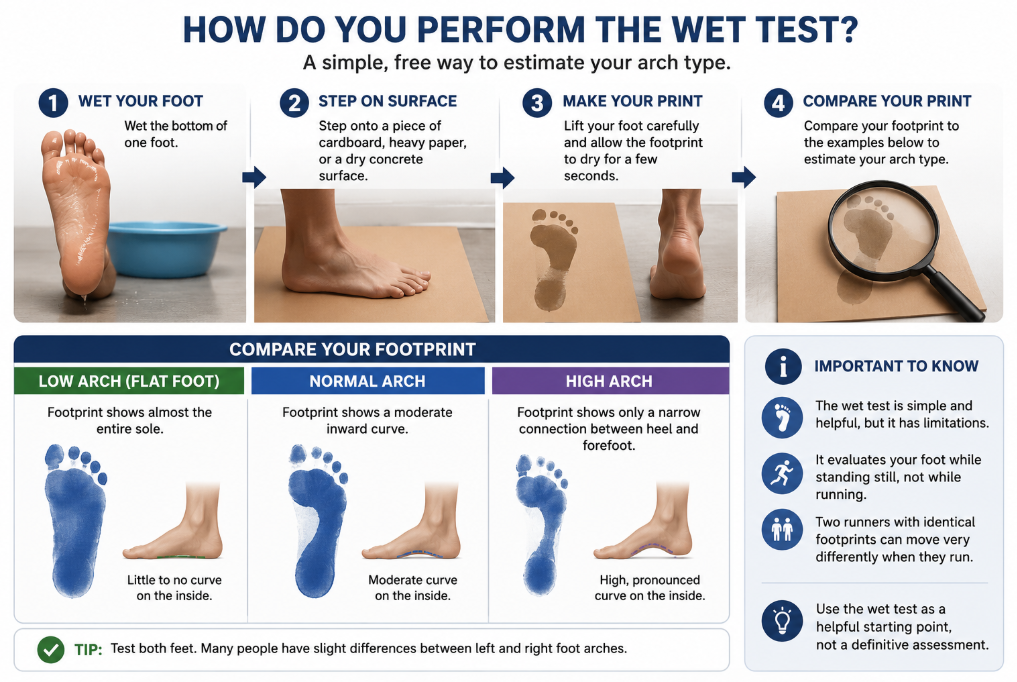
One of the easiest ways to estimate your arch type is with the wet test.
Wet the bottom of one foot and step onto a piece of cardboard, heavy paper, or a dry concrete surface where your footprint will be visible.
Compare your footprint.
A footprint showing almost the entire foot usually indicates low arches.
A footprint with a moderate inward curve suggests a normal arch.
A footprint showing only a narrow connection between heel and forefoot often indicates high arches.
The wet test is useful because it's simple and free, but it has limitations. It evaluates your foot while standing still, not while running. Two runners with identical footprints can move very differently once they begin running.
Think of the wet test as a helpful starting point rather than a definitive assessment.
What Is Pronation?
Pronation is one of the most misunderstood terms in running.
Many people believe pronation is something bad that needs to be corrected. In reality, pronation is a completely normal and necessary part of running.
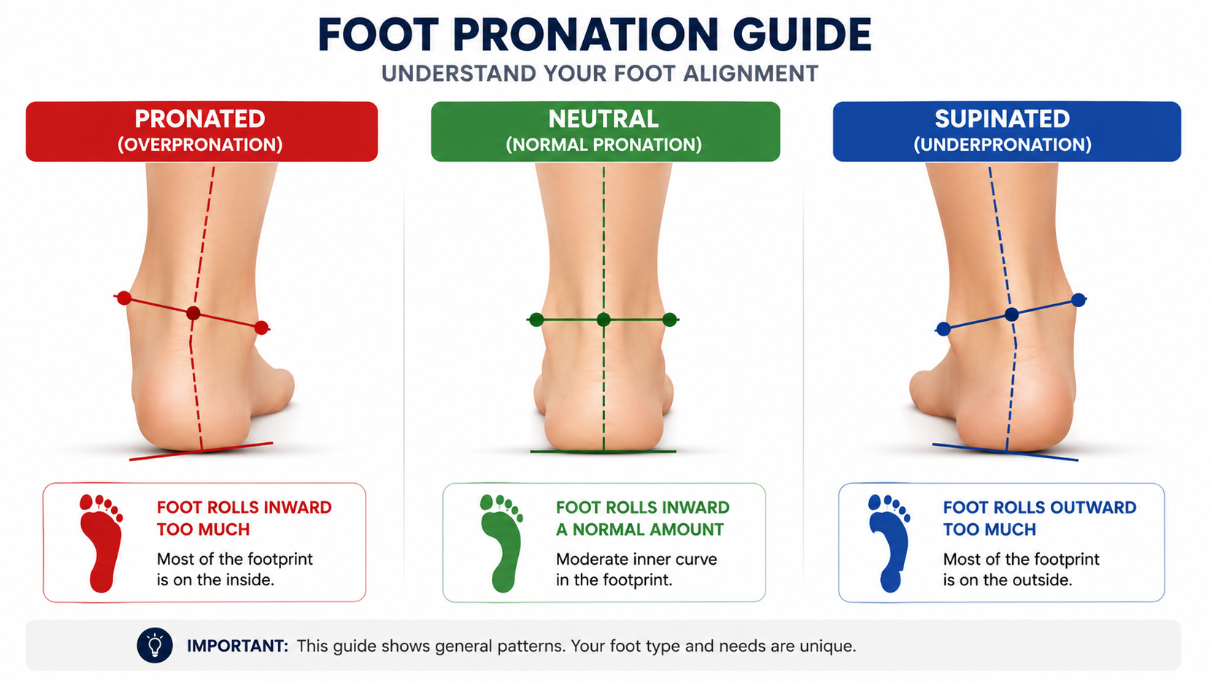
Pronation refers to the natural inward rolling motion of the foot immediately after it lands. This movement helps absorb impact and distribute forces throughout the foot and lower leg.
Problems generally arise only when that motion becomes excessive or insufficient.
Neutral Pronation
With neutral pronation, the foot rolls inward slightly after landing and distributes impact efficiently.
This movement allows the foot to function as a natural shock absorber while maintaining good alignment throughout the stride.
Most runners fall somewhere close to this category.
Overpronation
Overpronation occurs when the foot rolls inward more than necessary.
Some runners who overpronate experience increased stress on the inside of the ankle, shin, knee, or hip, although not everyone with overpronation develops injuries.
Modern stability shoes are designed to gently guide the foot rather than aggressively forcing it into a different position.
Underpronation (Supination)
Underpronation, often called supination, is the opposite pattern.
The foot remains relatively rigid and rolls inward very little.
Because less shock is absorbed naturally, impact forces remain concentrated along the outside of the foot.
Many runners with this movement pattern prefer neutral shoes with generous cushioning that help soften repeated impacts.

Which Type of Running Shoe Should You Buy?
Running shoes generally fall into three broad categories.
Understanding these categories makes shopping much easier.
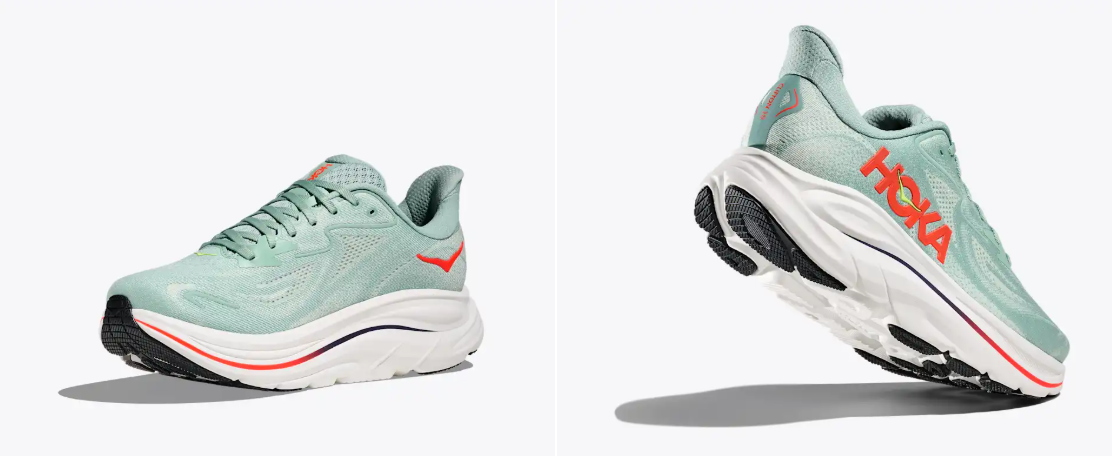
Neutral Running Shoes
Neutral shoes are designed for runners who don't require additional support features.
Their primary focus is cushioning, comfort, flexibility, and smooth transitions from heel strike to toe-off.
Most recreational runners wear neutral shoes successfully.
They're also commonly recommended for runners with higher arches who simply want better shock absorption rather than corrective support.
Stability Running Shoes
Stability shoes provide moderate support for runners whose feet tend to roll inward more than average.
Unlike older models that relied on very firm materials, today's stability shoes typically use subtle design features that guide the foot naturally while maintaining a comfortable ride.
Many runners who experience mild overpronation appreciate the additional support without feeling restricted.
Motion-Control Running Shoes
Motion-control shoes provide the greatest level of support.
They often feature:
- Firmer midsoles
- Straighter shoe shapes
- Wider platforms
- Increased structural support
- Greater resistance to inward foot movement
These shoes are generally recommended for runners with severe overpronation or those who require maximum stability because of their biomechanics.
For many recreational runners, however, motion-control shoes are unnecessary.
Should You Get a Professional Gait Analysis?
If you're serious about running or have experienced recurring injuries, a professional gait analysis can be extremely valuable.
Many specialty running stores offer this service at no additional cost.
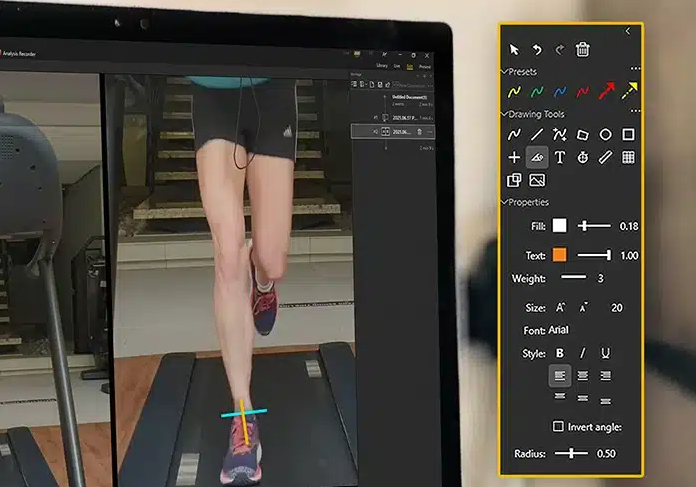
During a gait analysis, you'll usually run on a treadmill while being recorded from different angles.
A trained specialist evaluates several aspects of your stride, including:
- Foot strike pattern
- Pronation
- Cadence
- Lower-leg alignment
- Overall running mechanics
- Shoe wear patterns
Unlike the wet test, gait analysis evaluates your body in motion.
That's important because static foot shape doesn't always predict dynamic movement.
Although gait analysis isn't perfect—and different experts may interpret the same runner slightly differently—it often provides useful information that helps narrow your shoe choices.
If you've struggled with persistent foot, ankle, knee, or hip discomfort, scheduling a gait analysis before buying your next pair of shoes is often worthwhile.
Does Foot Strike Matter?
Another topic that receives a great deal of attention is foot strike.
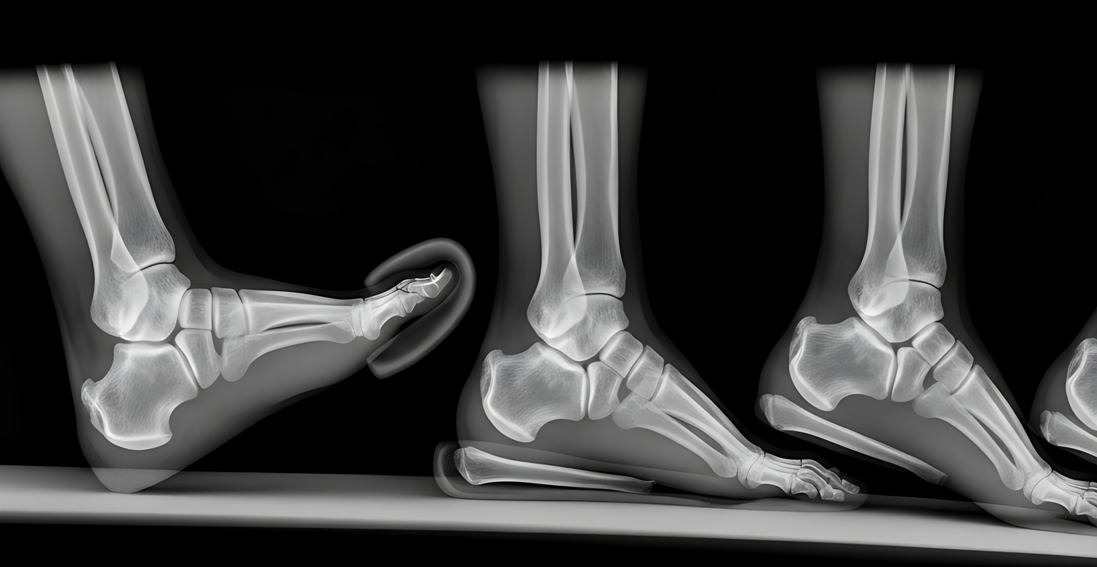
Simply put, foot strike describes which part of your foot contacts the ground first.
There are three common patterns.
Heel Strike
Heel striking is the most common running pattern, especially among recreational runners.
Contrary to popular belief, heel striking is not inherently bad.
Many healthy runners—including marathon finishers and elite athletes—land on their heels and remain injury-free.
Midfoot Strike
Midfoot runners land with the middle portion of the foot contacting the ground first.
This often distributes impact more evenly across the foot and is common among experienced runners.
Forefoot Strike
Forefoot runners land closer to the ball of the foot.
This technique generally places more work on the calf muscles and Achilles tendon while reducing some impact forces at the knee.
No single foot strike is universally superior.
Instead of trying to imitate elite runners, focus on wearing shoes that feel natural for your own running mechanics while gradually improving your overall technique.
What Running Surface Will You Use Most?
One of the easiest ways to narrow your shoe choices is by considering where you'll actually run.
Many runners overlook this step and simply buy the most popular model available.
That's a mistake.
The best running shoe for a mountain trail isn't necessarily the best shoe for city streets.
Road, Trail, or Treadmill: Which Running Shoes Do You Need?
Where you run should play a major role in the type of shoe you buy. Running shoes are designed for specific environments, and choosing the wrong type can affect comfort, traction, durability, and even your confidence on different surfaces.
Road Running Shoes
Road running shoes are designed for pavement, sidewalks, bike paths, and other hard, predictable surfaces.
Because asphalt and concrete provide little natural cushioning, road shoes focus on shock absorption, smooth transitions, and lightweight construction. Most runners who train in neighborhoods, parks, or cities will spend the majority of their time in road shoes.
If more than 80% of your runs take place on pavement, road shoes are almost certainly your best option.
Trail Running Shoes
Trail running introduces a completely different set of challenges.
Uneven terrain, loose gravel, roots, mud, rocks, and steep climbs require more traction and protection than road shoes can provide.
Trail shoes typically feature:
- Aggressive rubber lugs for grip
- Reinforced toe caps to protect against rocks
- Durable uppers that resist abrasion
- Wider, more stable platforms
- Stickier rubber compounds for improved traction
Many trail shoes also include rock plates that help protect the bottom of the foot from sharp stones.
If your runs regularly take you onto hiking trails or mountain paths, investing in dedicated trail shoes is well worth it.

Treadmill Running
If you primarily run indoors, traditional road shoes are usually the best choice.
Treadmills provide a relatively forgiving surface, so most runners don't need maximum cushioning indoors. Some runners even prefer lighter shoes for treadmill sessions because they feel more responsive.
Hybrid Shoes
Many runners split their time between roads and light trails.
If your off-road routes consist mainly of gravel paths, packed dirt, or park trails rather than technical mountain terrain, hybrid running shoes offer a practical compromise.
They provide enough grip for light trails without sacrificing the smooth ride expected on pavement.
How Much Cushioning Do You Really Need?
One of the biggest trends in modern running shoes has been the dramatic increase in cushioning.
Some shoes now have midsoles more than twice as thick as models from just a decade ago. While additional cushioning can improve comfort for many runners, more isn't automatically better.
The ideal amount depends on several factors, including your body weight, training volume, running pace, injury history, and personal preference.
Minimal Cushioning
Minimalist shoes provide very little foam between your foot and the ground.
They allow runners to feel the running surface more directly and often encourage shorter strides with increased calf and foot muscle activity.
These shoes appeal to some experienced runners but require a gradual transition. Moving too quickly from traditional shoes to minimalist footwear can overload the calves, Achilles tendon, and foot muscles.
Moderate Cushioning
Moderately cushioned shoes remain the most versatile option for most runners.
They offer an excellent balance of comfort, responsiveness, durability, and stability, making them ideal for everyday training.
If you're unsure where to begin, this category is usually the safest choice.
Maximum Cushioning
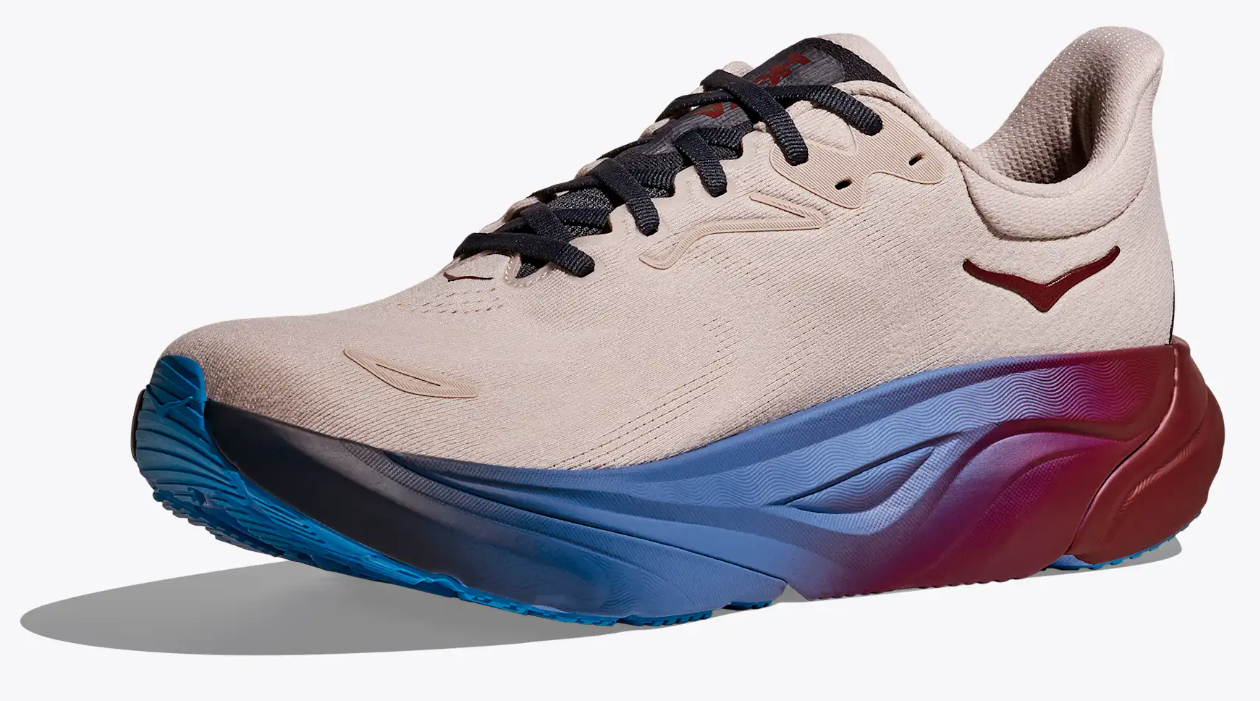
Maximum-cushion shoes feature thick midsoles that absorb a large amount of impact.
Many runners appreciate them for long runs, recovery days, or marathon training because they can reduce the feeling of repeated pounding on hard surfaces.
However, maximum cushioning isn't perfect for everyone. Some runners find these shoes feel less stable, particularly when cornering or running on uneven terrain.
The most comfortable shoe is not necessarily the one with the most foam.
What Is Heel Drop?
Heel drop is one of the specifications you'll often see when comparing running shoes.
It refers to the difference in height between the heel and the forefoot.
For example, a shoe with a heel that sits 30 millimeters above the ground and a forefoot that's 22 millimeters high has an 8-millimeter heel drop.
Heel drop influences how your muscles and tendons share the workload during running.
Low Heel Drop (0–4 mm)
Lower-drop shoes generally place greater demands on the calves and Achilles tendon.
Some runners enjoy the more natural feeling these shoes provide, while others experience increased calf soreness if they transition too quickly.
Moderate Heel Drop (5–8 mm)
Moderate heel drops work well for a wide range of runners and represent the most common design found in today's training shoes.
They provide a balanced distribution of loading between the ankle and knee.
High Heel Drop (9–12 mm)
Shoes with higher heel drops shift slightly more of the workload toward the knees while reducing stress on the Achilles tendon and calf muscles.
Some runners recovering from Achilles problems find higher-drop shoes more comfortable.
Heel drop is largely a matter of individual preference. There's no universally superior option.
What Is Stack Height?
Another specification you'll frequently encounter is stack height.
Stack height measures the total amount of material between your foot and the ground.
Higher stack heights generally provide:
- More cushioning
- Greater impact absorption
- A softer ride
Lower stack heights typically offer:
- Better ground feel
- Greater stability
- Improved agility
Stack height and heel drop are often confused, but they measure different things.
A shoe can have a high stack height with either a low or high heel drop.
Understanding Modern Running Shoe Technology
Running shoe technology has advanced rapidly over the past decade.
Today's shoes are lighter, more responsive, and often more durable than previous generations.
Understanding a few common terms can make shopping much easier.
Energy Return
Rather than simply absorbing impact, many modern foams compress and rebound, returning part of the stored energy to the runner.
This creates a smoother, more responsive ride without requiring additional effort.
Rocker Geometry
Many shoes now feature curved soles known as rockers.
Instead of bending sharply through the forefoot, rocker designs help roll the runner smoothly from heel strike to toe-off.
Many runners notice reduced fatigue during long-distance runs.
Engineered Mesh Uppers
Modern uppers are far lighter and more breathable than older materials.
Engineered mesh provides ventilation while using strategically reinforced areas to improve support without adding unnecessary weight.
Lightweight Foams
Manufacturers continue developing lighter foam compounds that provide excellent cushioning while reducing overall shoe weight.
Although each brand markets its own proprietary foam, the goal remains similar: maximize comfort while improving efficiency.
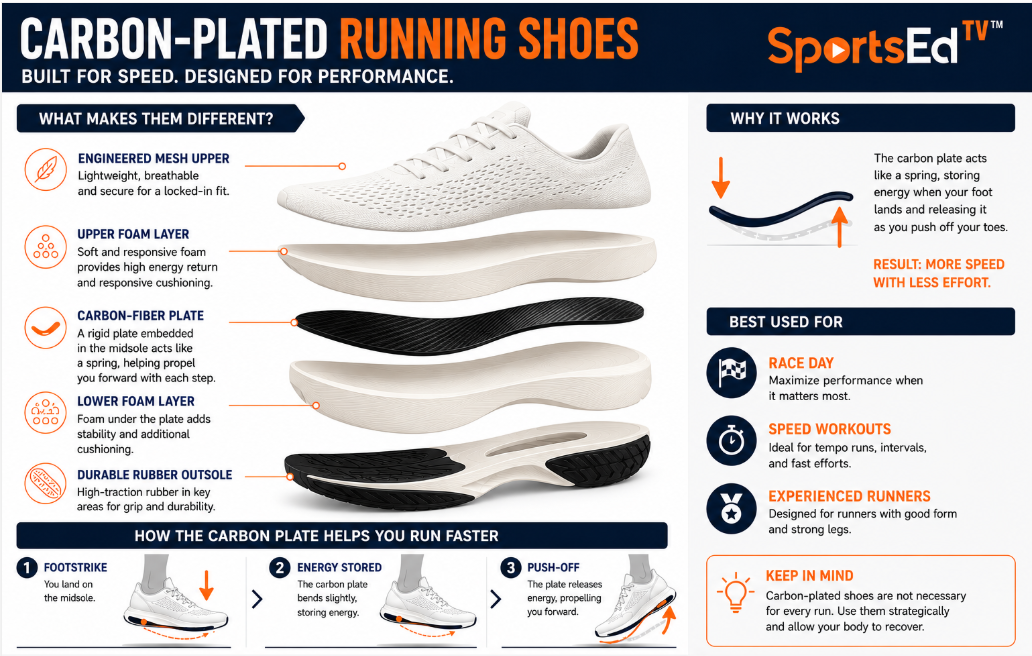
Should You Buy Carbon-Plated Running Shoes?
Few innovations have changed competitive running as dramatically as carbon-plated shoes.
Originally designed for elite marathon runners, these shoes combine lightweight, highly responsive foams with stiff carbon-fiber plates that help improve running economy.
They've become extremely popular, but they aren't the best choice for everyone.
Carbon-plated shoes are most beneficial for:
- Competitive racing
- Fast tempo workouts
- Experienced runners seeking peak performance
For beginners, recreational runners, or those simply looking for a comfortable everyday trainer, carbon-plated shoes are usually unnecessary.
They also tend to be significantly more expensive and less durable than traditional daily trainers.
If you're buying your first pair of running shoes, prioritize comfort and fit over advanced racing technology.
Should You Own More Than One Pair of Running Shoes?
Many experienced runners rotate between two or more pairs of shoes.
Shoe rotation offers several potential advantages.
Different shoes place slightly different stresses on the body, reducing repetitive loading patterns.
Rotating shoes also allows the foam midsoles time to recover between runs, potentially extending their lifespan.
A common rotation might include:
- A daily trainer for most runs
- A lightweight shoe for speed workouts
- A carbon-plated shoe reserved for races
- A trail shoe for off-road adventures
That said, beginners don't need four pairs of shoes.
One well-fitted, versatile daily trainer is more than enough to build a successful running routine.
How Should Running Shoes Fit?
Even the most advanced running shoe won't perform well if it doesn't fit properly.
In fact, poor fit is responsible for more discomfort than almost any other factor.
When trying on running shoes, remember these guidelines.
Leave approximately a thumb's width (about half an inch or 1 to 1.5 centimeters) between your longest toe and the front of the shoe. Your feet naturally swell during exercise, and this extra space helps prevent black toenails and pressure on downhill runs.
The widest part of your foot should align with the widest part of the shoe. A shoe that's the correct length but too narrow can still cause numbness, blisters, and discomfort.
Try shoes on later in the day whenever possible. Feet tend to swell as the day progresses, making afternoon or evening a more accurate time to judge fit.
Wear the socks you normally run in when trying on shoes. Thick hiking socks and thin running socks can produce very different fits.
Finally, don't just stand in the shoes. Walk around the store, jog if permitted, and pay attention to any pressure points. Running shoes should feel comfortable immediately. They shouldn't require a "break-in period."
Should You Buy Running Shoes Online or In a Store?
Both options have advantages.
Shopping at a specialty running store allows you to try on multiple models, compare different brands, receive professional fitting advice, and often undergo a gait analysis.
Online shopping offers convenience, competitive pricing, and access to a wider selection.
If you're buying your first pair of running shoes, visiting a specialty running store is often worth the extra time.
Once you've identified a shoe that fits well, purchasing future pairs online becomes much easier, especially if the manufacturer hasn't significantly changed the model.
Common Mistakes to Avoid When Buying Running Shoes
Even experienced runners occasionally choose the wrong shoes. While today's footwear technology is better than ever, the best shoe is still the one that fits your feet and your running style—not necessarily the one with the biggest marketing campaign.
Here are some of the most common mistakes runners make.
Buying Shoes Because They Look Good
There's nothing wrong with liking the appearance of your running shoes, but looks should never be your primary reason for buying them.
A shoe that matches your favorite colors won't matter if it causes discomfort after three miles.
Always choose fit and comfort before style.
Buying the Same Size as Your Casual Shoes
Many runners wear running shoes that are too small.
During exercise, your feet naturally swell, and they also slide forward slightly with every stride. That's why most runners need a little more room in their running shoes than in their everyday footwear.
If your toes constantly hit the front of the shoe, you increase your risk of blisters, black toenails, and discomfort.
Assuming Expensive Means Better
Higher-priced shoes often include premium foams, lighter materials, and advanced technology.
However, the most expensive shoe isn't automatically the best shoe for you.
A well-fitted $140 shoe that matches your running mechanics will almost always outperform a $300 racing shoe that's designed for a completely different purpose.
Ignoring Shoe Width
Length is only part of the equation.
Running shoes are available in multiple widths because feet vary considerably from one person to another.
If your feet feel squeezed or spill over the sides of the shoe, consider trying a wider version rather than sizing up.
Waiting Too Long to Replace Your Shoes
Many runners continue using shoes long after they've lost their cushioning and support.
The upper may still look fine while the midsole foam has already compressed significantly.
If your shoes suddenly feel less comfortable or you begin noticing new aches without increasing your training, worn-out shoes may be part of the problem.
When Should You Replace Running Shoes?
A common guideline is replacing running shoes every 300 to 500 miles (480 to 800 kilometers).
However, mileage alone shouldn't determine when it's time for a new pair.
Several factors influence shoe lifespan, including:
- Your body weight
- Running surface
- Running style
- Midsole material
- Weather conditions
- Shoe construction
Pay attention to these warning signs:
- The outsole is noticeably worn.
- The midsole feels flatter than it used to.
- The shoe no longer feels responsive.
- You develop new aches in your feet, knees, or hips.
- The shoe feels uneven or unstable.
- The upper begins separating from the sole.
Many running watches and smartphone apps allow you to track mileage for each pair of shoes, making replacement much easier.
Neutral vs. Stability vs. Motion-Control Shoes
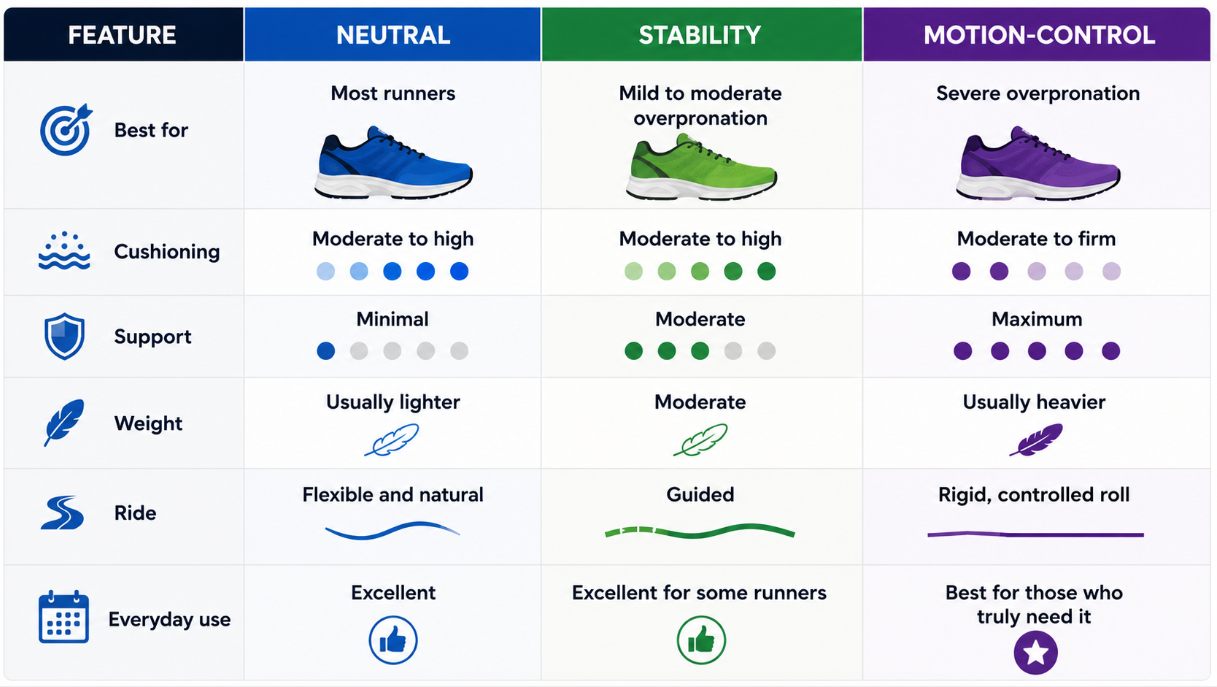
Remember that these are general categories. Comfort should always be your deciding factor.
Key Takeaways Before Buying Running Shoes
Choosing running shoes doesn't need to be overwhelming.
Instead of focusing on the latest trends or the shoes worn by professional athletes, focus on finding the pair that feels best on your feet.
Before making your purchase, remember these key points:
- Choose comfort over marketing claims.
- Buy shoes designed for the surface where you'll run most.
- Make sure there's enough room for your toes.
- Don't assume more cushioning is always better.
- Replace shoes when they lose their performance, not simply when they look worn.
- Consider a gait analysis if you've experienced recurring injuries.
- Carbon-plated racing shoes are impressive, but they aren't necessary for most runners.
- The best shoe is the one you'll enjoy running in.
Final Thoughts
Running is one of the simplest and most rewarding forms of exercise. It requires very little equipment, can be done almost anywhere, and offers tremendous physical and mental health benefits.
Your shoes are the single most important piece of equipment you'll own as a runner.
Rather than chasing the newest model or relying on someone else's recommendation, take the time to understand your own feet, your running habits, and your goals. A shoe that fits well, feels comfortable from the first run, and matches the way you train will almost always outperform one chosen because it's popular or heavily advertised.
Don't be afraid to spend time trying on multiple pairs. Walk around the store, jog if possible, and trust your instincts. If something feels off, it probably is.
Remember that no shoe is perfect forever. As your running experience grows, your preferences may change. Your ideal shoe today may not be your ideal shoe two years from now, and that's completely normal.
Choosing the right running shoes isn't about finding perfection. It's about finding the pair that helps you enjoy running, stay consistent, and keep moving toward your goals.
Frequently Asked Questions
How do I know if my running shoes fit correctly?
A properly fitting running shoe should feel comfortable immediately. Leave about a thumb's width of space between your longest toe and the front of the shoe, make sure your heel stays secure without slipping, and ensure the widest part of your foot matches the widest part of the shoe. There shouldn't be pressure points or pinching anywhere.
Can the wrong running shoes cause injuries?
Running injuries are influenced by many factors, including training load, recovery, strength, and running mechanics. While the wrong shoes don't automatically cause injuries, poor fit or shoes that don't suit your running style can contribute to discomfort and increase stress on certain tissues.
Should beginners buy stability or neutral running shoes?
Most beginners do well in comfortable neutral running shoes. Stability shoes may benefit runners with significant overpronation or those who have been advised by a qualified professional after a gait assessment.
How many miles do running shoes last?
Most running shoes last between 300 and 500 miles (480 to 800 kilometers), although some models last longer. Monitor both mileage and how the shoes feel rather than relying on distance alone.
Should I buy running shoes one size bigger?
Not necessarily one full size bigger, but most runners benefit from having approximately half an inch (1 to 1.5 centimeters) of space in front of their longest toe to accommodate foot swelling during runs.
Is it okay to walk in running shoes?
Yes. Running shoes are excellent walking shoes because they provide cushioning and comfort. However, using them extensively for everyday walking will contribute to wear and reduce their lifespan for running.
Can I use trail running shoes on the road?
Occasionally, yes. However, trail shoes tend to feel firmer and heavier on pavement, and their aggressive rubber lugs wear down faster on hard surfaces. If most of your running is on roads, dedicated road shoes are the better choice.
What is heel drop?
Heel drop is the difference in height between the heel and forefoot of a running shoe. Lower heel drops generally increase calf and Achilles tendon involvement, while higher drops shift more of the workload toward the knees.
What is stack height?
Stack height measures the amount of material between your foot and the ground. Higher stack heights generally provide more cushioning, while lower stack heights offer better ground feel and stability.
Are carbon-plated running shoes worth it?
Carbon-plated shoes can improve running economy for many runners during races and fast workouts. However, they are expensive and unnecessary for most beginners or recreational runners looking for an everyday training shoe.
Should I rotate between multiple pairs of running shoes?
If you run several times a week or train for races, rotating between two or more pairs can reduce repetitive loading patterns and may extend the lifespan of your shoes. Recreational runners can be perfectly successful with a single quality daily trainer.
Can I wash my running shoes in a washing machine?
It's generally not recommended. Machine washing can damage adhesives, midsoles, and upper materials. Instead, clean your shoes by hand using mild soap, water, and a soft brush, then let them air dry.
Why do my toes go numb while running?
Toe numbness is often caused by shoes that are too tight, laces that are overly tight across the top of the foot, or shoes that are too narrow. Adjusting the fit or choosing a wider model often solves the problem.
Why do I get blisters with new running shoes?
Blisters usually result from friction caused by poor fit, excessive movement inside the shoe, moisture, or improper socks. A properly fitted running shoe should not require a long break-in period.
Can I use the same shoes for running and the gym?
For light gym workouts, yes. However, if you regularly perform strength training or exercises involving quick lateral movements, cross-training shoes generally provide better stability than running shoes.
What socks should I wear with running shoes?
Moisture-wicking running socks made from synthetic fibers or merino wool are the best choice. Avoid cotton socks, which tend to retain moisture and increase the likelihood of blisters.
Do I need custom orthotics?
Not necessarily. Many runners do very well with the insoles that come with their shoes. Custom orthotics are generally recommended only when prescribed by a qualified healthcare professional to address a specific medical condition or biomechanical issue.
Should I replace both shoes if only one feels worn?
Yes. Running shoes are designed to function as a pair. Replacing only one shoe can create differences in cushioning and support that may affect your running mechanics.
Can running shoes stretch over time?
The upper materials may become slightly more flexible, but running shoes do not significantly stretch in length or width. If a shoe feels too tight when you first try it on, it's usually better to choose a different size or model rather than hoping it will stretch.
What is the most important factor when choosing running shoes?
Comfort. Numerous studies have shown that runners naturally prefer shoes that allow them to move efficiently and comfortably. If a shoe feels great from the moment you put it on, there's a good chance you've found a strong candidate for your next run.